Yoon Insurrection Verdict Sets off Regional Power Realignment
South Korea's impending insurrection verdict against former President Yoon Suk Yeol carries consequences far beyond Seoul's courts. A January 2027 appellate ruling will redefine the peninsula's political landscape—and ripple across Asia-Pacific security architectures.
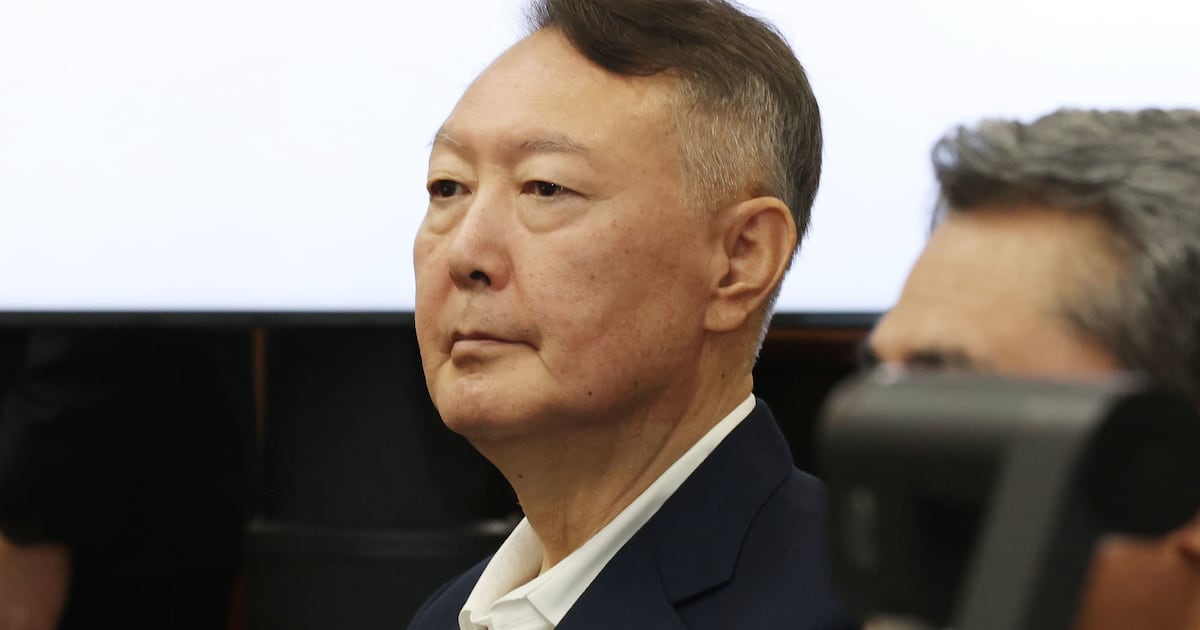
The Courtroom That Could Redraw Asia
South Korea’s highest court is preparing to deliver a verdict that will echo far beyond its own judicial system. On January 26, 2027, the Seoul High Court’s Criminal Division 12 (presided over by Judge Lee Seung-cheol) will announce its decision in the insurrection case against former President Yoon Suk Yeol. The stakes are existential—not just for South Korean democracy, but for the entire Indo-Pacific security architecture that Washington and its allies have spent decades constructing.
The international community largely slept through the early stages of this proceedings. Western capitals treated South Korea’s political crisis as background noise—a domestic squabble between rival political factions. They were wrong. What plays out in that courtroom represents something far more consequential: a stress test for the post-Cold War liberal order in Northeast Asia.
Who Really Loses When the Gavel Falls
The special prosecution team, led by prosecutor Oh Eun-suk, requested the death penalty for Yoon and life imprisonment for former Defense Minister Kim Yong-hyun. The first-instance court already handed Yoon a life sentence, finding his orders—including directives to drag lawmakers from the National Assembly floor and arrest prominent politicians—constituted clear illegal acts. However, the trial court stopped short of finding that Yoon and his co-defendants had planned the martial law declaration over an extended period.
This distinction matters enormously. If the appellate court upholds the life sentence, it establishes that even democratically elected leaders face criminal accountability for authoritarian overreach. But if the court imposes a lighter sentence—or worse, acquits Yoon—it signals that executive privilege in East Asian democracies remains functionally unlimited. The difference isn’t merely legal; it’s geopolitical.
For South Korea’s current President Lee Jae-myung and the Democratic Party, a harsh verdict reinforces their narrative of defending constitutional order against executive tyranny. For conservative forces watching nervously from the opposition benches, leniency would vindicate their claim that the prosecution represents politically motivated persecution.
The Blind Spot No One Is Talking About
Here is what English-language coverage consistently misses: Yoon’s case is not simply about whether one man committed treason. It is about whether America’s most important alliance partner in Northeast Asia can tolerate internal political violence without collapsing the institutional frameworks that sustain deterring North Korea and containing Chinese expansionism.
When Washington treats South Korean judicial proceedings as irrelevant to American strategic interests—as it did during the early phases of Yoon’s impeachment and subsequent trials—it cedes influence to Beijing and Pyongyang. Both regimes watch these proceedings with calculating attention. A fractured South Korean polity becomes a vulnerable ally. A consolidated one becomes an unpredictable but reliable partner.
The appointment of a special prosecution team itself reveals how deeply embedded the crisis has become within South Korea’s institutional architecture. Prosecutors acting outside normal channels suggest that regular judicial processes proved insufficient to handle the magnitude of the alleged offense. That fact alone should alarm every capital monitoring the peninsula.
What Happens Next Depends on Whose Verdict Holds
Several scenarios unfold depending on the appellate outcome. Should the high court impose death or maintain life imprisonment, Yoon’s political movement fractures. Conservative parties must either embrace accountability rhetoric or risk alienating moderate voters who view insurrection charges as disqualifying regardless of political sympathy.
If the appellate court reduces the sentence significantly—perhaps settling on something in the range of 15 to 20 years—the ruling effectively punishes Yoon without permanently removing him from public life. He could reemerge politically within a decade, carrying forward grievance narratives that destabilize future administrations.
The most dangerous scenario involves outright acquittal. An insurrection acquittal would normalize executive martial law declarations as legitimate political tools. It would signal to autocrats across Asia—from Myanmar to Thailand to the Philippines—that constitutional safeguards dissolve when presidents decide democratic constraints no longer serve their interests.
Why Global Powers Cannot Look Away
America faces particular urgency here. The United States maintains approximately 28,500 troops in South Korea and relies on Seoul as the cornerstone of its forward-deployed deterrence strategy against both North Korea and China. A South Korean government consumed by internal turmoil cannot effectively coordinate missile defenses, intelligence sharing, or joint military exercises with American forces.
Japan watches closely. Prime Minister Fumio Kishida’s administration has struggled to normalize its own constitutional ambiguity while watching Seoul navigate constitutional crises. A precedent allowing martial law declarations during political disputes emboldens Japanese revisionists who argue that Japan’s pacifist constitution similarly constrains legitimate executive action during emergencies.
China observes with barely concealed satisfaction. Beijing has long argued that Western-style democratic institutions prove unstable when tested by political polarization. Evidence of South Korea’s democratic backsliding supports China’s narrative that authoritarian governance provides superior crisis management capabilities.
The Timeline Everyone Ignores
The January 26, 2027 verdict arrives during an election year cycle that will dominate South Korean politics through 2028. Whatever sentence Yoon receives, his political base survives. Conservative voters who supported the martial law declaration will interpret harsh sentences as proof of partisan persecution. Light sentences confirm their suspicion that judicial institutions remain captureable.
The appellate proceedings took three sessions between late January and early February 2026, concluding with final arguments and defendant statements. Yoon used his final statement to defend the martial law declaration as necessary response to legislative obstruction by “major opposition parties” and criticized President Lee Jae-myung indirectly by referencing politicians who call themselves victims of fabricated prosecutions.
The court recognized Yoon’s illegal orders as factual findings but declined to classify them as part of prolonged conspiracy. This narrower characterization leaves room for appellate reconsideration—but also creates inconsistency that appeals courts typically resolve through enhanced scrutiny.
Where the Power Shifts Next
Regardless of the January verdict, South Korea’s political center of gravity has already shifted. The traditional conservative-liberal binary now includes an additional fault line: those who believe martial law justified legislative gridlock versus those who view it as unconstitutional coup attempt.
International observers treating this as mere domestic drama miss how thoroughly Yoon’s case reframes alliance politics. American policymakers must decide whether to engage South Korean institutions disrupted by insider trauma or abandon engagement entirely—both choices carrying severe consequences for regional stability.
The verdict on January 26, 2027 won’t simply determine one man’s fate. It will determine whether South Korea remains a reliable anchor in Asia’s security architecture or becomes another example of democratic decay in an increasingly authoritarian neighborhood.
Every capital from Washington to Tokyo to Beijing understands this intuitively. Only Seoul seems surprised.