Zelenskys Russian Sky Closure Is a Weapon Targeting Insurers and Airlines
Ukraine's declaration that Russian airspace is 'de facto closed' is not just a safety warning — it is a strategic pressure campaign aimed at the insurance underwriters and carriers still flying over Russia. The move forces European airlines and their insurers to make a costly choice between business as usual and compliance with Kyiv's demands.
The Warning That Was Never Just a Warning
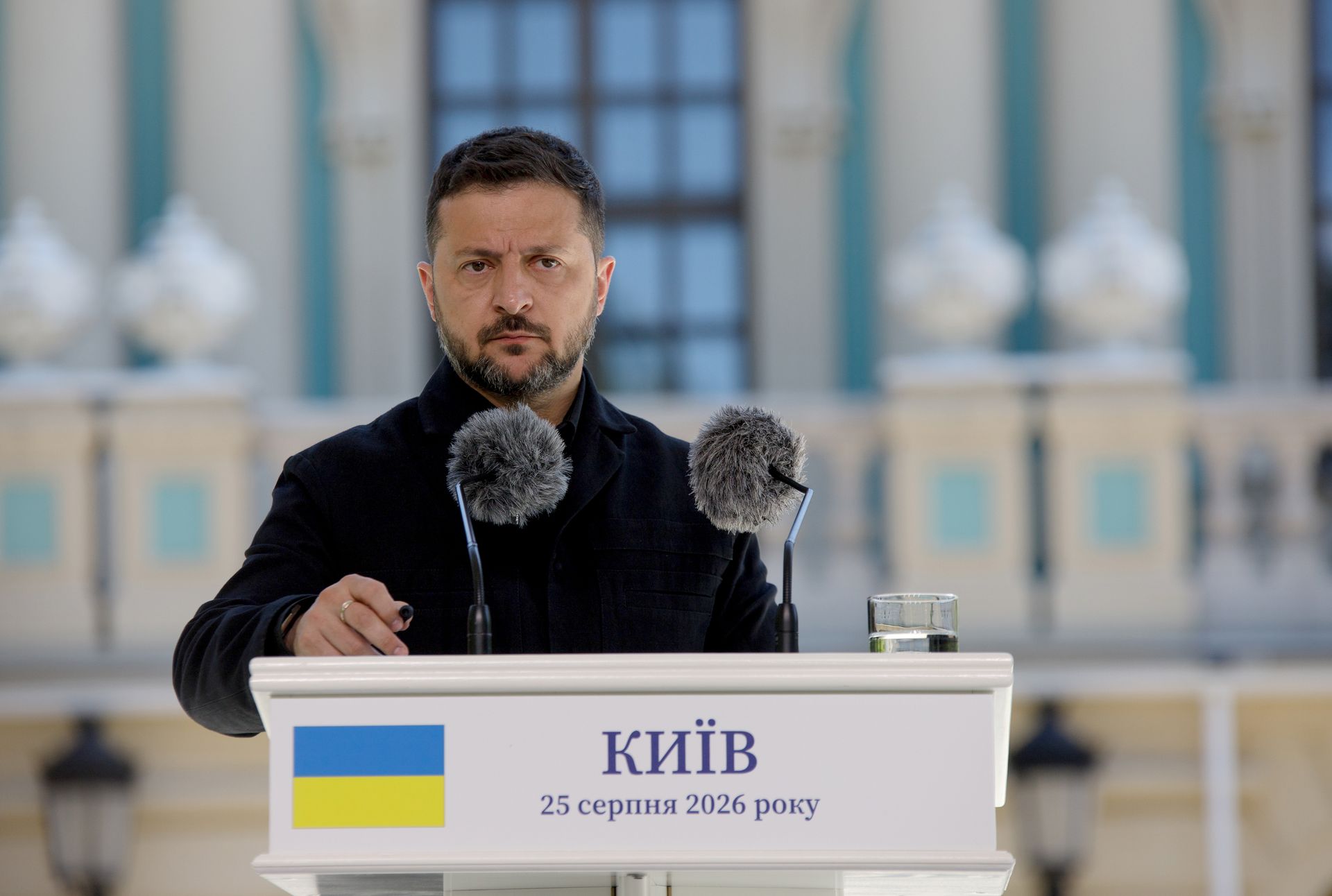
President Volodymyr Zelensky did not simply warn airlines on Sept. 1. He made a deliberate choice of audience — insurers, foreign governments, and the diplomats standing in Kyiv and Moscow — because the mechanism he is targeting is not military. It is financial.
By declaring Russian airspace “de facto closed,” Zelensky is forcing a question that Europe’s aviation industry has quietly avoided for two years: who pays when the sky over Russia is no longer safe, and who bears the cost of choosing to ignore that fact.
The announcement arrived with the precision of a surgical strike. Ukrainian drones have already breached Russian airspace repeatedly, striking airfields deep inside the border regions and setting ablaze fuel depots near Moscow. Yet the closure notice was framed not as a threat but as a factual record — airspace that Ukraine no longer controls, cannot guarantee, and will continue to contest. The distinction is everything. Zelensky is not asking airlines to join a boycott. He is telling them that the rules of engagement have changed, and the risk profile has shifted from manageable to material.
The Insurance Question Nobody Wants to Answer
War-risk insurance for civilian flights over conflict zones is one of the most specialized, opaque corners of global reinsurance. When Ukrainian drones began striking deep into Russian territory in 2024, the premiums on routes crossing Russian airspace rose sharply. Some carriers simply rerouted. Others — particularly state-backed airlines with political incentives to maintain links to Moscow — absorbed the cost or found underwriters willing to write the risk at a steep price.
A “de facto closure” changes the calculus entirely. If an insurer knows that a government with which it has diplomatic ties considers its airspace a prohibited zone, the legal and reputational exposure shifts. Claims following a drone strike on a civilian aircraft would no longer sit in a gray area of “unforeseen conflict zone risk.” They would sit squarely in the territory of known, declared hazard.
That distinction matters for balance sheets. Reinsurers in London, Zurich, and Munich do not care about the politics of the war. They care about aggregate exposure. A single fatal incident involving a civilian jet over Russian territory would trigger cascading claim reviews across the entire aviation war-risk book. No underwriter wants to be the one who wrote that policy. The second-order effect is already visible: several major European insurers have quietly raised their war-risk surcharges on Russian overflight routes, pricing in the likelihood of a catastrophic claim even as they avoid writing the coverage explicitly.
The Airlines Picking Sides Without Being Asked
European carriers that have maintained flights to Moscow or St. Petersburg face an uncomfortable contradiction. Many continue to operate these routes on the grounds that grounding them would punish passengers and employees without affecting Kremlin decision-making. But Zelensky’s announcement strips away that neutrality.
Fly over Russian airspace, and you are flying over territory that Ukraine has declared hazardous and that Kyiv is actively threatening. Continue, and you signal either indifference to Ukrainian civilian casualties or prioritization of commercial convenience over safety. Reroute, and you lose revenue on a route already bleeding money for most carriers.
The precedent already exists. Ukrainian authorities cleared drone activity for CIA Director John Ratcliffe’s flight to Moscow on Aug. 25. That was a one-off for diplomacy. Zelensky made clear this is not the model for commercial flights. The message is blunt: we will make exceptions for negotiated passages, not for profit-driven overflights.
The ripple effects extend beyond the airlines directly involved. Maintenance companies that service Russian-bound aircraft now face a reputational calculus. Air traffic control services that support overflight operations may find themselves indirectly implicated. Even the freight carriers — who have become a critical lifeline for Russia’s parallel import networks — must weigh the growing risk against the shrinking pool of willing underwriters.
Why Now — and Why It Matters Beyond Aviation
The timing is notable. On Aug. 31, Indian Prime Minister Narendra Modi urged Putin to end the “endless war” at the Shanghai Cooperation Organization summit in Bishkek. Kazakhstan’s President Kassym-Jomart Tokayev had called weeks earlier for a frozen conflict and a return to negotiations. Both men represent a growing cohort of Global South leaders pressing for de-escalation.
Zelensky’s announcement threads a needle between those diplomatic pressures and Ukraine’s military reality. By framing the airspace closure as Russia’s own creation — noting that Russian strikes have already closed Ukrainian skies to civilian aviation — he reverses the blame narrative. The war is not disrupting air travel. Russia’s war is. Ukraine is simply responding.
More strategically, the announcement turns economic participation in Russia into a visible political act. Every airline that continues to fly Russian routes, every insurer that continues to underwrite those flights, becomes a stakeholder in Russia’s ability to sustain its war economy through continued connectivity. Zelensky is asking the world to treat that connectivity as a choice, not a neutral default.
The second-order geopolitical effect is significant: by forcing insurers and airlines to pick a side, Ukraine is creating a domestic political problem for European governments that have been reluctant to draw the line themselves. When an airline’s board must justify continued flights over a “de facto closed” zone to shareholders and regulators, the political argument for maintaining ties to Moscow weakens — and the argument for further sanctions gains momentum.
What Comes Next
The practical effect will be measured in premiums, not prohibitions. No international body can enforce an airspace closure that Russia refuses to accept. But insurers can refuse to write coverage. Airlines can choose not to fly. When the financial cost of overflying Russia exceeds the revenue it generates — and that threshold is approaching — the decision makes itself.
Russia’s major airports, already operating with reduced international traffic since 2022, will feel the squeeze. Sheremetyevo and Domodedovo, once among Europe’s busiest hubs, now see fewer long-haul connections than they did before the full-scale invasion. The domestic routes remain, but the international connectivity that once signaled normalcy has eroded significantly.
The question is whether the pain translates into political pressure inside Russia, or whether the Kremlin absorbs it as another cost of the war it chose. For a regime that has spent two years reframing economic isolation as a badge of resilience, the loss of a few commercial routes may be dismissed as collateral damage. But the cumulative effect — the slow tightening of aviation access, the rising cost of staying connected, the growing list of nations and companies choosing distance — adds up to something more consequential than any single sanction.
Ukraine’s drone fleet is small compared to Russia’s air defenses. But the declaration that Russian airspace is closed is a different kind of weapon — one that doesn’t need to shoot down planes to make a point. It makes flying over Russia too expensive, too risky, and too politically costly to ignore. The real battlefield is not the sky above Moscow. It is the insurance ledger and the airline route map, where every policy renewed and every flight rerouted writes a new line in the story of this war.