Zelenskyy's Public Rebuke of Trump Exposes a Fractured Peace Push
Zelenskyy's on-camera pushback against Trump's energy ceasefire claim lays bare the limits of American mediation and Moscow's information advantage. His conditional commitments reveal Ukraine's narrowing leverage.
The Moment That Didn’t Fit Any Script
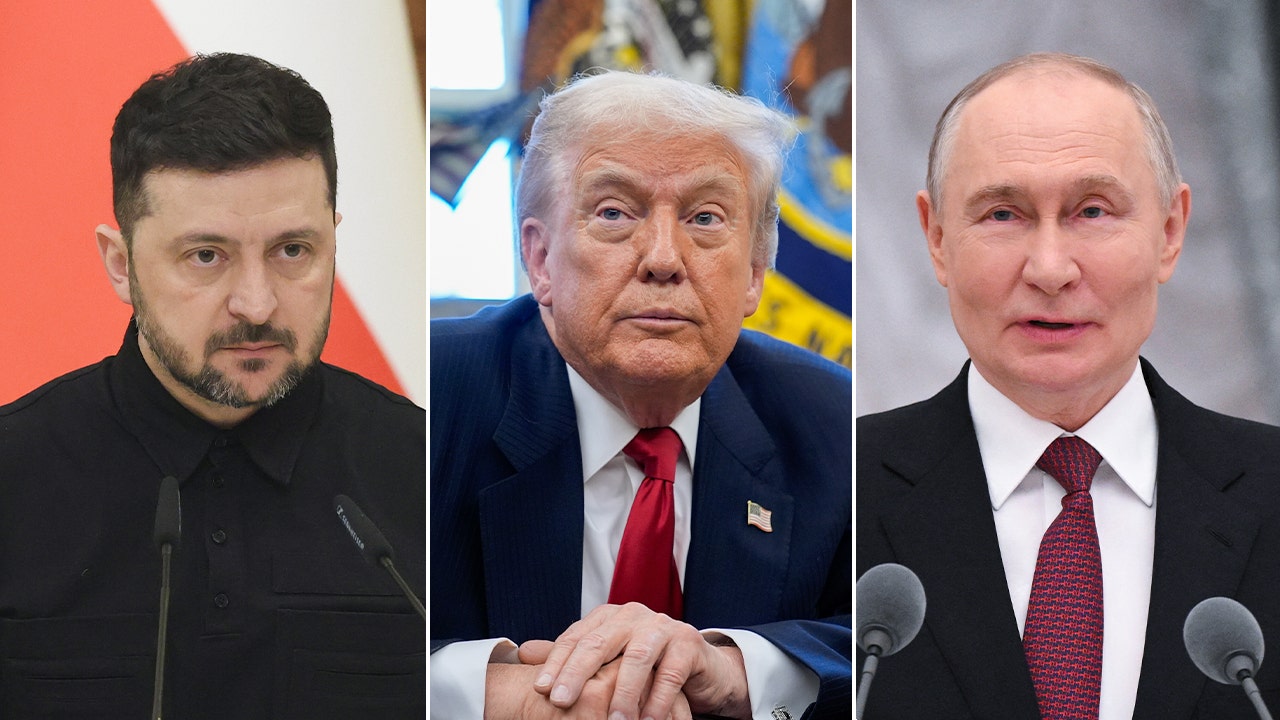
Volodymyr Zelenskyy did not mince words. On Monday, live on Fox News, he told Bill Hemmer that Vladimir Putin had answered Trump’s ceasefire announcement not with diplomacy but with missiles striking Ukrainian gas infrastructure. He then offered a conditional commitment — if Russia stops attacking Ukraine’s energy grid, Kyiv will stop hitting Russian refineries. The phrasing mattered. It was a pivot away from unconditional acceptance of Washington’s terms and toward a reciprocal framework that places the onus squarely on Moscow.
It was also, arguably, a message to the White House. The Ukrainian president last spoke to Trump face-to-face in late September at the U.N. General Assembly in New York. There is a gap worth noticing. In that interval, Trump has been reshaping the terms of engagement — pressing for refinery attacks to halt, brokering a diesel deal with Russia, publicly questioning whether Zelenskyy should still be in power. Kyiv is now sending a counter-signal on a major American network, and the optics are deliberate.
Who Gains and Who Loses
The immediate winner is Russia. Its foreign minister, Sergey Lavrov, dismissed the idea of any pause lasting 60 days — enough time for Ukrainian elections — as a trick to let Europe rearm Kyiv. That framing landed neatly alongside the image of Russian drones hitting energy targets hours after Trump’s announcement. The sequence itself is the story: Trump declares a truce; Moscow ignores it; Zelenskyy publicly clarifies where the blame lies. That is not a peaceful moment. It is a battlefield of narratives, and Russia is exploiting the opening.
The loser in the short term is the credibility of the ceasefire proposal. A White House official told Axios that the initial offer focused only on oil refineries, with a broader halt to strikes on power plants and electricity grids as a potential follow-up. Moscow never agreed. Yet Trump presented it as a settled arrangement. When shelling continued, the discrepancy became impossible to ignore, and Zelenskyy’s interview made the gap visible to an American audience that may have believed otherwise.
Ukraine also carries a cost. Zelenskyy’s conditional language — “if Russia will not attack our energy, we will not attack the energy” — signals restraint but also vulnerability. It reveals that Kyiv’s refinery strikes, which have disrupted fuel supplies deep inside Russia, are being treated by Washington as bargaining leverage rather than military necessity. Trump has explicitly criticized those attacks, arguing they drive up global diesel prices. Zelenskyy pushed back, pointing to disruptions in the Strait of Hormuz as the real price driver. The argument is technically sound but politically asymmetrical: Washington controls the aid tap, and Kyiv knows it.
The Diesel Deal Complication
Trump’s decision to ease restrictions on Russian diesel exports adds another fracture line. Critics on both sides of the ideological aisle have raised alarms. Carrie Filipetti, a former deputy assistant secretary of state in Trump’s first term, argued that the deal directly undermines recent legislation pushing harder tariffs and sanctions on Russian energy. Her concern was blunt: paying for Putin’s war machine through relaxed diesel rules makes accountability impossible.
Morgan Murphy, a former official in the Special Presidential Envoy’s office, offered a different reading. He defended Trump’s push for negotiation, arguing that neither side can achieve a decisive military victory and that prolonged attrition only benefits weapon manufacturers and coffin makers. Both perspectives share one assumption: that the war must end soon. Where they diverge is on the price of ending it.
That divergence is exactly where Zelenskyy’s pointed message gains its urgency. Kyiv cannot afford to be painted as the obstacle to peace while Russian missiles continue to strike residential buildings and power plants. The civilian toll he cited — 20 to 30 deaths per day — may not be independently verified, but the pattern is undeniable. Over a single week, Russian forces struck electricity generation and transmission facilities more than 200 times, according to Ukraine’s charge d’affaires in Washington, Denys Sienik.
The Election Question
Trump’s suggestion that Ukraine needs a new president is the most politically combustible element of this episode. Zelenskyy’s response was measured but firm: only the Ukrainian people can change their leader, and even then, only after a minimum of 60 days of security guarantees. He did not dismiss the possibility of elections. He attached conditions to them — conditions that Moscow has no incentive to meet and that Washington has not yet committed to enforcing.
This is where the power dynamics become clearest. Trump holds the lever of military and financial support. Zelenskyy holds the narrative. Lavrov holds the timeline. Each actor is playing a different game, and the ceasefire proposal is the scoreboard they are arguing over.
What Happens Next
Three scenarios are plausible. In the first, Moscow continues its energy strikes, forcing Zelenskyy into a dilemma: honor Trump’s refinery restraint or respond to civilian casualties. Either choice costs him politically. In the second, Washington hardens its position, conditioning further aid on Kyiv’s continued restraint while expecting Moscow to comply — an expectation that has so far proven unfounded. In the third, the ceasefire quietly unravels as both sides continue striking energy targets and the public messaging shifts from negotiation to blame.
The diesel deal complicates all three. If Moscow interprets eased sanctions as a sign of American willingness to accommodate Russian energy revenue, it has less incentive to compromise on the ground. If Zelenskyy interprets the same deal as American detachment from Ukrainian security concerns, it explains the sharpness of his public pushback.
What is clear is that the ceasefire is no longer just a military arrangement. It is a test of whether Washington can still set the terms, whether Kyiv can resist pressure without losing support, and whether Moscow can exploit the缝隙 — the cracks — without paying a price. So far, the price has been mostly borne by Ukraine’s infrastructure and its civilians.
The interview ended with Zelenskyy saying he wants the war to end as quickly as possible and calling a ceasefire a good first step. The words are diplomatic. The context is not. The real message was in what came before them — the recitation of violated promises, the conditional commitments, the quiet reminder that Kyiv is watching how Washington chooses to define accountability.