Saudi Arabia's Yemen War Regret
Saudi Arabia's decision to resume full-scale war in Yemen has handed the Houthis a victory they couldn't achieve through diplomacy. The move strengthens Houthi legitimacy, undermines US strategy, and risks dragging Riyadh into a conflict it cannot win.
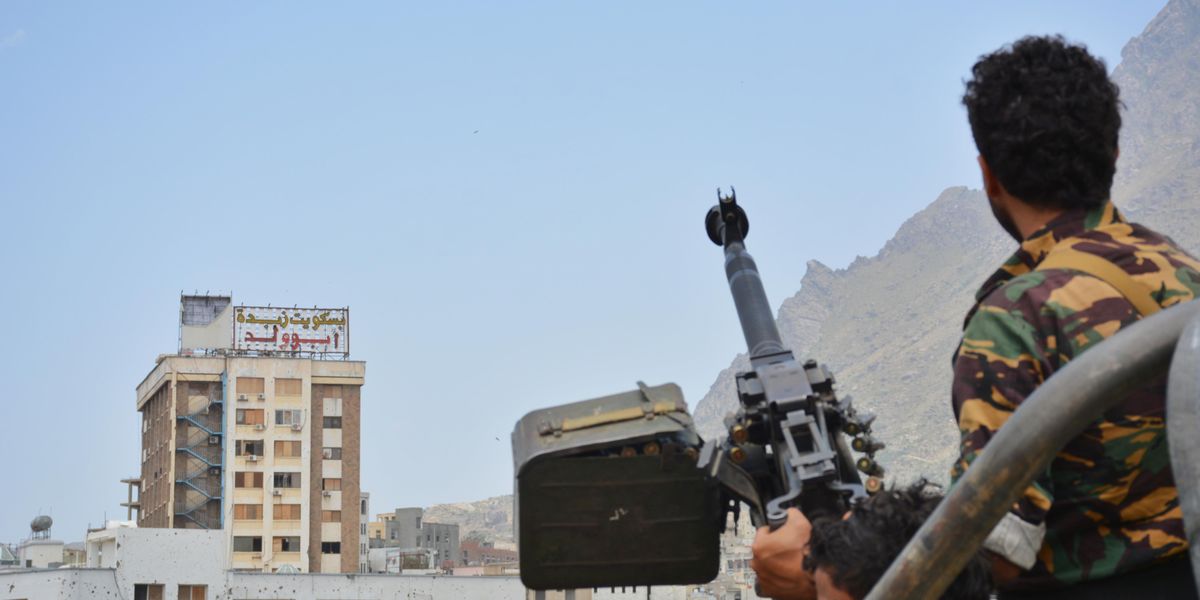
The Houthis Win Whether They Fight or Negotiate
Saudi Arabia went to war in Yemen again in October 2026, and the result was almost predictable: the Houthis held the coast, the internationally recognized government faltered, and Riyadh found itself relying on foreign partners it could barely control.
On September 10, Houthi forces seized key stretches of Yemen’s Red Sea coastline, including territory around the Bab al-Mandab Strait — the chokepoint through which a significant share of the world’s oil passes. By early October, Saudi-backed government forces had begun clawing some of it back, but the damage to Saudi credibility was immediate. France dispatched troops to Yanbu to protect energy infrastructure. Pakistan had already deployed between 30,000 and 40,000 personnel to Saudi Arabia the prior year. The United States refused to resume air strikes on Houthi positions. The United Kingdom agreed to refuel Saudi aircraft over Yemen. None of this changes the fact that the PLC, Riyadh’s chosen proxy, could not repel a Houthi offensive without outside help — a sign of institutional decay more than tactical failure.
The broader point is simpler and more uncomfortable: every path Saudi Arabia has taken in Yemen since 2015 has produced the same outcome, just with different actors taking the blame.
What the Airport Bombing Actually Unlocked
The triggering event was not some sudden Houthi aggression. It came on July 13, 2026, when a civilian Iranian plane carrying a Houthi delegation that had attended the funeral of Ayatollah Ali Khamenei attempted to land at Sanaa International Airport. The runway was bombed. Yemen’s Presidential Leadership Council took responsibility. The Houthis blamed Saudi Arabia. The plane was forced to land in Hodeidah.
Four days later, the Houthis announced a blockade on Saudi Arabia, targeting oil exports through the strait. The truce that had held since April 2022 was over.
But the truce was already fraying. In June 2026, Houthi leader Abdul Malik al-Houthi had given a speech framing the conflict in purely Yemeni terms — not as solidarity with Gaza or alignment with Tehran, but as a war against eleven years of Saudi aggression. This was a deliberate recalibration. The group’s earlier pivot toward the Palestinian cause had raised its profile enormously and recruited fighters, but it also invited devastating air strikes from Israel and the United States. Israel assassinated several Houthi cabinet ministers in August 2025, including the prime minister. The Houthis had paused their campaign against Israel after Netanyahu’s stated ceasefire commitment in October 2025, even as Israel continued daily violations. They were hedging — trying to stay relevant without inviting annihilation.
The Sanaa airport attack changed the calculus entirely. It gave the Houthis a grievance they could weaponize against their Saudi adversary rather than their Israeli or American one. And it gave Riyadh an opening it could not resist — the chance to reclaim the initiative through force.
The UAE Gambit and Its Aftermath
Perhaps the most consequential move in this chain of events happened months before the current fighting: the UAE’s withdrawal from Yemen in January 2026, under direct Saudi pressure.
Until then, the UAE had been the primary backer of the Southern Transitional Council, the secessionist movement that controlled large swaths of southern Yemen. The STC’s chairman, Aidarous al-Zubaidi, sat on the PLC. The arrangement was messy and contradictory — a southern separatist leading a body that was supposed to preserve Yemen’s unity — but it kept a degree of balance within the anti-Houthi coalition.
In December 2025, the STC suddenly seized territory in eastern Yemen along the Saudi border, in the provinces of Hadramawt and al-Mahra. Saudi Arabia responded by bombing Emirati ships carrying weapons and insisting the UAE withdraw entirely. The STC dissolved. Al-Zubaidi fled to the UAE. The PLC purged him and his allies.
The result was not a stronger Yemeni government but a hollowed-out one. Southern separatists who had quietly supported the PLC in the hope of eventual independence now felt abandoned. The PLA, stripped of its most effective local partner, faced the Houthi advance with whatever internal capacity remained — and it was insufficient.
Saudi Arabia had eliminated a rival power broker and gained a cleaner field. But the field was still Yemen, and Yemen is a country where external actors routinely discover that control is an illusion.
The Three Options, and Why Only One Is Viable Long-Term
Riyadh currently faces three choices. The first is to persist with the military route: continue backing the PLC, accept the reliance on foreign partners, and hope the Houthis break. The second is to shift support toward the STC or other southern forces, gambling that a friendly southern Yemen could contain the Houthis. The third is to return to negotiations — the same framework that was laid out in December 2023, under which Saudi Arabia would pay public sector salaries in Houthi territory, ease port and airspace restrictions, and accept a Houthi role in a unified Yemeni state.
The first option is failing. The second is politically toxic and strategically questionable — an independent southern Yemen could become a new liability, not a buffer. The third option is the one Riyadh seems most reluctant to revisit, precisely because it looks like surrender. But the evidence suggests it was the only path that ever produced a durable outcome.
The December 2023 deal would have effectively disempowered the PLC, which depended on Saudi subsidies and political cover. That made it unpalatable to Riyadh’s allies within Yemen. It also meant accepting Houthi dominance over much of the country — a reality the Houthis have now consolidated regardless of any agreement.
The Human Cost of a Strategy Without End
The numbers from the previous war cycle are staggering enough that they should serve as a warning. Between 2015 and 2022, Saudi Arabia’s blockade and military campaign contributed to the deaths of tens of thousands of children from starvation and disease. The Houthis, too, have been documented using child soldiers at significantly higher rates than other factions. They have detained hundreds of activists, journalists, and civil society figures. They have diverted humanitarian aid and kidnapped or attacked aid workers, accusing them of spycraft. Multiple humanitarian organizations have suspended operations in Houthi-controlled territory as a result.
These are not abstract violations. They are the daily reality for millions of Yemenis who are already on the edge of survival.
What makes the current escalation especially dangerous is that the Houthis have grown stronger during the years of relative quiet. They manufacture weapons inside Yemen now, using components supplied by Iran and, according to reports, tools like Claude, Anthropic’s AI platform, to develop guided munitions. They experimented with drone boats as far back as 2017 and have remained at the cutting edge of asymmetric warfare. The very conflict they survived has made them harder to defeat, not easier.
Who Wins, Who Loses, and What Comes Next
The Houthis win by any measure of this episode. They retained their Red Sea coastline despite a Saudi military response. They forced a foreign power into a costly and publicly embarrassing re-engagement. They proved that their narrative — that they are the sole defenders of Yemen’s sovereignty against foreign aggression — holds even when tested against a coalition that includes American, British, French, and Pakistani personnel.
Saudi Arabia loses credibility, financial resources, and strategic flexibility. It loses the PLC as a reliable instrument. It loses time — time that could have been spent consolidating its position in the Gulf or pursuing Vision 2030 without the drag of another unwinnable war.
The United States loses leverage. Trump’s refusal to intervene directly signals that Washington will not reopen a sustained Yemen campaign while its attention is fixed elsewhere. That gap is being filled by European and South Asian partners, none of whom have a stake in Yemen’s future beyond protecting their own citizens and infrastructure.
The most likely outcome is not a decisive victory for either side but a protracted grinding conflict that drains Saudi resources, entrenches Houthi control over the Red Sea coast, and leaves Yemen’s population to bear the cost of a war that serves everyone’s interests except their own.
Saudi Arabia apparently believes diplomacy has failed. The evidence suggests the opposite: that diplomacy was the only tool that ever came close to working, and that military force has only made the problem worse.