The 1.8C Floor: What the UN's Bleakest Climate Warning Really Means
The UN has confirmed that 1.5C is now unavoidable, but capped overshoot at 1.8C is the line between reversibility and permanent damage — a threshold that rewrites the economics of climate adaptation and the politics of net zero.
The Line in the Sand
The United Nations Environment Programme delivered a number on Tuesday that will reshape how every government, insurer, and central bank thinks about the climate trajectory ahead: 1.8°C. That is the floor — the absolute minimum warming expected even under the most optimistic scenario — and it sits above the 1.5°C threshold enshrined in the Paris Agreement nearly a decade ago. More important than the number itself is the implication buried in the report’s language: staying below roughly 1.8°C is the narrow corridor in which the world can still pull temperatures back down. Cross it, and the door begins to close.
The report, titled Limiting Overshoot, confirms what scientists have long feared but rarely stated so plainly in an official UN document. Overshooting 1.5°C is now unavoidable. The authors call it “unavoidable” rather than “likely” — a deliberate word choice that signals the gap between ambition and trajectory has already widened beyond repair. The Paris target was always going to be missed. The question now is how badly, and whether recovery is still possible.
Why 1.8C Is the Critical Threshold
The report’s central finding is both technical and devastating in its simplicity. Climate scientists had long modelled overshoot pathways — scenarios where the world warms past 1.5°C and then cools back down through aggressive carbon dioxide removal. The new analysis puts a hard boundary on that possibility. If peak warming stays below approximately 1.8°C, there is a credible chance average temperatures could return to 1.5°C within this century. Beyond that, the mechanics of recovery grow increasingly unstable.
This matters because the physics of overshoot are unforgiving. The report warns that nature’s capacity to store carbon shrinks as the planet heats. Forests dry out. Oceans absorb less. Permafrost thaws and releases methane. Each degree of additional warming erodes the very systems that might otherwise help pull the planet back. The longer the world spends above 1.5°C, the more expensive and difficult it becomes to come down.
Prof Debra Roberts, a report author and co-chair of the Intergovernmental Panel on Climate Change, put it bluntly: the rules of the game are changing. Existing approaches are no longer fit for purpose. Governance needs to be reconfigured around an overshoot pathway — meaning policy frameworks built for a world that was still inside the 1.5°C target must now account for a reality where that target has been breached and the task is damage limitation rather than prevention.
The Economics Nobody Wants to Discuss
Here is what the report implies but does not fully articulate: the economics of climate adaptation are about to be rewritten. Until now, the framing has been largely binary — spend on mitigation to prevent warming, or spend on adaptation to cope with it. The 1.8C floor collapses that distinction. If the world is committing to a period of elevated warming followed by an uncertain recovery, every infrastructure decision, every insurance model, every budget projection needs to account for a world that is both hotter than designed and potentially still rising.
The report cites earlier analysis showing that limiting heating to around 1.8°C requires global emissions to be halved by 2035. Current national policies, it says, project at least 2.3°C of warming. There is a path below 2°C if countries deliver on their net zero commitments by mid-century — but that path depends on political will that has proven unreliable. Net zero has become increasingly contentious in some countries, with governments questioning the cost and feasibility of Phase-out fossil fuel dependence entirely.
The UNEP report itself has drawn criticism for not adequately addressing fossil fuel phase-out. Bill Hare, chief executive of Climate Analytics, said the report did a poor job of showing there is a way out, noting that “real zero” emissions is already achievable in many sectors by mid-century. The contrast between what the science demands and what the report recommends reveals something about the political constraints under which UN agencies operate — they must produce documents that governments can endorse, even when endorsement means accepting weaker language on the root cause.
The Vulnerable Know What the Rest of the World Ignores
For nations on the frontlines, the report is both vindication and indictment. Palau’s President Surangel Whipps Jr called it a “fork in the road moment.” Vishal Prasad of Pacific Island Students Fighting Climate Change was more direct: keeping to 1.5°C is not a choice, he said, it is a legal obligation — a reference to the International Court of Justice’s recent advisory opinion that clarified states’ duties under international law.
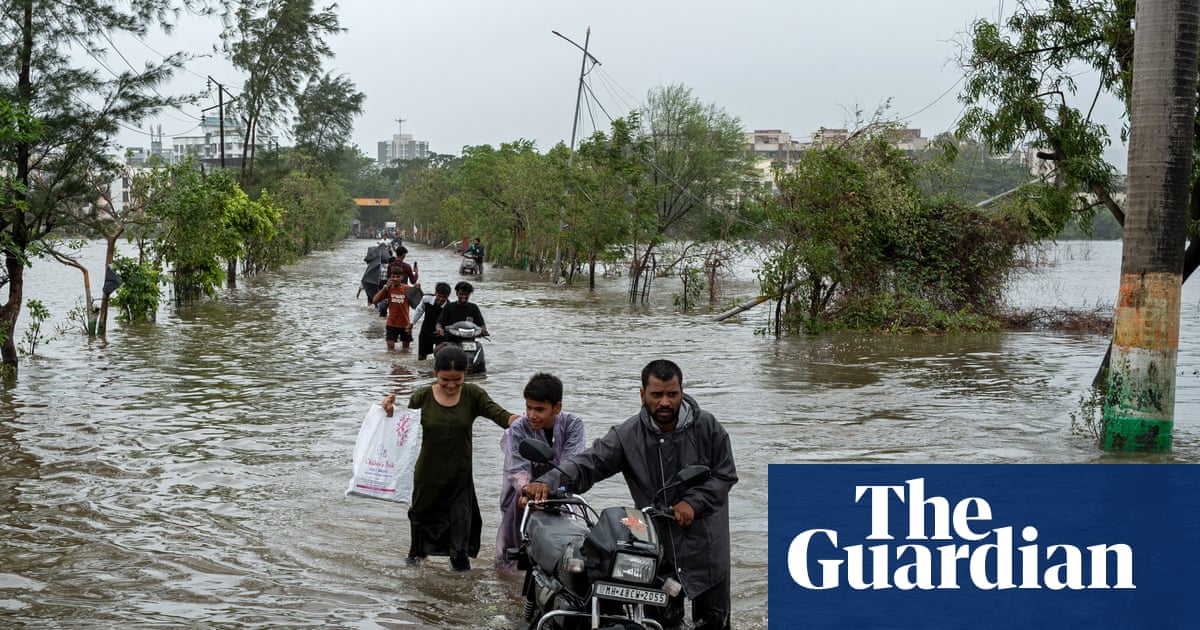
Nepal’s demand for climate justice, cited in the broader coverage of the report, carries a particular weight given the geography of harm. The Trishuli River flash floods that killed dozens in Nepal’s Nuwakot district were caused by the collapse of rock and glacial ice — exactly the kind of compound event the report describes. Prof Richard Betts, another report author, pointed to the Nepal flooding as a demonstration of why limiting overshoot matters. “We are committed to glacier loss,” he said. “We can stop them getting much worse by reducing emissions and limiting the amount of warming.”
Glacier loss is the quiet accumulator of climate harm. The report notes that heating of up to 3°C could cause glaciers to lose more than a quarter of their mass by 2100, raising sea levels by up to 13 cm. But that number understates the human dimension. Hundreds of millions of people depend on glacier-fed river systems for water, agriculture, and hydropower. When glaciers retreat, the damage is not just sea level rise — it is sudden flood risk, then chronic water scarcity, then economic collapse in regions that never signed a treaty about their own survival.
What Happens Next
The report recommends an “overshoot, peak and decline” pathway — a framework that acknowledges the world will warm past 1.5°C before temperatures fall again. This is a significant shift from the linear narratives that dominated climate policy for decades. It means governments must prepare for a period of intensifying disruption before any recovery begins. The political challenge is staggering: asking populations to accept worsening conditions while committing to a recovery that may not arrive for decades.
Carbon dioxide removal will be essential. The report is clear that net zero is “an essential milestone that cannot be skipped” and that removal through afforestation and other methods must accompany deep fossil fuel cuts, not replace them. But the scale required is enormous, and the technology is unproven at the necessary magnitude. The report’s caution about nature’s uncertain carbon storage capacity under higher warming adds another layer of risk to any strategy that relies on trees and soil as primary sinks.
The money question remains unanswered and uncomfortable. Adaptation finance for vulnerable nations has consistently fallen short of promises made at summits in Glasgow, Sharm el-Sheikh, and Dubai. If the 1.8C floor becomes reality, the adaptation bill grows significantly. Every fraction of a degree above 1.5°C multiplies the cost of protecting coastlines, securing food supplies, and managing water scarcity. The Paris Agreement’s $100 billion annual commitment was always insufficient. The new warming trajectory makes that figure look like a rounding error.
Inger Andersen, the UNEP executive director, warned that extreme heatwaves are already proving impacts will strike faster, hit harder, and last longer. The northern summer of 2026 — with record-breaking heat in Europe, wildfires near Omis in Croatia, and catastrophic flooding in Nepal — was not an anomaly. It was a preview.
The 1.8°C floor is not a prediction. It is a diagnosis. The prognosis depends entirely on what happens next — and for the first time in a UN report of this stature, the language makes clear that there is no comfortable path forward. The only variable is how much worse it gets before the world decides to act.