The $31.6 Trillion Gamble That Could Redefine Global Power
PwC forecasts $31.6 trillion in AI data center investment through 2050 — more than double US GDP. The US claims nearly half, but local backlash is already killing projects. Here's what the numbers really mean.
The Number Nobody Is Treating Seriously Enough
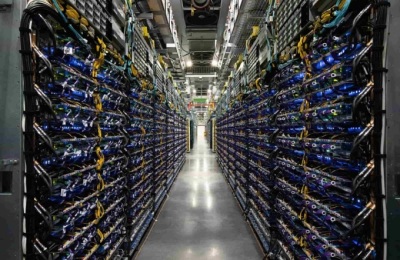
PwC released a report Wednesday forecasting $31.6 trillion in global AI data center investment through 2050. For context, the entire United States GDP is roughly $30 trillion. The number is not hyperbole — it is a statement that the next 25 years of physical infrastructure build-out for artificial intelligence will exceed every capital project in human history combined.
Railways. The internet. Electrification. All eclipsed.
But the headline number barely scratches the surface of what actually matters. The real story is where the money goes, who controls the chips powering it, and who gets left behind when communities say no.
What makes this forecast particularly destabilizing is its compounding nature. Each new data center doesn’t just consume capital — it trains models that demand even more compute, which demands more centers, which demands more power, more water, more land, more permitting battles. The feedback loop is self-reinforcing and accelerating. The $31.6 trillion figure isn’t a static target; it’s a floor that likely shifts upward as model capabilities outpace today’s most aggressive projections.
The US Takes Nearly Half — And It Already Invites Backlash
The United States is projected to absorb $15.1 trillion of that total, nearly half of all global spending. Asia-Pacific follows at $8.2 trillion, Europe at $5.6 trillion, the Middle East at $1.1 trillion, and Africa at a modest $255 billion. The distribution tells you everything about where the AI boom is concentrated — and where it faces friction.
Local opposition is already slowing the build-out. Data Center Watch recorded 75 projects worth at least $13 billion in the first quarter alone being delayed or killed outright by community resistance. The concerns are not abstract: environmental impact, water and energy consumption, and fears about AI’s broader social disruption. These are not NIMBY complaints in the traditional sense. They are structural bottlenecks that could reshape which regions actually get the infrastructure.
The pattern is repeatable and damning. In Texas, proposed facilities have faced pushback over strain on the regional grid during peak summer demand. In Ireland, the government has effectively paused new data center approvals in certain counties after existing installations pushed local electricity demand beyond grid capacity. In North Carolina, communities have organized around water usage concerns, with some facilities drawing millions of gallons daily for cooling. These aren’t isolated incidents — they’re early indicators of a global permitting crisis.
Every billion dollars stalled in community opposition is a billion dollars redirected elsewhere — or a timeline pushed further out. In an industry racing against competitors, delay is a strategic liability. Companies that can’t secure land, power, and water on schedule don’t just lose time; they lose positioning in a market where first-mover advantage compounds. The second-order effect is that capital will flow toward regions with faster permitting, weaker environmental review, and more accommodative local governments — potentially concentrating infrastructure even more aggressively than the current projections suggest.
The Nvidia Moat Is Showing Cracks — And Everyone Is Racing to Fill Them
The PwC report notes that the majority of spending flows into hardware, with Nvidia still dominating the AI semiconductor market. But the market dynamics shifting beneath that dominance are more significant than the report acknowledges.
OpenAI recently unveiled Jalapeño, its first custom ASIC designed specifically for its own training workloads. This is not a minor product launch. It is a signal that the largest AI company on Earth no longer wants to be dependent on a single supplier’s roadmap. Custom silicon gives OpenAI control over performance-per-watt, cost structure, and supply timing — the three variables that matter most at scale.
The implications are profound. When your primary hardware supplier also competes with you in the AI software layer — which Nvidia effectively does through partnerships with Microsoft and its own Clara platform ambitions — dependency becomes a strategic vulnerability. Jalapeño isn’t just about cost savings; it’s about aligned incentives. An in-house chip serves OpenAI’s research priorities, training workflows, and iteration speed without filtering through a third party’s product cycle.
Samsung is responding on the memory side. The company is doubling its HBM4 output, the high-bandwidth memory critical to training clusters. HBM is the bottleneck that determines how fast a GPU or ASIC can access its working data. Whoever controls HBM capacity at volume controls a chokepoint in the entire supply chain.
The memory shortage is already visible. HBM prices have surged as demand from Nvidia, AMD, and custom ASIC buyers collides with limited fabrication capacity — primarily at Samsung and SK Hynix. TSMC is entering the HBM race, which should ease constraints over time but won’t happen overnight. The second-order effect of this memory squeeze is that any company unable to secure HBM supply — regardless of how well-designed their chip is — faces a hard ceiling on production. Memory availability may ultimately determine market share more than raw compute performance.
These moves together mark the beginning of a post-Nvidia era in AI hardware. Nvidia’s current advantage is real — its CUDA ecosystem, its interconnect technology, its sheer volume of shipped training chips — but it is an advantage built on a monolithic architecture. Every major cloud provider and top AI lab now has an incentive to diversify. Google has TPU v4 pods already running. Amazon has Trainium. Microsoft is investing in Custom Silicon. The question is no longer whether alternative architectures emerge, but who builds them fast enough and at what cost.
The $50 Trillion Upside Scenario — And Why It Terrifies Planners
PwC’s “central scenario” is $31.6 trillion. The upside case — where AI adoption outpaces current projections — pushes that number to $50 trillion. That is nearly twice the US economy, deployed over a quarter-century into buildings, chips, cooling systems, power grids, and fiber optic cable.
To put that in perspective, the entire global semiconductor industry generated roughly $600 billion in revenue last year. A $50 trillion build-out would require scaling that output by an order of magnitude — not over decades, but in sustained annual increments that no fabrication network has ever sustained. The physics of silicon, the geography of rare earth mining, the capacity of shipyards building transformers — none of these constraints are theoretical. They are hard limits that will test the elasticity of global industrial policy.
This is not speculative fiction. Microsoft and Amazon are already constructing data center campuses at scales that strain local permitting processes and utility capacity. The gap between planned infrastructure and what communities will tolerate is the actual risk factor here. A $50 trillion build-out requires not just capital, but political license — and that is the scarcest resource in the equation.
The energy dimension deserves particular attention. Training a single frontier model now consumes megawatt-hours of electricity. The data centers that run those models consume megawatts continuously. The International Energy Agency has estimated that data centers could account for up to 8% of global electricity demand by 2026 if current trajectories hold. That’s comparable to the entire energy consumption of Japan. The grid simply wasn’t built for this. Upgrading transmission infrastructure takes a decade. Building new generation — nuclear, renewable, or otherwise — takes longer. The energy bottleneck may prove more binding than the chip bottleneck.
Who Wins, Who Loses, What Comes Next
Wins: Semiconductor suppliers with diverse portfolios — Samsung, SK Hynix, TSMC — because demand spans multiple architectures. Cloud providers with capital reserves and land access, because scale becomes a moat. Regions with willing local governments and available grid capacity, because they become the de facto AI hubs. The US likely secures the largest share, but only if it resolves its permitting and community opposition problems faster than Europe and Asia-Pacific.
Lithium and copper producers also stand to benefit enormously. A single data center requires tons of copper for wiring and transformers. The IEA projects copper demand from data centers alone could rise 20-fold by 2035. There simply isn’t enough mine capacity online to meet that — and opening new mines takes 7 to 10 years. This creates a secondary scarcity loop that will bid up commodity prices across the board.
Loses: Communities that cannot absorb the environmental and infrastructural burden of data center construction. Regional economies outside the established hub markets, where the $255 billion going to Africa illustrates how concentrated the benefits will be. Traditional chip suppliers who cannot pivot to custom ASIC design or next-generation memory. Companies betting everything on Nvidia without a diversification strategy.
The labor market will also punish laggards. Data center construction and operation require specialized skills — electrical engineering, thermal management, grid integration — that are in short supply. Wages in these categories are already rising. Companies and regions that can’t attract or train this workforce will be locked out regardless of how much capital they bring to the table.
What comes next: The next 18 months will determine which regions win the infrastructure race and which architectures survive. OpenAI’s Jalapeño and Samsung’s HBM4 push are early signals of a supply chain that is fragmenting away from a single-point dependency. The $31.6 trillion number is a forecast — but the real measurement will be how many of those 75 stalled projects get unstuck, and how many new ones face the same wall.
The second-order dynamics will matter as much as the first. If the US fails to streamline permitting, capital may reroute to Texas-independent grid zones, Canadian provinces with surplus hydroelectric capacity, or Middle Eastern states like Saudi Arabia and the UAE that are aggressively courting AI infrastructure with sovereign wealth and regulatory fast-tracks. The geographic concentration predicted by PwC is not destiny — it’s a baseline that assumes current political and regulatory conditions hold. They won’t.
The infrastructure build-out has begun. The question is who controls it, and who gets left on the wrong side of the grid.