Ace Combat 8 Is Betting Big on Cinematic Storytelling
Ace Combat 8's new trailer reveals a variable-wing fighter and an orbital kinetic weapon — signals that Bandai Namco is pushing the series toward increasingly ambitious, politically charged narratives.
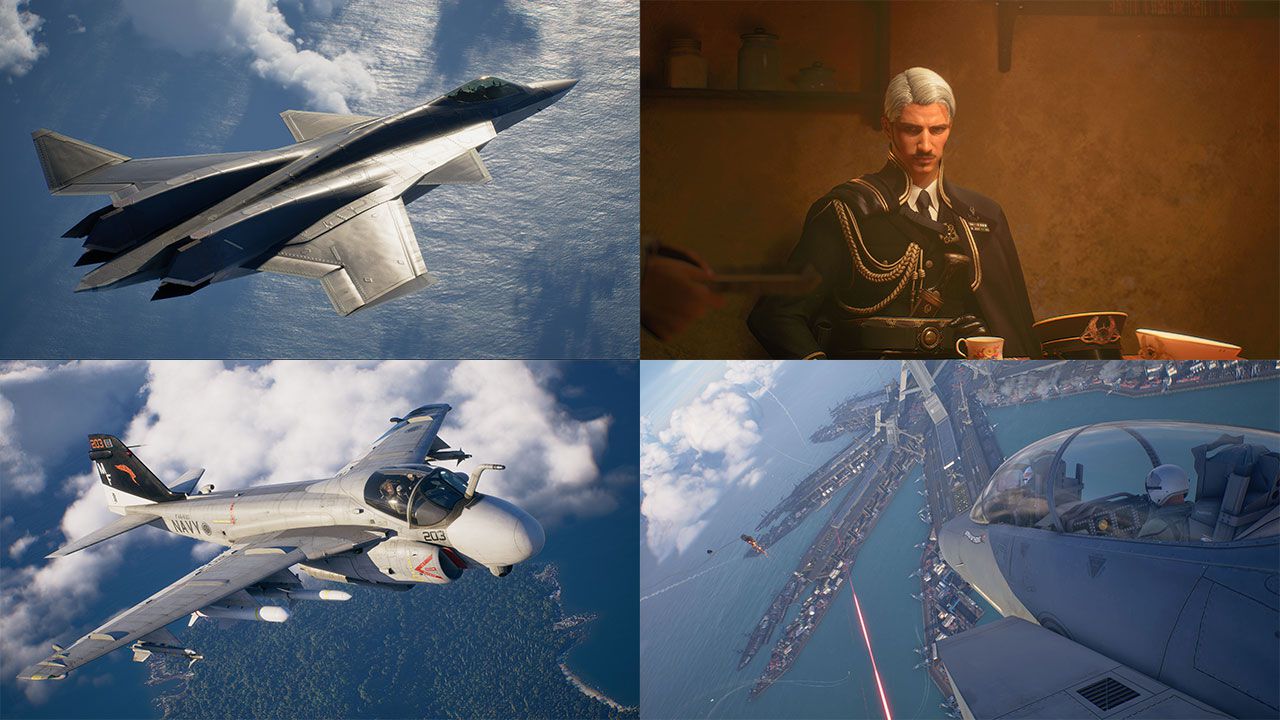
The myth is a lie
The protagonist of Ace Combat 8: Wings of the Veve is not who everyone thinks he is. Bandai Namco’s latest trailer confirms what the series has always hinted at: the legendary ace known as the Wings of Veve is a constructed identity, a propaganda symbol assembled around a random survivor pulled from the sea. That is not a gimmick. It is a thematic statement — and it changes what kind of game this series is trying to become.
Set in July 2029, the story opens with the Federation of Central Usea reeling from a surprise invasion by the Republic of Solatia. Its military is shattered, its territory occupied, and what remains of its naval aviation has fallen back on the aging aircraft carrier Endurance — now carrying refugees as much as warriors. The player’s character is rescued from a life raft and handed a name that does not belong to them. The Wings of Veve legend becomes a burden, not a birthright.
That premise alone signals a departure from the series’ traditional arc. Earlier entries built their drama around national rivalries and clear-cut heroes confronting existential threats. This is messier. The hero is an impostor. The cause is a crumbling state. The enemy has named characters behind its mask.
The enemies have faces
Two Solatia pilots are introduced with voice performance, backstory, and a dynamic that suggests genuine moral complexity.
Camille Tui, voiced by Aya Hirano, commands the elite Solatia fighter squadron Lux Lunae. She is described as a strategic mind who directs operations from distance, reshaping the battlefield without flying a single mission herself. Her counterpart is Kirish Toprak, voiced by Kenichi Suzumura — Solatia’s top ace, assigned to hunt down the Wings of Veve. By day he behaves like a gentleman; in combat, the switch is brutal. These are not archetypes. They are characters with agendas, loyalties, and the kind of interiority that the series has rarely afforded its antagonists.
On the player’s side sits D.D., a man sent by the En索 Order — a faction whose role in the conflict remains unclear. Charismatic, talkative, and resourceful, he operates out of the Endurance handling logistics and intelligence. His stated goal is to accomplish the Wings of Veve plan through skill alone, and he is searching for the person capable of delivering on that promise. That framing raises the stakes: if the legend is manufactured, what happens when the right person for the job is found — or fails?
The weapons are getting larger
The hardware on display pushes the franchise further into speculative territory, though not without precedent. The Megafloat Fatusia is a 6-kilometer-long floating fortress with a 2,000-meter runway, multi-layered structure, automated defense systems, and multi-function radar. It is designed to project air power independently of land-based infrastructure — a floating airbase that redefines forward deployment.
Then there is Thor’s Spear, a Solatia-operated orbital kinetic weapon derived from a Cold War-era Yuktobanian conceptual design for a nuclear alternative. Mounted on a space platform at 500 kilometers altitude, it fires heavy metal rods using pure kinetic energy — no warhead, no radioactive fallout, just mass and gravity accelerating to orbital velocities. The description emphasizes precision and scale: a weapon that can flatten a city without leaving fallout, the kind of tool a state needs when it wants to demonstrate power without triggering nuclear escalation.
These designs are not the first superweapons in Strangereal lore. The Erion orbital cannon appeared in Ace Combat 04. Space-based fighters featured in Aces Above. But the detail here is sharper, the descriptions more grounded in real engineering logic. The series is not reaching for spectacle — it is building a speculative framework that resembles near-future military strategy more than fantasy.
The aircraft roster is a timeline
The playable lineup confirms Bandai Namco is treating this as both a legacy exercise and a forward look. The FA-36 Game — an original variable-sweep-wing stealth carrier fighter with three-dimensional thrust-vectoring engines — is the flagship. Its nickname, derived from a gamecock, is a small detail that suggests the writing team is thinking about identity the way pilots think about aircraft: through lore, not specs.
But the rest of the roster spans decades of real aviation. The F-15E Strike Eagle, the F-16C Fighting Falcon, the A-6E Intruder, the Gripen E, the Su-35S Flanker-E, and the Su-47 Berkut. These are not decorations. Each one exists in the game for a reason, and each reason corresponds to a role in the campaign. The A-6E is a low-altitude precision striker with decades of upgrade history baked into its design. The Su-47’s forward-swept wings give it a silhouette that sets it apart visually and functionally. The Gripen E’s short-field capability means it can operate from damaged highways when airbases fall — a detail that reinforces the game’s theme of fighting without infrastructure.
Who wins, who loses
The winner here is the series itself. Ace Combat has always occupied a strange space in the flight combat genre — too story-driven for simulation purists, too flight-focused for narrative gamers. By leaning harder into cinematic storytelling with named antagonists, constructed heroism, and near-future weaponry, Bandai Namco is closing the gap. The risk is that the gameplay must match the ambition. A weaker campaign or shallow dogfighting would make the lore feel unearned.
The loser, if there is one, is the assumption that Ace Combat is a niche product. It is not. The franchise has a dedicated following, and this entry is positioning itself to attract players who want military fiction with emotional weight, not just dogfighting with a plot attached.
What happens next is a October 2, 2026 launch across PS5, Xbox Series X|S, and PC — a platform strategy that maximizes reach. The real test will be whether the narrative depth seen in these trailers translates to actual gameplay, and whether the variable-wing FA-36 Game offers enough mechanical novelty to justify its centerpiece status. Until then, the Wings of Veve remain a promise — a legend waiting to be tested.