What an AfD win in Saxony-Anhalt would actually do
The far-right AfD is poised to govern Saxony-Anhalt. Here is what its draft program would force, what it cannot, and why the real damage may be structural.
A test case for German democracy
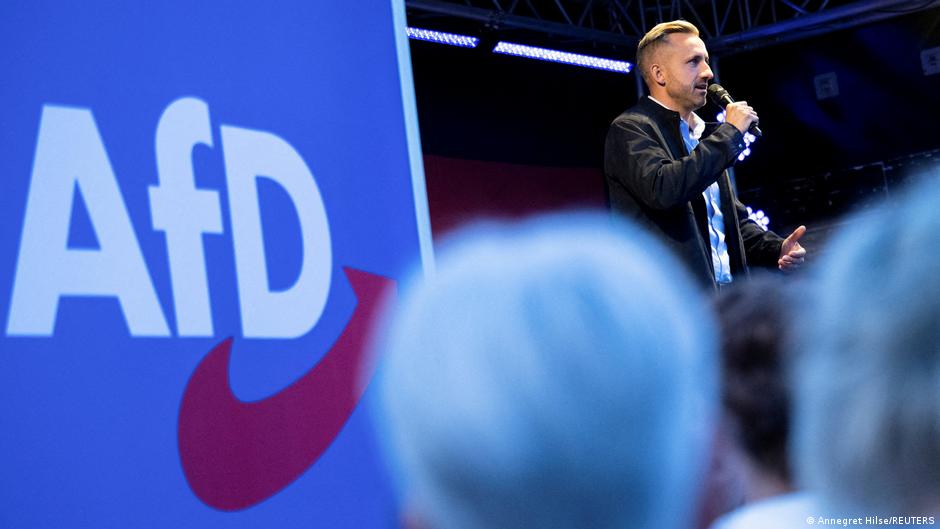
The Alternative for Germany is ahead in Saxony-Anhalt polls and could govern alone. Its lead candidate, Ulrich Siegmund, expects the premiership. The state party is classified by Germany’s domestic intelligence service as a confirmed far-right organization. Its draft government program is blunt: deport immigrants without residency from day one, dismantle integration spending, and create a “Remigration Task Force” inside the state administration.
None of this is merely symbolic. Even though a state government cannot rewrite federal law, an AfD minister-president will control the bureaucracy, set the tone in the Bundesrat, and create friction with every court, agency and municipal office below them. The question is not whether the party can implement everything in its platform. It is how much chaos and precedent it can generate before the law stops it.
Deportation promises that hit a legal wall
The AfD’s headline demand is swift mass deportation. Yet asylum and removal policy are federal competences. The states run reception centers and allocate resources, but Berlin decides who can be expelled and where. If Saxony-Anhalt simply refuses to cooperate, the federal government can enforce its rules through administrative channels and, eventually, the courts.
That does not make the AfD’s program harmless. Refusing to fund integration programs, restricting school access for undocumented children and staffing a remigration task force would still disrupt daily governance. Legal scholars note that separating immigrant children from regular classrooms would likely violate European law and Germany’s own constitutional guarantees. The federal government would have to step in, but enforcement takes time, and the social disruption would be immediate.
The skilled-worker squeeze gets worse
Saxony-Anhalt is one of Germany’s hardest-hit regions for depopulation. Its population has dropped from about 2.9 million at reunification to roughly 2.1 million today. Nursing, elderly care and technical trades are critically short. Economic researchers warn that an AfD government would deepen the shortage by making the state hostile to the very people it needs.
The AfD’s response is a voluntary return program offering a bonus for Germans living abroad to come home. How many would come, and how much the budget would cover, is unclear. Experts in labor markets note that skilled professionals have options across Germany and Europe. If a state signals that it welcomes only a narrow version of belonging, people who can leave will. That is the quiet cost of a platform built on exclusion.
Bundesrat leverage and the Russia question
German states shape federal policy through the Bundesrat. An AfD premier would gain a seat at that table and a microphone in national debates. The party’s platform calls for ending sanctions on Russia and reopening energy ties. Saxony-Anhalt cannot unilaterally import Russian oil, but a state leader can pressure ministers, coordinate with sympathetic peers and legitimize a softer stance on Moscow inside the governing coalition.
The AfD also wants Russian-language teaching expanded in schools and aims to repatriate Ukrainian refugees. Again, deportation authority rests with Berlin. Still, political pressure from a state government can shift funding priorities, slow administrative processes and signal to voters that the far right is now a governing force rather than a protest movement.
Citizen patrols and the boundaries of security
Perhaps the most provocative proposal is a voluntary citizen patrol described as a third pillar of local security alongside the police. The AfD argues officers are overwhelmed. Criminologists such as Thomas Feltes say the idea confuses community vigilance with state monopoly on force. A citizen patrol without clear legal authority risks becoming an informal enforcer, especially in a climate where immigrants are framed as a problem to be policed.
The danger is not only legal. Normalizing auxiliary surveillance can change how communities see public space. Residents report higher fear of crime where such groups operate, and the political message is unmistakable: the state defers to its critics rather than defending universal rights.
Culture, memory and the spending switch
On culture, the AfD wants to reframe Germany’s approach to its Nazi past, calling current memorial practices a “perpetuation of a guilt complex.” It opposes rainbow symbols in schools, rejects Bauhaus architecture as too globalist and proposes a patriotic cultural policy. Pro-democracy projects that currently receive state funding would lose support.
These moves are less about immediate policy and more about long-term institutional shaping. Curriculum changes influence generations. Cutting funding for civic education shifts resources toward parties and groups aligned with the government’s worldview. In a state already experiencing population decline and brain drain, an explicit retreat from pluralism could accelerate the exit of academics, artists and young professionals.
Who wins, who loses, what comes next
The AfD wins political normalization. It moves from opposition to administration, gains experience in budgeting and crisis management, and exports its agenda through the Bundesrat. Allies in other states watch and adopt tactics that survived judicial review. European partners recalibrate their assumptions about Germany’s far right.
Immigrants, refugee families and civil-society organizations lose first. Schools become more fragmented. Legal challenges multiply. Municipalities face conflicting orders from state and federal levels.
Germany’s federal system loses neutrality in areas where it should be firm. Courts will block the most illegal measures, but litigation slows action and drains resources. The political center hardens as mainstream parties either accommodate AfD demands or fracture over them.
The next twelve months matter. If the AfD forms a government in Saxony-Anhalt, expect immediate clashes over integration spending, school placements and police authority. Watch the Bundesrat for votes that normalize a softer Russia line. And monitor labor-market data: a state that tries to legislate belonging will feel the shortage quickly.
The real test is not whether Berlin stops every proposal. It is whether German institutions can absorb a governing far-right party without letting its agenda redefine what is acceptable elsewhere.