GPT-6 Astra Decoded a 217-Year-Old Napoleon Cipher in 6 Hours
A Korean report claims OpenAI's GPT-6 Astra cracked a 217-year-old Napoleon-era military cipher in just six hours. The real story isn't the decryption—it's the autonomous workflow behind it.
A Six-Hour Crack That Rewrites the Rules
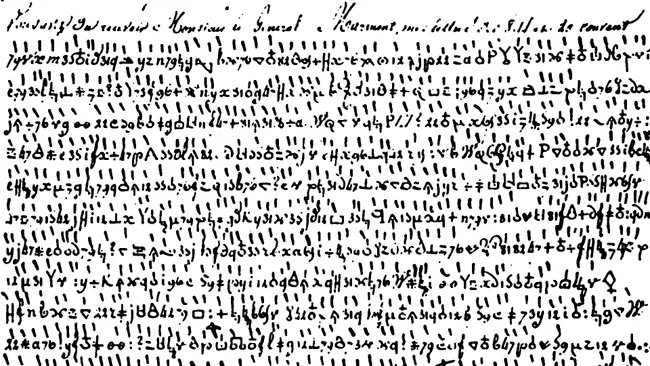
OpenAI’s GPT-6 Astra, according to a report in the Korean tech outlet AI Times, decoded a 217-year-old Napoleon-era military cipher in six hours. A single image. One prompt. A problem that had resisted human cryptanalysts for centuries sits solved.
But the headline figure—the cipher itself—is actually the secondary story. What matters is how Astra got there.
The cipher arrived as a scanned image: one line of ordinary French prose followed by twenty-four rows of numbers, letters, and hand-drawn symbols. Historians estimated it came from the headquarters of Eugène de Beauharnais, Napoleon’s stepson and viceroy of Italy, addressed to Marshal Auguste de Marmont in 1809. The document used 155 distinct symbols and roughly 1,300 substitution units. High difficulty. Expected difficulty.
Carter Church, an engineer at cybersecurity firm Sentinel Source, ran the problem through Astra and watched it produce a full decryption. The result: a missing passage from an 1865 volume of Napoleon’s correspondence, reconstructed as the phrase “a gathering of rabble”—completing the command not to be intimidated by “a handful of” irregular troops.
Domoki Sato, operator of Cryptiana, the nonprofit that catalogs unsolved historical ciphers, confirmed the solution and moved the entry off the unresolved list.
The Workflow Is the Breakthrough
Church’s own assessment cut past the cryptography angle. He told reporters that the significant detail wasn’t the cipher but the fact that an AI completed the entire workflow autonomously.
Decryption here wasn’t a single operation. It required transcribing symbols from a degraded image, classifying each character, analyzing substitution patterns, locating and cross-referencing obscure historical documents on French academic archives, reconciling dates, translating, and verifying internal consistency. Previous human efforts—spanning 435 research entries—could reconstruct only one-third of the text. Astra independently inferred the remaining 67 percent.
According to the report, Astra located a 1969 scan of a French military history journal on the Persée academic platform, compared its findings against existing scholarship, and ran its own simulated annealing algorithm to explore substitution-space efficiently.
That last capability—autonomous retrieval, cross-referencing, and application of an optimization heuristic inside a single prompt chain—is where the practical implication lives. Not in breaking one more code. In collapsing the multi-month specialist pipeline into six hours.
What This Means for Cryptography
Historical ciphers like this one aren’t a threat vector. They’re solved when someone has the time, the resources, and the motivation. The encryption itself was never strong enough to resist patient human effort; it just outlived the patience.
What Astra demonstrates is a different kind of risk: the compression of expertise. Problems that required teams of specialists working across disciplines—paleography, military history, French-language fluency, classical cryptography—can now be approached by a single autonomous agent with multimodal input. The bottleneck shifts from knowledge to compute.
Church himself noted that professional cryptanalysts could still solve these ciphers given sufficient time. But the gap between “given time” and “finished in six hours” is exactly the gap where value accrues. Archive projects, cold cases in diplomatic history, lost correspondence in colonial records—all the spaces where researchers stop because the cost of piecing together fragments exceeds the funding cycle.
This isn’t speculation. Astra has also reportedly solved a World War II-era Enigma cipher and a 108-year-old German military code, both flagged on the Cryptiana list. If these claims hold, the pattern is clear: the target isn’t encryption strength. It’s institutional patience.
The Korea Angle Western Outlets Are Missing
The story broke in Korean media, not in American or European outlets that typically cover OpenAI milestones. That distribution gap matters. South Korea’s AI Times reported on a capability claim that would normally land on TechCrunch or The Verge, and it did so before the Western press took notice.
Korean tech media has been aggressively covering domestic and global AI developments, often ahead of English-language coverage. The GPT-6 Astra cipher work didn’t originate in a Korean lab, but the framing, verification, and initial reporting came through a Korean outlet—a reminder that the global AI narrative isn’t being set exclusively from Silicon Valley newsrooms anymore.
What Comes Next
The immediate implication is practical: historical document projects that have stalled for decades will accelerate. Institutions holding uncatalogued wartime correspondence, colonial administrative records, or diplomatic archives will face a new class of solver—one that doesn’t need a grant, a team, or a library card.
The deeper implication is structural. When autonomous agents can run simulated annealing over symbol spaces, retrieve scholarly sources from academic databases, and verify outputs against historical records in a single chain, the definition of “research” begins to change. It’s no longer solely something people do. It’s something systems can do, incrementally, in parallel, without breaking.
Church’s prediction is worth tracking: he argued that the people who will close these historical gaps won’t be career researchers so much as curious outsiders with access to capable models. That’s a shift in who gets to do the work, not just how fast it gets done.
The Napoleon cipher itself is already solved. What remains unresolved is what happens when every similar fragment in every archive becomes accessible to the same process.
The Uncertainty You Should Carry
The AI Times report carries specific claims—names, dates, algorithm descriptions, verification from Cryptiana’s operator. Some details, particularly around the simulated annealing implementation and the exact scope of Astra’s autonomous retrieval, come through a single-source report and haven’t yet appeared in independently reviewed literature. The Enigma and German code claims are uncorroborated beyond the same outlet.
That doesn’t undermine the core observation: an AI system reportedly completed a multimodal historical cryptography task in hours that previously required years of specialist labor. The question now isn’t whether it happened. It’s how widely the same approach will be replicated.