AI Is the New Trump Trap, Not Iran
US residents are organizing against data centers at a scale that's crossing party lines and splitting conservatives. In Korea, where AI power demand is already straining grid policy, the American story is a warning about what happens when infrastructure outpaces politics.
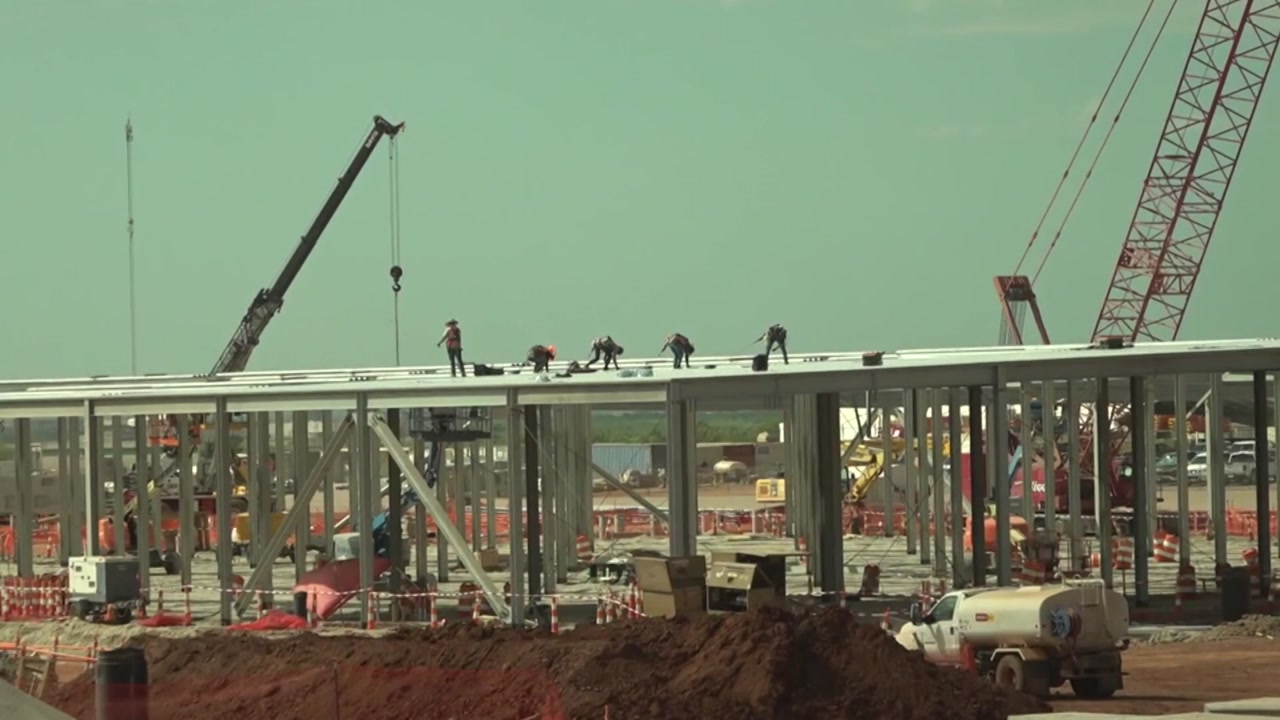
The Ground Beneath the Servers
A mother in Utah is standing in front of a proposed data center with a sign that says, simply, protect our children. In Texas, families are packing up because property values can no longer absorb the cost of living next to a server farm. This is not a fringe protest. It is spreading state by state, crossing party lines, and it may be the single most politically toxic issue facing Donald Trump heading into November.
The YTN report from late August captured something most English-language coverage is only now catching up to: the opposition is not just environmental or NIMBY. It is fiscal. Residents are facing higher electricity bills, strained water supplies, and housing market distortion — all in service of AI infrastructure that benefits companies headquartered far away.
Who Fights Data Centers Now
The most striking development in the footage is not the protests themselves but who is leading them. Conservative civic organizations have built a nationwide network opposing data center construction. That matters because the American right has historically been pro-industry, pro-development, and sympathetic to Trump’s economic nationalism. When conservatives turn against a major infrastructure project, it is not a scheduling disagreement. It is a realignment.
Texas Democratic Senate candidate James Talarico put it bluntly: stop the electricity cost spike, stop the water consumption. Republican candidates are largely echoing the same line. That bipartisan chorus is unusual for this kind of local infrastructure fight and signals how deeply the political wound has opened.
Trump’s response has been predictable. He summoned industry executives to the White House, pushed a jobs-and-tax revenue frame, and warned that the US will lose ground to other regions if it does not move fast. The argument is economically coherent. The politics are not tracking with it.
The Iran Distraction
Some analysts are now saying the Iran conflict may not be the political anchor dragging on Trump in 2026. The data center fight might be. That sounds like hyperbole until you consider the geography of the opposition. It is not concentrated in blue cities where Democrats can dismiss it as liberal elitism. It is in suburban and rural districts across swing states — the exact neighborhoods that decide midterms.
If voters in those districts feel their electricity bill, their water ration, and their housing market are being sacrificed for AI construction they did not ask for, they will punish incumbents regardless of party. That is the mechanism. It is mundane. It is also lethal in an election cycle where margin for error is thin.
What This Means for Korea
Korean readers should not treat this as a distant American controversy. The dynamics are already visible in South Korea, just compressed and managed differently.
Samsung SDI, SK Hynix, and LG Energy Solution are all expanding AI-related operations. Power demand from semiconductor and battery plants is climbing. The Korean government has been accelerating nuclear restarts and approving new facilities partly to meet this demand. The political friction has not yet reached US levels, but the underlying pressure is identical: AI infrastructure consumes extraordinary amounts of electricity and water, and the local communities hosting it often bear the cost while the revenue flows elsewhere.
Korea’s grid policy decisions this year — particularly around nuclear fuel licensing, reactor restart timelines, and industrial power pricing — are being shaped by the same AI demand curve that is provoking protests in Utah and Texas. The difference is that Korea’s energy governance is more centralized. Opposition gets routed through channels that can contain it. In the US system, that containment is failing.
The Numbers Nobody Is Citing Yet
The report does not include specific megawatt figures, and that omission is telling. Data center power consumption is one of those statistics that is fiercely contested because the numbers shift with every new facility announcement. What is clear is that a single large data center can draw as much power as a small city. Water usage for cooling is measured in millions of gallons per day. These are not marginal footprints.
Utilities in Utah and Texas are already signaling capacity constraints. The question for policymakers is not whether AI will consume more power. It is whether the grid can expand fast enough to prevent local communities from facing blackouts or rate spikes while tech companies import power from regions that did not consent to the construction.
Who Wins, Who Loses
Tech companies win if they secure power and zoning approval. Local governments win on paper through tax revenue agreements. Residents lose on two fronts: immediate cost increases and long-term environmental impact that is difficult to quantify until it is too late.
Trump wins the industry argument and loses the electoral one unless he delivers on cost mitigation for host communities. That requires either federal subsidies to cap residential electricity increases, fast-tracked nuclear or renewable capacity dedicated to data zones, or zoning reforms that give communities veto power — any of which would reshape the current development trajectory.
What Happens Next
If the November midterms turn into a referendum on data centers, expect three outcomes:
First, a wave of municipal bans or moratoriums on new facility construction in swing districts. Local governments will use zoning as a political shield.
Second, a federal response that attempts to preempt local control, likely framed as national AI competitiveness. That confrontation between state and federal authority will dominate legal and policy debates through 2027.
Third, a pricing mechanism change. If residential rates cannot absorb the demand shock, data centers will be pushed toward merchant power contracts or on-site generation — which means nuclear, which means another round of licensing battles.
Korea is watching all of this through a different lens. The policy question there is not whether to allow data center expansion. The question is whether the grid can deliver power cheaply enough to keep Korean AI and semiconductor firms competitive while avoiding the kind of community backlash that is destabilizing American politics.
The answer will determine whether Korea imports American friction or exports American solutions. Either way, the servers are coming online whether the voters are ready or not.