How AI Micro-Dramas Are Hijacking Korea's Instagram Feed
A 20-second AI-generated short drama just hit 4 million views on Instagram, revealing a fast-moving shift in how Asian audiences consume entertainment. The creator behind it is a 23-year-old photographer — not a studio — and the model is already spreading beyond Korea.
The 4-Million-View Short That Changed Everything
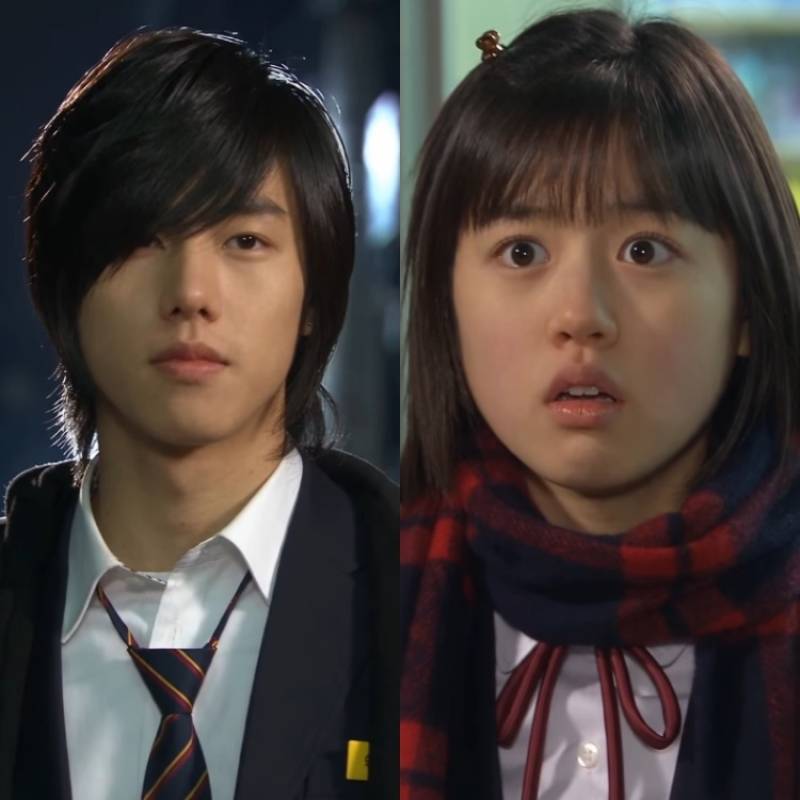
A 20-second clip recently racked up 4.11 million views on Instagram. It looks like a scene from a 2000s Korean sitcom — acne-splotched high school boy confesses to a pretty classmate, gets cruelly rejected, drops 20 kilograms overnight, then reappears in a handsome actor’s silhouette to the unmistakable strains of a mid-2000s drama OST. Except no actors, no camera crew, no set. It was all generated.
The account behind it, run by a 23-year-old named Choi Je-hyun, has 70,000 followers and zero formal AI training. He was a photographer. That background — an eye for lighting, composition, wardrobe — is exactly what separates his work from the flood of generic AI slop saturating the platform.
This is not a novelty. It’s a signal.
The Chinese Blueprint Korea Is Racing to Copy
AI-generated micro-dramas did not originate in Korea. They exploded first in China, where platforms like Kuaishou and Douyin have seen dozens of titles rack up billions of views and producers charge as little as a few hundred dollars per episode to pump out scripted, AI-staged content. Chinese companies then exported the format to the West through apps like ReelShort, Perfectshort, and DramaBox — vertical dramas that run 60 to 90 seconds per episode, delivered through paywalled subscriptions.
Korea has been slower to commercially exploit the format. But what Choi Je-hyun and a small cluster of Korean accounts are doing right now — posting free, algorithm-optimized, emotionally dense 15-to-30-second stories on Instagram Reels — is arguably closer to the endgame than the ReelShort model. It proves the format works without a paywall, without a dedicated app, and without a corporate studio behind it. A single person can build an audience this large with nothing but a Midjourney subscription and a film student’s sense of pacing.
That is the more dangerous iteration, and it is spreading.
Nostalgia as a Technology Stack
Choi’s account is called Mongttang Geochim Eopsi Sunpung Gamja Byeol — a portmanteau of four beloved 2000s Korean sitcoms: Mongttang Nae Sarang, Geochim Eopsi Haikeik, Sunpung Sanbuinga, and Gamjabyeol. The name alone is a metadata strategy. It signals the genre instantly to anyone who grew up watching those shows.
But the nostalgia is deeper than a reference list. Choi researches hairstyles, beaded accessories, primary-color cardigans, plaid school uniforms, interior decor, signage typography, and even the color grading of CRT-era television sets. He studies how 2000s Korean characters paused before delivering a punchline, how a romantic confession sounded, how anger was physically performed on screen. The result is indistinguishable from actual broadcast footage from that era — except it never existed.
This level of period-accurate worldbuilding is what makes the format viable at scale. The algorithm rewards watch-through rate, and watch-through rate depends on emotional recognition. A viewer who feels, within two seconds, that they know exactly what kind of show this is will keep watching. A viewer who sees generic AI faces will scroll past. Choi’s technical edge is not the AI — it is his editorial obsession with a specific cultural moment.
The Creator Economy Is Already Rewiring Itself
Other Korean accounts are following the same path. Nojeupuseukeyskye is building mythological worldviews inspired by Korean shamanism and folklore using the same technique. Another account called Jihyun is recreating 2000s Japanese youth cinema aesthetics. None use live actors. All are attracting hundreds of thousands of views per post.
This matters because it demonstrates a structural shift in how entertainment content is being produced in Asia. The traditional gatekeepers — broadcast networks, production companies, talent agencies — are being bypassed entirely. The content lives on a Western social platform, targets a Korean audience, and is made by someone who has never worked in the industry they are parodying.
The implication for Western media companies is straightforward and uncomfortable. If a single 23-year-old in Seoul can produce narrative content that outperforms studio-backed shorts on Instagram, the production cost barrier that protected traditional distributors is effectively gone. The next wave of this will not come from a studio. It will come from someone who already understands visual storytelling and adds AI as a production layer — exactly what Choi describes when he frames himself as a director and the AI as his performer.
What Happens Next
The Chinese micro-drama industry is already professionalizing. Production houses are hiring dedicated prompt engineers, story editors, and AI art directors. Revenue models are being tested. Korean platforms are watching closely and will likely institutionalize the format within 12 to 18 months.
Instagram is not optimized for serialized narrative the way TikTok or dedicated drama apps are. That means the current viral moments are largely organic — driven by shareability and comment engagement rather than algorithmic recommendation for story continuation. As Meta builds better tools for serialized short-form content, the same model will scale further. Expect Chinese production companies to enter the Korean Instagram space directly, and expect Korean creators to begin licensing their AI-generated IPs into longer formats.
Choi Je-hyun has already moved past short-form into AI-assisted short films. The trajectory is clear: the format that began as an Instagram novelty is becoming a legitimate production pipeline.
The core insight from this story is simpler than the technology suggests. AI does not replace the storyteller. It amplifies the one who already knows what to show and why. The 4-million-view short that started this conversation was successful not because the AI was impressive, but because the human behind it had a point of view — a specific era, a specific emotion, a specific memory that millions of viewers also carry. That is the asset. Everything else is just execution.