Why a Korean Film About Assassins Triggered a Culture War
A Korean film about the 1974 assassination of First Lady Yuk Young-so is facing political backlash that has spilled beyond South Korea's borders — from a hometown screening cancellation to a Singapore film festival bowing to pressure.
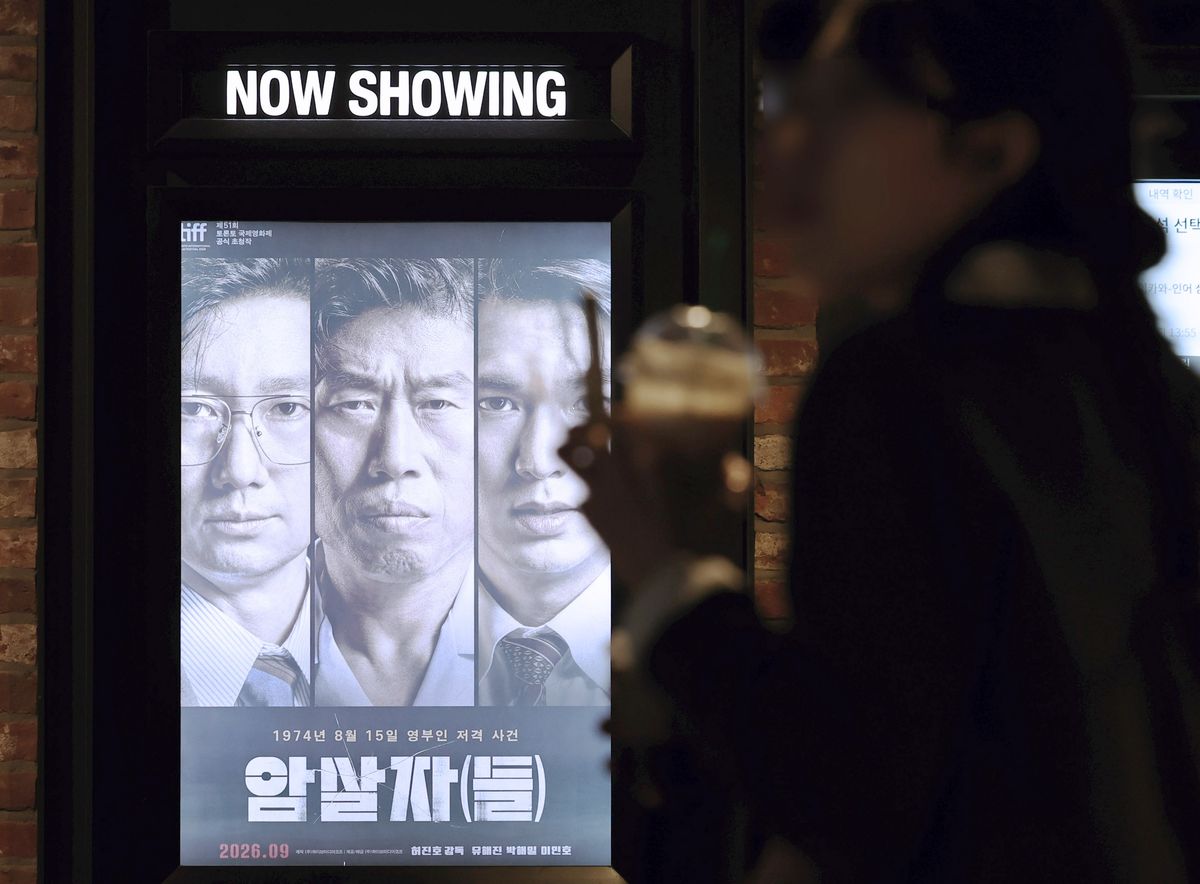
The Screen That Wouldn’t Play
A CGV in Gumi — a cinema chain known for playing everything from arthouse dramas to summer blockbusters — chose not to screen one film this week. Not because of technical failure or low attendance. Because the film, titled ‘암살자(들)’ (The Assassins), depicts the 1974 assassination of First Lady Yuk Young-so, wife of former president Park Chung-hee. And because that act of omission in a mid-sized city in north-central Korea was one visible symptom of something much larger: a coordinated political campaign to control how South Korea remembers its past.
The decision came on October 6, after weeks of rallies outside Park’s birthplace — a modest house-turned-museum that has become an unofficial shrine and, increasingly, a frontline in Korea’s history wars. Conservative groups including the Park Chung-hee Birthplace Preservation Society held a protest there on October 30, accusing the film of distorting historical facts and damaging the late president’s honor. Another demonstration followed at local theaters on October 6.
CGV Gumi is not company-operated; it is run by a contracted operator who sets the schedule independently. The chain’s headquarters did not issue a nationwide withdrawal. But the distinction matters less than the fact that the film was pulled from a town where Park was born and raised — a place where the memory of his rule carries weight far beyond its 260,000 residents. Local business owners who had booked group screenings reported receiving unexpected calls from constituents demanding the showings be canceled, a detail that underscores how social pressure, not just institutional authority, became an enforcement mechanism.
The Political Escalation
What makes this story unusual is not that a film about a real assassination has drawn criticism. It is how fast and how high the criticism climbed.
On October 6, lawmakers from the conservative People Power Party’s Daegu-Gyeongbuk delegation — Park’s home region and his most loyal political base — held a press conference at the National Assembly. Their demands were specific and sweeping: the production company should make a public apology worth a hundredfold, halt all screenings immediately, and — notably — the government should request that the Singapore International Film Festival withdraw the film from its opening slot.
The escalation from local protest to international diplomatic pressure is the signal here. Korea’s culture ministry has already weighed in, framing the film as potentially divisive. The education ministry has launched its own inquiry into whether the depiction constitutes historical revisionism. The film, which opened on October 23, has become the latest flashpoint in a broader conflict over how South Korea narrates its authoritarian past — a conflict that no longer stays within Korean borders.
Underlying the backlash is a deeper struggle over Park Chung-hee’s legacy. For decades, the official narrative in conservative circles has emphasized his role in orchestrating Korea’s economic miracle — the “Miracle on the Han River” — while downplaying the cost: political repression, labor exploitation, and the centralization of power that enabled the very assassination the film dramatizes. Progressive historians and filmmakers have spent years pushing back. The Assassins represents the latest creative work to enter that fray, and its targeting reveals how politically charged even artistic interpretation has become.
The Singapore Incident
The Singapore International Film Festival had selected ‘The Assassins’ as its opening film — a prestigious positioning that signals curatorial intent and a commitment to bold, conversation-starting cinema. Conservative lawmakers then wrote to festival organizers, pressing for the film’s removal through formal diplomatic channels.
Within days, the festival announced it would no longer screen the film. It did not publicly attribute the change to the lawmakers’ letter. But the timing was unmistakable. The decision drew immediate criticism from filmmakers and cultural commentators who saw it as a precedent: a foreign festival, responding to pressure from a domestic political faction in another country, removing a film before it could be seen.
Industry observers noted that Singapore, while culturally connected to East Asia, has traditionally positioned itself as a neutral forum for Asian cinema — precisely the kind of space where difficult historical narratives might safely air. Its retreat raises questions about whether that positioning is sustainable as regional political tensions intensify. A festival programmer in Seoul, speaking on condition of anonymity, described the decision as a quiet betrayal of the very principle that makes international film festivals valuable: the ability to screen work that home institutions might prefer to ignore.
This is not the first time East Asian culture wars have crossed borders. China’s censorship apparatus has long influenced programming at festivals in Taiwan, Hong Kong, and beyond — but that influence flows top-down from an authoritarian state. Japan’s disputes over comfort women narratives have spilled into museum exhibitions and film selections across the region. But Korea’s exported pressure is qualitatively different. It is not state censorship imposed on its own productions. It is a political faction within a democracy applying pressure to institutions abroad — and getting results. The distinction matters because it suggests a model that other democratic societies with historical grievances could replicate.
Second-Order Effects
The immediate consequences are visible — a cancelled screening, a withdrawn film, a protest site. But the second-order effects are harder to measure and likely more significant. Distribution operators, already operating on thin margins, now face a new variable in their booking decisions: the risk that a historically charged film will become a lightning rod for organized backlash. Cinemas in cities with significant conservative populations may preemptively decline similar projects. Film festivals may begin self-censoring, avoiding controversial works before any external pressure arrives.
Investors in Korean cinema are already recalculating. A producer at a mid-tier Seoul company noted that greenlighting committees are now asking about a project’s political sensitivity alongside its commercial potential — a shift that could narrow the range of stories told, particularly those dealing with modern Korean history. Younger filmmakers, who have increasingly turned to historical subjects as a way of processing their country’s unresolved past, may find the field closing around them even as the demand for such work grows.
There is also a gender dimension worth noting. Yuk Young-so’s assassination remains one of the most consequential yet underexamined events in Korean modern history, and the film’s focus on her death — rather than on Park’s political legacy — reflects a broader trend of Korean cinema centering women’s experiences during the authoritarian era. The backlash, then, is not only about historical interpretation but about whose suffering gets dramatized and whose gets honored.
Who Wins, Who Loses
The immediate winners are clear: conservative groups that successfully weaponized the film controversy to enforce a single approved narrative of Park Chung-hee’s era. Park is a deeply polarizing figure — credited by some with Korea’s economic transformation, condemned by others for authoritarian rule and the very assassination that claimed his wife’s life. The film’s decision to dramatize that event, rather than side with official hagiography, made it a target.
The losers are more diffuse but no less real. Filmmakers working on historically charged subjects now face a new calculus: not only domestic backlash, but the risk that a foreign festival might cancel a screening to avoid entanglement. Critics of the Park era lose the chance to see their work reach international audiences through established cultural channels. And Korean cinema — already under financial strain from declining theatrical attendance and the dominance of streaming platforms — loses a tool that could have expanded its reach.
International distributors, too, bear costs. A sales agent in Hong Kong noted that buyer confidence in Korean co-productions with historical themes has weakened, not because of any change in quality or market demand, but because the political risk premium has risen. That premium will eventually translate into fewer projects getting funded.
What Happens Next
The film is still screening in parts of Seoul and other major cities. ‘The Assassins’ has not been banned domestically, and South Korea’s constitutional framework does not currently allow the kind of outright suppression seen in neighboring authoritarian states. But the pressure campaign has achieved something subtler: self-censorship by distribution operators, hesitation by festivals, and a chilling effect that extends far beyond one movie.
Legal challenges are expected. A media law firm in Seoul confirmed it has fielded inquiries from multiple production companies seeking to understand their protections against third-party interference in exhibition. Whether existing defamation and anti-interference laws can withstand claims grounded in political pressure rather than legal action remains an open question.
The film’s producers have denied that the work was designed to distort history or deny established facts. They maintain it is a dramatic interpretation, not a historical document. In a normal cycle, that distinction would be sufficient. But the political machinery assembled around this film suggests the debate is no longer about the accuracy of a screenplay. It is about who gets to decide what stories about Park Chung-hee can be told — and where those stories are allowed to travel.
The answer to that question will shape Korean cinema for years. If the precedent holds — that a domestic political faction can effectively veto a film’s international itinerary — then Korean filmmakers will face not only their own government’s expectations but the diplomatic sensitivities of every partner country. If it does not, the incident will stand as a landmark case in the ongoing struggle for creative freedom in a society still reckoning with its authoritarian past. The film itself may yet outlast the controversy. But the damage to the ecosystem that produces such films is real, measurable, and likely irreversible.