Why the AI Selloff Is Rewriting the Mega-Cap Rule
Midterm elections delivered anti-AI candidates into office, triggering the worst tech rout in 18 months. The real story is what happens to the mega-cap concentration thesis that has ruled markets since 2023.
The election result no one priced in
The U.S. midterm elections produced something markets hadn’t fully anticipated: a Democratic sweep that carried anti-AI and data-center-opponent candidates into office, including Gov.-elect Gina Hinojosa in Texas, the single largest data-center market in the country. The market read that result not as a policy footnote but as a structural risk to the AI infrastructure buildout that has underwritten every major tech valuation since 2023.
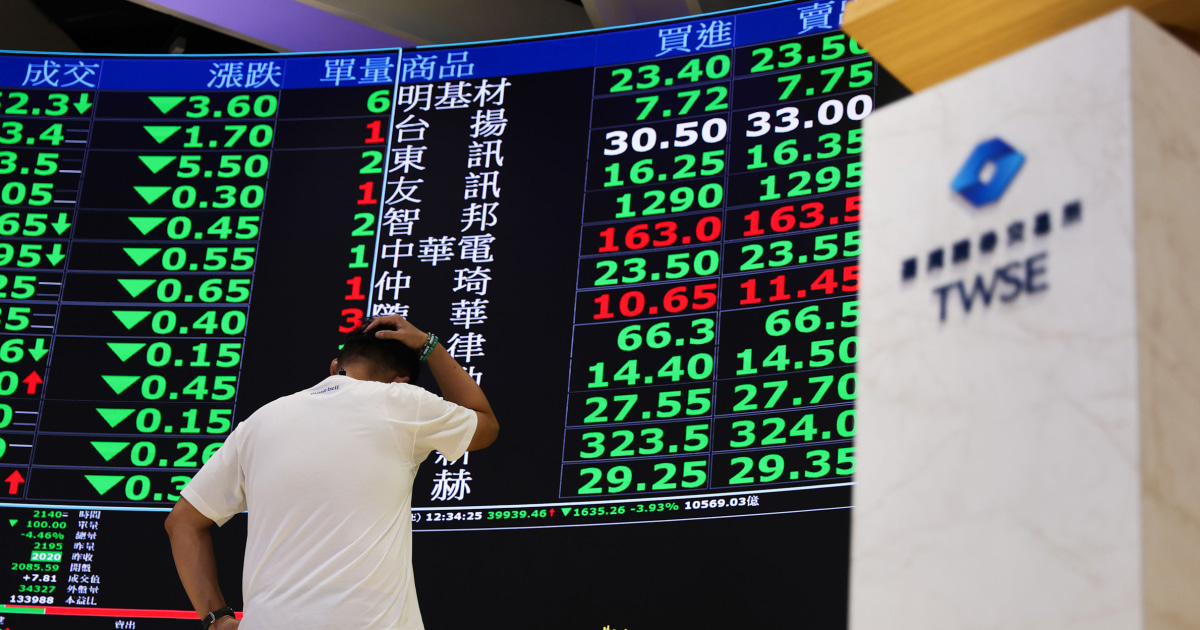
The selling started Thursday. The Nasdaq 100 shed 6.3 percent, erasing roughly $2.3 billion in market value. The S&P 500 dropped 4.4 percent, wiping out $2.8 trillion — its worst single day in 18 months, a figure last seen when former President Donald Trump’s global tariffs set markets reeling. Asian markets opened Friday into a wave of red. South Korea’s Kospi tumbled more than 8 percent before triggering a circuit breaker. Taiwan’s TAIEX fell 9 percent. Japan’s Nikkei 225 dropped as much as 6 percent, pushing it into bear-market territory — its worst weekly performance since 2020.
Europe followed. London’s FTSE 100 fell nearly 2 percent. Frankfurt’s DAX and Paris’s CAC 40 took similar hits.
Who is actually paying the price
The magnitude of the selloff maps almost perfectly onto exposure to U.S. AI capital expenditure. Charu Chanana, chief investment strategist at SAXO Markets, put it plainly: markets are being punished according to their dependence on the U.S. AI infrastructure cycle. That means Taiwan and South Korea — home to TSMC, Samsung, and SK Hynix — took the hardest blows because they sit at the narrowest point of the supply chain.
Samsung and SK Hynix each dropped more than 10 percent in early Asian trading on Friday. Both companies are essential suppliers of high-bandwidth memory for AI data centers. Their collapse reflected a simple realization: if U.S. regulation slows data-center construction, the orders that fund these companies’ valuations slow with it.
China offered a different shape of loss. Model maker Z.ai had surged 2,000 percent in June after its January debut, one of the most dramatic short-term valuations in recent memory. It has since shed more than 80 percent from its peak and lost another 10 percent on Friday. China’s Star 50 index — which tracks semiconductor and AI leaders — now sits at half its June peak, with roughly half a trillion dollars in market value gone. The Chinese AI bubble, at least in its most speculative corners, appears to have burst.
The political signal behind the sell-off
The anti-AI candidates who won on Tuesday are not a fringe faction. Several are entering office in states and districts where data-center development has been most aggressive — and most controversial. Governor-elect Hinojosa’s victory in Texas matters because Texas is the largest data-center market in the country. A Congress that includes voices skeptical of AI infrastructure will find it easier to push for environmental reviews, zoning restrictions, and energy-use caps on the facilities that cloud providers and model developers have been building at scale.
Delays and additional compliance costs would not stop the AI buildout. They would slow it, raise the per-unit cost of deployment, and — crucially — compress the profit margins that have justified the current valuations of both the model developers and the hardware makers supplying them. Investors do not sell stocks because regulation exists. They sell because regulation changes the math.
What this means for the mega-cap thesis
The most important implication of this rout is not the size of the drop but what it reveals about the market’s underlying structure. Since 2023, global equity returns have been dominated by a handful of mega-cap technology names whose valuations have been built on a shared assumption: that AI investment will continue accelerating regardless of political headwinds. That assumption is now being tested.
The concentration thesis worked because capital expenditure on AI infrastructure appeared unstoppable. Companies like Microsoft, Amazon, Google, and Meta committed to tens of billions in spending each year. Asian manufacturers built their growth projections on those commitments. When the political landscape shifted, the entire chain of assumptions came under pressure at once.
Tai Hui, J.P. Morgan’s APAC chief market strategist, offered a useful framing. The demand for computing power may find new pathways even if the gold rush hits regulatory friction, he said — and the picks and shovels will still be needed. But the analogy contains an uncomfortable truth for investors who bought the concentration thesis: if gold becomes harder to mine, the value of the pick-and-shovel business shrinks too, even if it does not disappear.
Where Asia stands now
For all the damage, most Asian indexes remain above their levels from a year ago. South Korea’s Kospi is up roughly 25 percent year to date. Japan’s Nikkei is up about 13 percent. Taiwan’s Technology Index has climbed 47 percent. The question is whether those gains were built on sustainable demand or on the belief that the AI capex cycle was politically immune.
Chinese equities offer a cautionary tale. As Chanana noted, China treats AI and semiconductor self-sufficiency as strategic national priorities, which means investment can continue for reasons beyond immediate profitability — technological independence, industrial competitiveness, national security. That logic sustained Chinese AI valuations longer than pure market fundamentals might have. But it also means the government, not the market, ultimately decides when to pull the plug. The recent crash in Z.ai and the Star 50 shows what happens when speculative positioning runs into reality.
South Korea has no such strategic cushion for its memory makers. Samsung and SK Hynix are commercial players whose fortunes are tied directly to U.S. demand. Their vulnerability is their exposure.
What comes next
The immediate trajectory depends on two variables: how aggressively the new Congress moves to regulate AI infrastructure, and whether the megacap tech companies adjust their capex plans in response. If regulation slows the buildout, hardware suppliers face the most direct damage. If companies absorb the costs and continue spending, the selloff may prove transient — a brutal but brief repricing rather than a structural shift.
The longer-term implication is harder to dismiss. The market’s mega-cap concentration was never just about technology. It was about confidence that the AI investment cycle was immune to political friction. That confidence has been shaken. How deeply it recovers will determine whether this rout is a correction or a turning point.