Why the $4.7 Trillion Wipeout Changes Everything for AI
Democratic control of Congress and key governorships has shattered the AI infrastructure thesis overnight. Here's why today's $4.7 trillion wipeout isn't a normal correction — it's a structural reckoning.
The Thesis Cracked
For months, the AI stock rally ran on a single implicit assumption: datacenters will appear wherever demand appears. Build them fast enough, and the chips move. Lay the fiber, rack the GPUs, repeat. The valuation multiples on every major AI play — Nvidia, the broad semiconductor complex, the software companies selling into infra spend — rested on that pipeline being open.
Then came Tuesday night’s election results, and the pipeline looked suddenly uncertain.
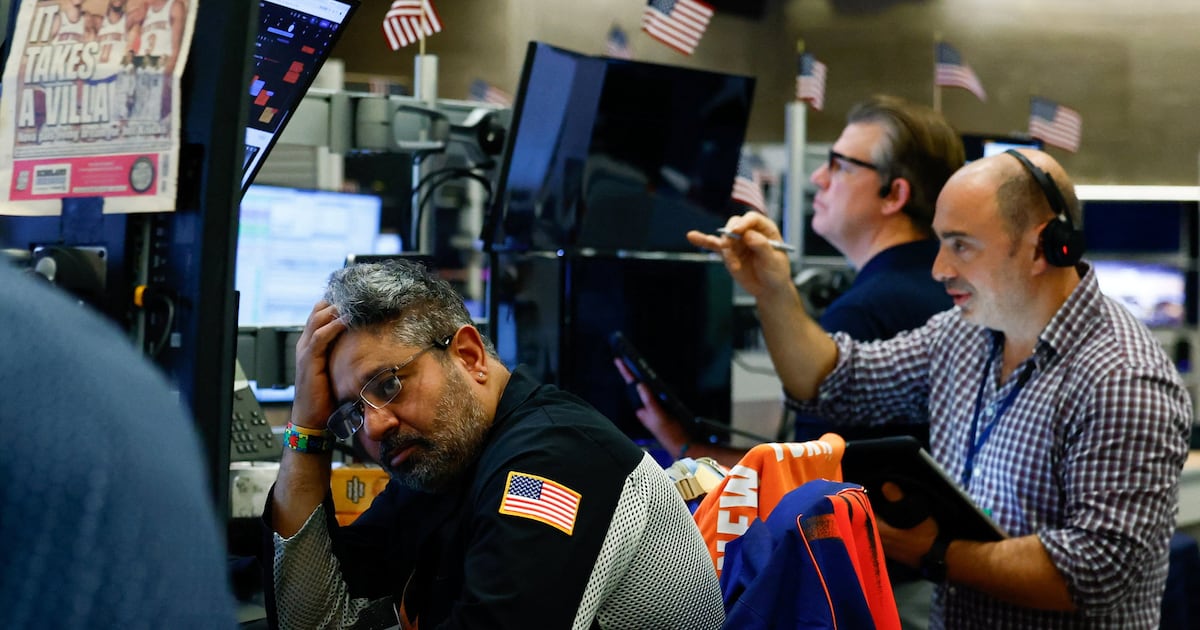
Democratic control of both chambers, plus victories in governorships across states where datacenter development is already politically contested, triggered a wave of re-pricing that erased roughly $3.5 trillion in global market capitalization in a single trading session. That figure comes from Nikkei’s compilation, using QUICK and FactSet data. Japan’s Nikkei fell 6.0 percent on Wednesday alone, its worst one-day drop since October 1987 and August 2024. The SOX index, which tracks the semis that powered this entire cycle, shed 12.2 percent in a single day.
This is not a routine pullback.
Who Lost, Who Gained, What Comes Next
The direct losers are obvious: semiconductor designers, foundries, memory producers, and any company whose revenue story depends on capex acceleration. Nvidia sold off sharply. Micron Technology cratered. TSMC touched the daily circuit-breaker limit on Taiwan, prompting Huang Kun-hsuan, head of Taiwan’s executive yuan, to publicly urge financial regulators to make “swift judgments” to stabilize the market — a remarkable step for a sitting premier-level official to take during market hours.
SoftBank Group, which bet heavily on Arm Holdings as a proxy for chip-design demand, saw that position drop nearly 17 percent in two days. Kioxia Holdings fell more than 23 percent. Goldman Sachs’ Tokyo-based deputy president Takayuki Ishibashi told Nikkei that unlike past drawdowns, there is no obvious catalyst on the horizon to trigger a sharp recovery, and sentiment among investors has shifted toward something closer to resignation.
The indirect losses stretch further. Any company that priced growth assuming cheap, abundant energy and land for datacenter construction now faces higher input costs or longer timelines. Cloud providers who overextended on capacity plans may find their leverage working against them if permitting slows. Even the consumer-facing AI plays that never built a single datacenter carry guilt by association right now.
There are no clear winners from a market this violent, but the structural beneficiaries would be incumbents with existing permits and power agreements — companies that already sit on datacenter capacity while newcomers face a harder path. That dynamic favors Scaleway-type players in Europe, Equinix and Digital Realty in North America, and the larger cloud builders who can weather a delay without missing a quarter.
The Infrastructure Risk Nobody Was Pricing In
What makes this episode different from the routine tech sell-offs of recent years is the nature of the shock. This wasn’t earnings disappointment, regulatory action, or a geopolitical spike. It was political realignment touching the physical footprint of the AI economy.
Datacenter construction is local politics in a way few technology investors seem to have fully absorbed. Permitting runs through city councils and state governments. Power grid interconnections require utilities commissions. Zoning changes face county boards. When the party in charge of those institutions signals reluctance — or when the coalition shifts in ways that prioritize housing, environmental review, or legacy energy interests over new industrial buildout — the timeline stretches.
Texas, a state where several major AI datacenter projects are planned, elected a Democratic governor in this cycle. States with active datacenter zoning fights — Virginia, Ohio, Pennsylvania — all sent new signals. The assumption that red and blue borders don’t matter for semiconductor demand just got a lot more complicated.
Nikkei put it directly: investors now have to revisit the logic that supported the rally.
What Happens Next
Three scenarios are plausible, and none of them look like the old trajectory resuming intact.
The pause scenario sees datacenter announcements slow to a crawl while developers renegotiate power purchase agreements and navigate new political realities. Valuations compress gradually rather than collapsing in another leg down. Companies with secured capacity hold their ground; companies still early in their build plans scramble. This plays out over six to twelve months and produces a much more bifurcated market than the one that existed before the sell-off.
The delay-and-doubt scenario is darker. Permitting battles attract litigation. Grid interconnection queues widen further — they were already long before this. AI capex plans get revised downward publicly, and the earnings guidance cascade begins. This is the scenario that keeps institutional risk officers awake. The market already prices in continuous growth; anything that looks like a secular slowdown forces position rebalancing across funds that assumed otherwise.
The adaptation scenario is the one most insiders privately want to believe. Developers pivot to repowering existing facilities rather than greenfield builds. Modular datacenter designs ship faster and sidestep some permitting. Companies that already own power capacity monetize surplus. In this version, the election reshuffles the competitive landscape but doesn’t kill the thesis. The question is whether the timeline compression that defined the cycle — building months instead of years — survives at all.
The evidence so far points toward scenario two, with elements of one bleeding in. The velocity of the sell-off tells you what the market believes: the old assumptions were tighter than anyone admitted, and the political variables were always part of the equation even though nobody was pricing them explicitly.
Why This Matters Beyond Wall Street
The global ripple is already visible. Japan’s market, which had been finding footing after last year’s volatility, gave back seven months of gains. Korea’s semiconductor names would follow if the trend extends. Emerging-market currencies tied to chip exports face renewed pressure. The entire architecture of the AI investment thesis — borrowed growth, accelerated deployment, infrastructure-first capital allocation — just hit a wall it didn’t know was there.
What’s striking is how unprepared the market seems to have been for exactly this kind of political friction. For two years, the dominant narrative treated datacenter buildout as an engineering problem with an unlimited budget line. The election result reframed it as a governance problem, and governance problems don’t resolve on a quarterly cadence.
The $4.7 trillion disappearance is painful headline math. The more important number is whatever fraction of AI capex plans now carry a political risk discount that the market hasn’t fully applied yet. That gap — between what analysts projected and what the new political reality allows — is where the next leg of this story lives.
For everyone who bought the narrative that AI demand simply outpaces supply constraints, this was the bill coming due.