AIDS accidentally birthed a multibillion-dollar market betting on death
In the 1980s, desperate AIDS patients sold their life insurance policies to survive. That humanitarian workaround became the blueprint for a sophisticated financial market where investors profit from mortality. Today it is worth billions and raises timeless questions about who gets to monetize human suffering.
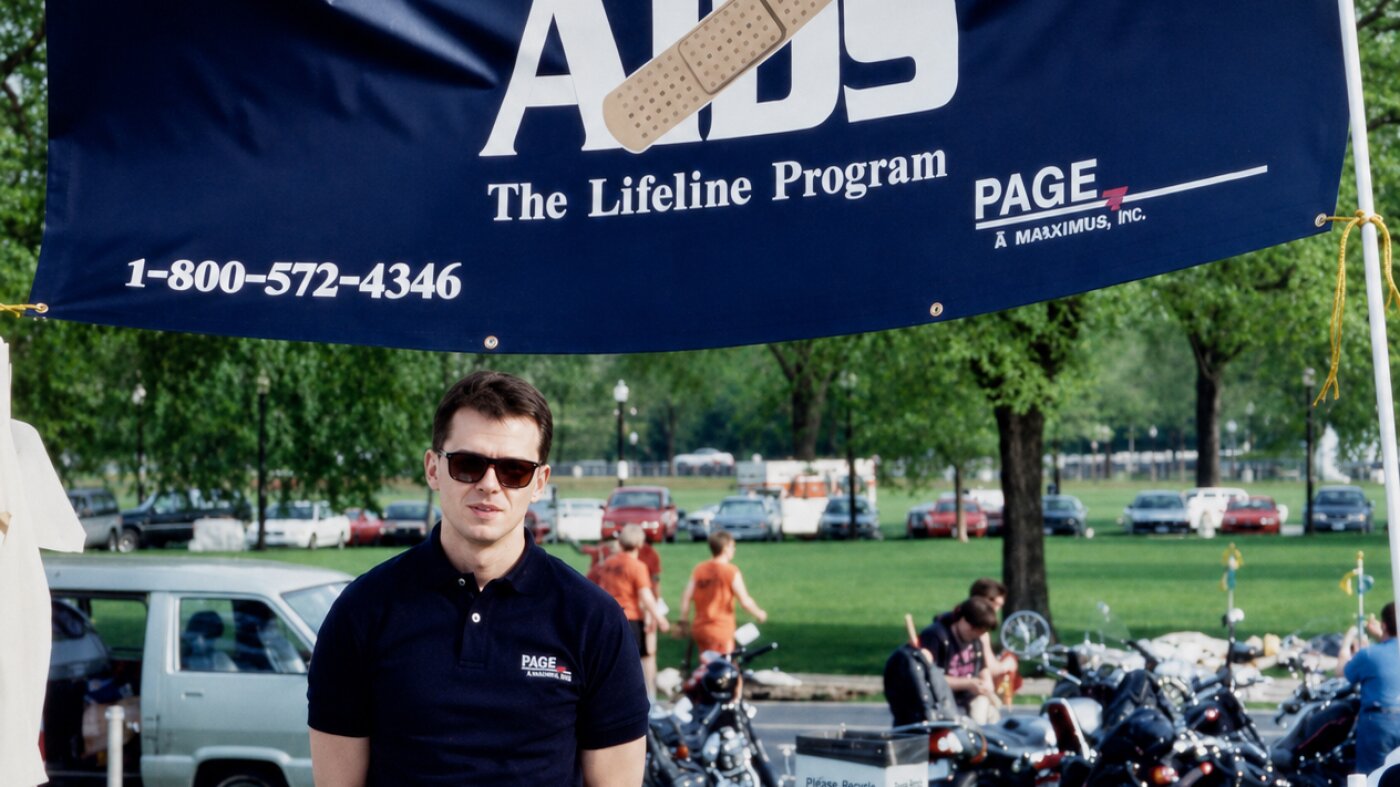
The ledger of survival
Scott Page was not a financier when he first sold a life insurance policy. He was a partner watching his lover Greg waste away from AIDS in the late 1980s. Greg had a $100,000 policy. The premiums were due. There was no money.
At an HIV support group, Page described their dilemma to a wealthy stranger. The stranger agreed to pay the premiums and lend them $10,000 installments. In return, when Greg died, the stranger would be repaid from the insurance payout. The arrangement kept Greg alive longer and gave Page the oxygen and hospice care his lover needed. Greg died in 1993. Page did not stop there. Others in the support group had similar policies. He became a broker, a middleman connecting dying people with cash-poor families to investors who had capital and a taste for mortality arbitrage.
That marketplace, born in a San Francisco community center, now sits inside hedge-fund portfolios. The policies Page traded are now called viatical settlements. They have been refinanced, securitized, and wrapped into derivatives that trade on Wall Street as “death bonds.” The market is worth billions. The Supreme Court has blessed it. The math is cold. The humanity, when you look closely, is even colder.
A legal shortcut to speculation
The foundation dates to 1911. A man sold his life insurance policy to his doctor for $100 to pay for an operation. When the man died, the insurer refused to pay, arguing the doctor lacked “insurable interest.” The Supreme Court disagreed. It ruled that a policy is property. If you bought it legally, you could sell it to anyone. The principle ended one kind of moral hazard: it prevented strangers from wagering on each other’s deaths. It also created another: it allowed strangers to buy policies on dead-endings and collect when they die.
The loophole lay dormant for decades. Insurance companies priced policies on healthy, middle-aged customers who paid premiums for years. They assumed a predictable attrition rate. Then the AIDS epidemic hit.
Patients with advanced HIV were dying younger than their premiums suggested. Their policies were mispriced. Investors noticed. A dollar of premium could buy a promise of $1 in a few years instead of decades. The spread was enormous. The only thing required was the willingness to monetize decline.
From caregiver to commodity trader
Page called his early brokers “vulture” work. He was right. The word stuck, but the business grew. By the late 1990s, Page had facilitated more than 3,000 viatical deals. The Latin root of viaticum means provisions for a journey. The journey was toward death. The provision was cash now instead of cash later.
The pharmaceutical breakthroughs changed everything. New antiretroviral drugs extended lifespans from months to years. The mispricing vanished. Viatical investors suddenly held policies on patients who would not die soon enough. The market should have collapsed.
Instead, it pivoted. Brokers began targeting retirees. Wealthy seniors with paid-off homes and full life insurance policies did not need the cash flow. But they liked the idea of converting a dead asset into living capital. Companies sent salespeople to golf courses and financial-planner conferences. They called the new product “life settlements” to distance it from the viatical stigma.
The transition was not seamless. Insurance companies resisted. They had built models on policy lapses. Buyers who kept paying premiums interrupted those models. Skeptical planners asked whether buyers might harm policyholders. Wholesalers explained that scale neutralized perverse incentives: owning thousands of policies meant death was an actuarial variable, not a murder opportunity. The argument held enough water to let the industry expand.
Wall Street finds a new asset class
The 2008 financial crisis provided the catalyst. Hedge funds and investment banks searched for uncorrelated returns. Mortality fit the bill. Human death is, broadly speaking, independent of equity markets. Investors liked that. They started buying entire portfolios of life settlements. Some reassembled those portfolios into securities that traded as bonds. The abstraction was complete: a policy once sold to cover hospice costs became a line item in a structured product valued by mathematicians who never met the people whose deaths it priced.
Jonah Kahn, a former wholesaler, recalled an industry conference where a planner asked whether someone might kill their client. Kahn explained that the risk was diluted across thousands of lives. The insurance companies were still uneasy, but the money kept flowing. Television ads followed. Daytime viewers saw celebrity cameos and promises of liquidity. The marketing targeted retirees directly, bypassing financial advisors and creating a one-sided information battlefield.
Kahn noted that a policyholder calling a hotline cannot compare prices the way a homeowner checks Zillow. An investor with underwriting teams, actuarial models, and data access knows far more than the seller. The spread between what a buyer pays and what the policy is worth represents their profit. That spread has widened as the market matured.
Who profits, who pays
The arithmetic is straightforward. A buyer purchases a $1 million policy for 20 cents on the dollar. The buyer pays ongoing premiums until the insured dies. If death occurs sooner than expected, the return accelerates. If it occurs later, the return compresses. Investors price longevity risk using medical databases, actuarial tables, and sometimes direct physician reviews. They build diversification into their portfolios to smooth outcomes.
Policyholders receive immediate cash. They use it for medical care, debt relief, or retirement spending. They also surrender future benefits to their beneficiaries. The trade-off is explicit, but the information gap is not. Many sellers do not know they can surrender policies back to insurers for a smaller, tax-efficient sum. Many do not understand the tax consequences of a settlement. Some will outlive their projections and watch premiums erode value.
Insurance companies lose when policies stay in force. They anticipated lapses; they received payouts instead. Their pricing models required adjustment. Regulators responded with varying disclosure rules. Several states require independent third-party valuations. Federal guidance remains fragmented. The market moved faster than the statute books.
The ethics of abstraction
Page eventually left the business. He sold his brokerage to private equity. He called it a deal with the devil. The industry had become too abstract. The original question—how do we help dying people live comfortably?—had been replaced by a new one: how fast can we collect?
That replacement is not inevitable. It is structural. When human mortality becomes an input in a yield model, the moral weight shifts from caregiver to calculator. The bell-ringing anecdote from a former employee rings true to this dynamic: staff celebrated entries in the Social Security death master file because each entry marked a realized return. A death is a release of capital. That is not a moral failing; it is a design feature.
Capitalism has always commodified risk. Fire, flood, and shipping losses became insurance. Credit defaults became bonds. Now death timelines have become securities. The AIDS crisis proved that desperation creates markets. Financial engineering proves that markets can persist long after the original suffering fades.
What this means for today
The parallels to pandemic-era finance are sharp. Crisis breeds innovation. Innovation breeds speculation. Speculation breeds scale. Scale attracts regulation. Regulation struggles to keep pace.
Mortality derivatives offer genuine liquidity to people who need it. They also offer institutional investors a hedge against longevity risk and a return stream that does not track GDP. Both uses are rational. Neither is purely benign.
The lesson is not that the market is evil. The lesson is that transparency matters. Sellers need independent advice. Buyers need to disclose their models. Insurers need to adjust pricing without punishing policyholders who sought liquidity. Regulators need to define who owns the data and who profits from it.
The Supreme Court opened the door in 1911. AIDS pushed people through it. Wall Street expanded the hallway. The multibillion-dollar valuation is the rent.
What remains to be decided is whether the door should stay open, whether the rent is fair, and whether the ledger should include a column for dignity alongside dollars and years remaining. The market has solved the pricing problem. It has not solved the moral one.