Why Akiyama's Nobel-Winning Chemistry Could Redefine Drug
Kenichi Akiyama's discovery of asymmetric autocatalysis earned him the 2026 Nobel Prize in Chemistry. The work has profound implications for how chiral drugs are manufactured worldwide.
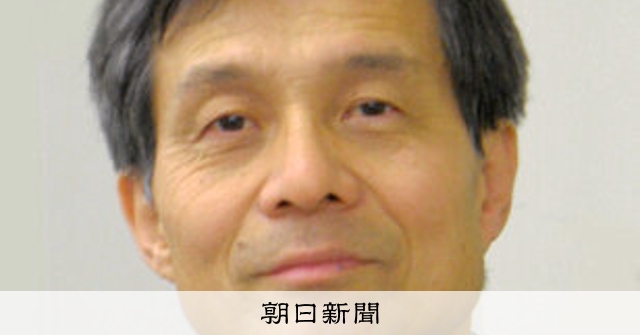
A Shopping Trip Interrupted by a Lifetime’s Work
Kenichi Akiyama was near a grocery store when he learned he had won the Nobel Prize in Chemistry. At 76, the honorary professor at Tokyo University of Science simply smiled and said it was “one of the most joyful days” of his life. The 12-million-Swedish-crown prize — roughly 189 million yen, about 10 percent higher than last year — is shared with Henri Kagan, 95, from the University of Paris-Sud. But the real story is what Akiyama actually did: he found a chemical reaction that explains one of the oldest puzzles in science and could quietly reshape how the world makes medicines.
Mirror Molecules and a 100-Year Mystery
Amino acids and sugars exist in two forms — mirror images that look identical but cannot be superimposed, like left and right hands. Chemists call them enantiomers. Life, confusingly, prefers one side almost exclusively. The amino acids in your body are all left-handed. The sugars in your DNA are right-handed. For over a century, scientists have wondered why nature chose one hand over the other, and how that preference originated.
Akiyama’s 1995 discovery offered a clue. He found a reaction where a tiny excess of one enantiomer could act as its own catalyst, reproducing more of itself and amplifying the imbalance. This process, now called the Akiyama reaction, meant that near-equal starting amounts could spontaneously resolve into a dominant form. It was not a complete answer to life’s origins — no one claims it is — but it was the first experimental demonstration that self-amplifying chirality was chemically plausible.
Kagan had shown something similar in 1986, proving that asymmetric induction was possible. Akiyama went further. His reaction was autocatalytic — the product became the catalyst — which meant the amplification could grow exponentially. That is a qualitatively different mechanism. It is the kind of process that could, under the right conditions, turn a noisy chemical soup into an ordered, homochiral system.
Why Drug Companies Should Care
Here is what English-language coverage tends to skip: the commercial implications are enormous. Many modern drugs are chiral. One enantiomer may treat a condition; the other might be inert or even harmful. Thalidomide remains the most tragic example — one form relieved morning sickness in the 1950s, while its mirror image caused severe birth defects. Today, the pharmaceutical industry spends vast sums separating enantiomers or synthesizing only the useful one. Chiral drug synthesis accounts for a growing share of global pharmaceutical output, and the cost of achieving high enantiomeric purity is significant.
Asymmetric autocatalysis offers a potentially cheaper route. Instead of relying on expensive chiral auxiliaries or resolution processes that discard half the product, a reaction that self-amplifies the desired form could streamline manufacturing. The principle is already being explored in industrial labs. If Akiyama’s reaction model can be adapted to drug-relevant molecules — and that is a large if — it could reduce the cost of producing chiral pharmaceuticals by meaningful margins. No company has publicly announced a commercial process based directly on the Akiyama reaction yet. That gap between the bench and the factory floor is where the real story will unfold over the next decade.
The Japanese Context Nobody Is Talking About
Japan now has ten Nobel laureates in chemistry. Akiyama’s win follows 2025’s award to Susumu Kitagawa and colleagues for metal-organic frameworks — materials with applications in carbon capture and gas storage. This pattern matters. Japan’s chemistry prizes are not scattered accidents. They reflect sustained investment in basic research and a culture that allows long-horizon, curiosity-driven projects to mature. Akiyama published his landmark paper in 1995. The Nobel committee took another thirty years to recognize it. That patience is unusual in an era of quick hits and impact-factor chase. It is worth asking whether other fields — and other countries — can afford that kind of timeline.
The broader implication is about where breakthrough chemistry happens. Akiyama worked at Tokyo University of Science, a respected but not Oxford-or-Cambridge-level institution by global rankings. Kagan was at a French university. Neither was at a pharmaceutical lab. The discovery came from academic fundamental research, not corporate R&D. That should give pause to anyone who assumes innovation in chemistry still flows primarily through industry pipelines.
Who Wins and Who Loses
The winners are clear: researchers working on chirality, origins-of-life questions, and asymmetric synthesis. Pharmaceutical companies that move quickly to explore autocatalytic routes will also benefit. Japan wins on prestige and the soft power that comes with recognizing its scientific tradition.
The losers are less dramatic but real. Researchers and institutions that bet against long-gestation, seemingly abstract projects will face harder justifications next time. The pharmaceutical industry, if it remains slow to adapt, cedes ground to competitors who do. And the broader public loses when the translation from Nobel-winning insight to affordable medicine stalls — which is the risk if the chemistry community does not prioritize applied follow-up work.
What Happens Next
The Nobel ceremony is December 10 in Stockholm. Akiyama will receive his medal and give a lecture, as will Kagan. Within months, expect a wave of papers building on the Akiyama reaction, particularly from groups working on chiral catalysis and prebiotic chemistry. Patent filings related to asymmetric autocatalysis in pharma-adjacent molecules are likely to follow. Whether any reach commercial scale within five years is impossible to say. The chemistry is promising. The economics are unproven.
The award also reinforces a quiet truth about Japanese science: its greatest contributions often come not from flashy launches but from patient, rigorous work that takes decades to mature. Akiyama was doing research in 1995 that the world is only now fully appreciating. That gap between discovery and recognition is where real science often lives.
For drug manufacturers watching from a distance, the takeaway is simple. Asymmetric autocatalysis is no longer just a curiosity about why life chose one hand. It is a manufacturing possibility. The question is no longer whether the chemistry works. It is whether anyone can build a process on top of it fast enough to matter.