How one man convinced physicists to look through Antarctica
Francis Halzen won the 2026 Nobel Prize in Physics for building IceCube, the South Pole observatory that turned glacial ice into a cosmic telescope. His story reveals how high-energy neutrino astronomy went from heresy to the fastest-growing field in astrophysics.
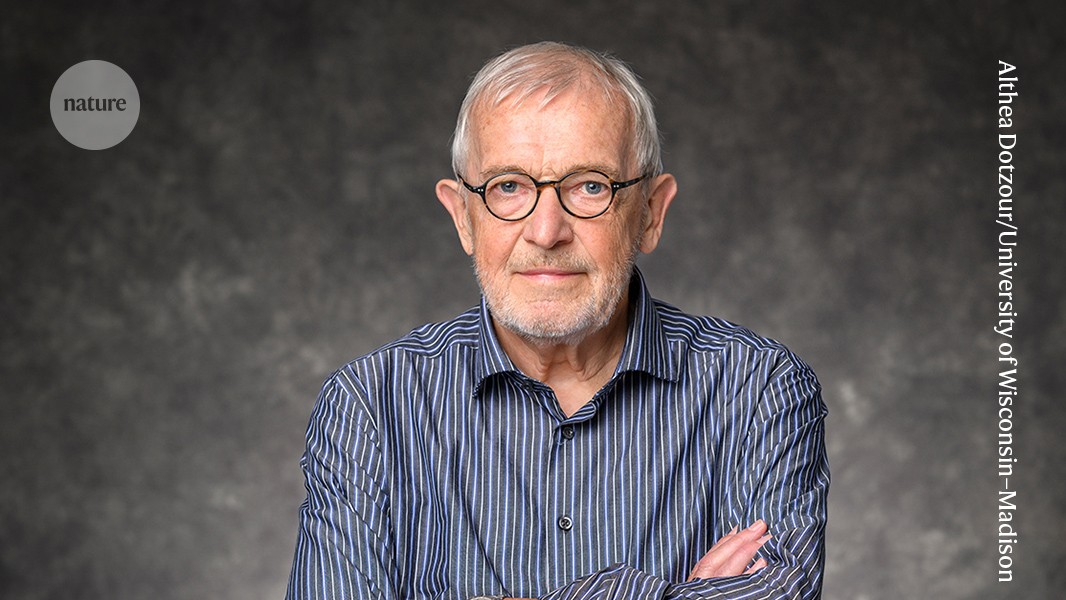
The Nobel That Looked Through the World
Francis Halzen won the 2026 Nobel Prize in Physics alone — the first time since 1992 the committee handed the prize to a single recipient. But the man himself immediately deflected the spotlight. When asked about the award at the Stockholm press conference, he did not talk about his own brilliance. He talked about the “courageous people” who joined a project that, by his own admission, “no respectable conservative physicist would have joined.”
That deflection is the truest thing about the prize. Halzen’s Nobel recognises not just a discovery, but the audacity of a proposition that almost nobody believed could work: that you could build a detector large enough to catch neutrinos from deep space by stringing sensors through a kilometre of Antarctic ice.
The Problem With Ghost Particles
Neutrinos are the universe’s most abundant ghost. More than a billion pass through your hand every second. They barely interact with anything. They ignore magnetic fields. They travel in straight lines across the cosmos, unperturbed by dust, gas, or gravity.
That last quality is what makes them revolutionary as astronomical tools. Photons get scattered, absorbed, bent. Light from a distant blazar can take a tortured path through intergalactic medium before reaching Earth. A neutrino arriving at your detector points back to its source like an arrow. The line is direct. If you can catch enough of them — and catch the rare high-energy ones — you get a map of the violent universe that optical telescopes simply cannot produce.
The difficulty, of course, is that catching them requires something enormous. A neutrino might traverse light-years of lead before interacting with a single atom. To have any chance of catching the ones that matter, you need a detector the size of a cubic kilometre. And you need it somewhere dark, cold, and free of the background radiation that would swamp the faint flashes of light produced when a neutrino finally does strike an atomic nucleus.
Antarctica as Instrument
Halzen solved this paradox in the 1980s with what colleagues privately called “the weirdest idea in the world.” Drill holes into the ice at the South Pole. Lower strings of sensors 1.5 kilometres down into the clear, ancient ice. Wait. The ice itself becomes the detector — a quadrillion kilograms of ultra-pure target material, naturally occurring, naturally dark, naturally cold.
It took another two decades to turn the idea into reality. The IceCube Neutrino Observatory, completed in 2010 at a cost of roughly $271 million and funded primarily by the US National Science Foundation, ultimately deployed 5,160 optical sensors across 86 strings. The collaboration grew to about 450 researchers.
Halzen called it the biggest risk he had ever taken. “Nobody knew if the kilometre-cube detector was actually large enough to detect neutrinos beyond our atmosphere from the Universe,” he told the Nobel press conference. “But it only took two years to detect that.”
The Data Rewrote the Sky
In 2013, IceCube published its first definitive result: a population of high-energy neutrinos that could not have originated anywhere within the Solar System. Their energies exceeded anything produced by known solar or atmospheric processes. They were extra-galactic. The field of neutrino astronomy was born in that paper.
The follow-up discoveries came fast. Three neutrinos dubbed Bert, Ernie and Big Bird arrived with energies measured in petaelectronvolts — thousands of times more energetic than particles produced in the Large Hadron Collider. And in 2018, IceCube traced a single high-energy neutrino back to its source: a blazar called TXS 0506+056, a violent galaxy 4 billion light-years away harboring a supermassive black hole actively devouring matter.
This was multimessenger astronomy in its purest form. Telescopes around the world turned toward the blazar at the same time IceCube logged the neutrino hit. The convergence of data from light, gravitational waves and neutrinos created a picture of the cosmos that no single instrument could have produced alone.
What Halzen’s Win Signals
The Nobel committee’s decision to award a single winner may strike some as arbitrary for a project that depends on 450 scientists. But the physics prize has always been selective, and the committee appears to have chosen the person whose vision made the entire enterprise possible. Elisa Resconi, an IceCube senior member, called Halzen the project’s “undisputed driving force.”
Halzen himself seems uncomfortable with the solitary framing. He is widely described by colleagues as someone who remembers every researcher’s name and academic history, who cultivates talent, who turns heads when he enters a room. The Nobel portrait of him as lone genius doesn’t quite capture the collaborative culture he built — but it does capture the kind of intellectual conviction required to pitch a cubic-kilometre neutrino detector to funding agencies and see it through.
The timing also matters. Halzen was born in Belgium in 1944, trained at CERN, and moved to the University of Wisconsin–Madison in 1971. His career spans the transition from particle physics as a purely accelerator-based enterprise to an era where the detectors are no longer housed in buildings but embedded in continents. The prize acknowledges that shift.
Why It Matters Beyond the Lab
The practical spin-offs from IceCube are hard to quantify — the sensors, the drilling technology, the data-processing pipelines all have applications outside astrophysics. But the deeper impact is cultural. For centuries, astronomy meant looking up with light. IceCube proved that you could look through the planet instead.
The field now includes KM3NeT, a Mediterranean counterpart being built in the sea, and plans for even larger detectors on the lunar far side and beneath the Greenland ice sheet. The techniques Halzen pioneered are multiplying.
More importantly, the discovery that the brightest neutrinos in the sky do not come from the Milky Way but from supermassive black holes in distant galaxies changes how we understand the most energetic processes in the universe. Every supernova, every gamma-ray burst, every merging black hole — neutrino astronomy is beginning to tell us which of these events actually accelerate particles to extreme energies, a question that has baffled physicists for more than a century.
Halzen once said there was “no guarantee we would ever see anything.” The Nobel proves he was wrong to doubt. The universe has been sending us messages all along. We just needed to build something big enough to listen.