What Alberta's No Vote Really Means for Energy and Independence
Alberta rejected independence, but 23% who voted yes signal deep resource grievances. The result reshapes North American energy politics and federalism debates worldwide.
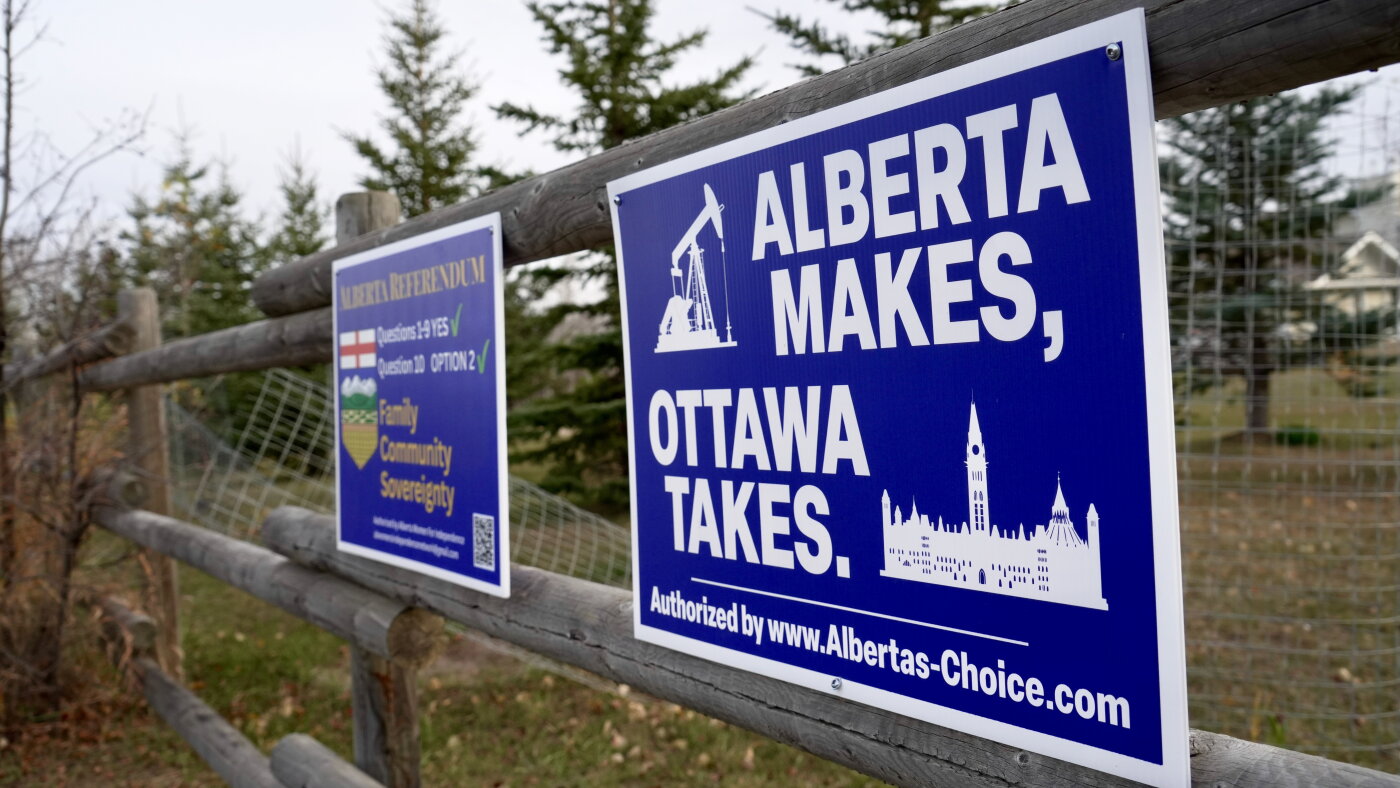
Alberta Chose Canada — But the Question Lingers
Alberta’s referendum delivered a decisive “no” on independence. Seventy-seven percent of voters backed remaining in Canada, with over a million ballots counted across a province where turnout exceeded expectations and polling stations in rural counties reported lines stretching into the evening. Prime Minister Mark Carney called it a vote for unity, a reaffirmation of the federal bond even as Canada navigates its most consequential trade negotiations in decades. Alberta Premier Danielle Smith framed the result differently — as support for a stronger Alberta within Confederation, not a retreat from ambition. Separatist leaders, meanwhile, pointed to the 23% — roughly one in four Albertans — as proof their movement had crossed from fringe into mainstream.
The margin matters less than the signal. Alberta holds the world’s fourth-largest proven oil reserves. It is a province that votes conservative, resents Ottawa’s fiscal grip, and shares more cultural DNA with Texas than with Toronto or Vancouver. Even a failed referendum can shift power dynamics. This one just did — and the aftershocks are already rippling through energy markets, federal-provincial relations, and political strategy across North America.
The Number That Changes Everything
A quarter of Albertans now believe separation should be on the table. That is not a marginal number. It is a constituency — one that has grown from single-digit percentages in previous sovereignty votes to a share that commands attention in party caucuses, provincial legislatures, and boardrooms across the energy sector.
For decades, separatist movements in Alberta managed only 1% or 2% at the ballot box. The calculus shifted during the pandemic, when former Premier Jason Kenney documented how anger over COVID-19 restrictions helped mobilize activists who later embraced independence as a logical extension of their grievance. Then came Donald Trump’s trade war, his tariff threats against Canadian energy, and his casual suggestions that Canada could simply become the 51st state. Carney himself urged Albertans during the campaign to “vote like Canada’s future depends on it” — words that carried unusual weight coming from a prime minister whose own economic legacy depends on keeping the country whole.
The result gives Ottawa a reprieve. It does not end the grievance. Keith Wilson, a separatist leader who campaigned across the province, said the numbers may fluctuate but the sentiment is structurally real. At least 23% of Albertans feel the province is treated like a colony — a phrase repeated by voters in Wainwright, in drumheller, in Edmonton’s outer suburbs. That language carries historical resonance in a province that joined Confederation in 1905 with limited control over its own resource revenues, a grievance that was partially remedied in the 1960s but never fully resolved.
Jeff Rath, a separatist advocate who organized voter outreach in southern Alberta, said he would have been thrilled with 30%. He wants Smith ousted, arguing that her caution costs the movement credibility, and warned the United Conservative Party could splinter, potentially creating a new pro-independence party that draws from both the right and the resource-sector workforce. The machinery of separatism is no longer dormant. It is organized, funded, and learning.
Resource Sovereignty Is the Real Fault Line
Independence was the vehicle. Resource sovereignty was the destination.
Alberta produces oil, natural gas, and an expanding portfolio of critical minerals — lithium, cobalt, graphite — that any energy transition strategy requires. It sends revenue west to east, often with less return in infrastructure, healthcare funding, or policy influence. Voters like Taylor MacIsaac, a heavy-truck operator near Fort McMurray, and Dustin Degenhardt, a small-business owner in Lethbridge, expressed a simple view that echoed through campaign rallies: Alberta is exploited. Dave Malka, a retired teacher who voted no but supported the referendum’s premise, criticized the cost of what he called a “referendum on a referendum” while hospitals wait for renovations and rural clinics face closure. The underlying complaint remains unresolved — and it is this complaint, not constitutional theory, that sustains the movement.
Carney pledged to accelerate diversification of trade routes, reduce dependence on single-pipeline corridors, and make Canada a global energy powerhouse with Alberta at its center. Smith promised to address the province’s future through aggressive fiscal negotiation and direct investment in downstream processing. Both recognize — reluctantly on Carney’s part, strategically on Smith’s — that unity requires more than a ballot box. It requires economic justice that matches the scale of Alberta’s contribution to the federation.
Trump Casts a Shadow Over the Result
Donald Trump’s trade war and annexation rhetoric changed the calculus for thousands of voters who had never considered sovereignty before. Carney’s rally in Edmonton — the largest campaign event of the referendum period — drew supporters in maple leaf pants and hockey jerseys, people who had not voted in provincial elections but turned out because the question felt existential. The threat of American absorption unified a province that had long chafed at federal authority. Nationalism, even grudging, has its moments. Polling conducted after the rally showed a temporary but measurable spike in support for remaining in Canada.
But Trump’s presence also highlights a vulnerability that will define Canadian energy politics for the foreseeable future. Canada is the largest trading partner of the United States. Alberta’s energy flows south — pipeline capacity, rail carloads, tanker volumes. A trade war disrupts prices, delays pipeline approvals, and chills investment. The referendum proved that external pressure can strengthen federal bonds. But it also showed how quickly those bonds fray when the economic terms feel unjust — especially when those terms are negotiated in Washington, not Ottawa or Edmonton.
Second-Order Effects on Energy Markets and Federalism
The result will reverberate beyond Alberta’s borders. Energy companies that had quietly hedged against separatist scenarios will reassess their Canadian exposure. Pipeline projects that depended on provincial stability for financing — the Northern Gateway successors, the Trans Mountain expansions — now face a clearer political horizon but also a more assertive Alberta government that will demand greater revenue sharing. Institutional investors managing pension funds with significant Canadian energy allocations will adjust risk models that previously priced in low sovereignty probability.
Federations around the world are already watching. Texas lawmakers referenced the Alberta result in closed briefings about resource taxation. Bavarian politicians cited the 23% as evidence that commodity-dependent regions anywhere can mobilize quickly when fiscal arrangements feel extractive. Queensland and Western Australia face similar debates about revenue retention and infrastructure investment. The global lesson is plain: energy wealth without political voice breeds separatism, and vote counts matter less than the perception of fairness.
What Happens Next
Results were delayed after late openings in several rural ridings forced over 100 polling stations to extend voting hours past midnight. Final tallies are pending certification, which could take days in constituencies where margin reviews are requested. Smith promised an evening address emphasizing Alberta’s continued strength within Canada. Carney says Canada can now move forward — a directive that assumes the grievance has moved with the vote, which it has not.
The immediate aftermath is political reconciliation: federal transfers, infrastructure commitments, healthcare funding adjustments. The longer game is institutional reform. If Ottawa fails to deliver on resource revenue modernization, energy corridor development, and regional healthcare equity, the 23% will grow. If it succeeds, the movement may recede — but the grievance remains structurally embedded in Canadian federalism, waiting for the next fiscal shock, the next trade disruption, the next moment when Alberta feels that Confederation has failed to protect its interests.
The Negotiation Has Begun
Carney will push for unity. Smith will govern a province that voted no but thinks in terms of sovereignty — extracting maximum leverage from a result that gave the federal government a win without giving Albertans the economic settlement they demanded. The 23% will organize, fundraise, and build the next wave of political infrastructure. The rest of Canada will watch, hoping the matter stays buried.
And the world’s fourth-largest oil reserve will keep flowing — north toward refinement capacity, south toward Gulf Coast markets, and sometimes sideways through the complex routing that modern energy trade demands. The referendum is over. The negotiation has just begun.