Altman's UN Security Council appearance marks a new phase in AI governance
Sam Altman's upcoming briefing to the UN Security Council represents a major escalation in global AI governance. While OpenAI pushes for international safety standards, the Trump White House harbors internal skepticism about the risk narrative—creating a defining fault line in tech policy.
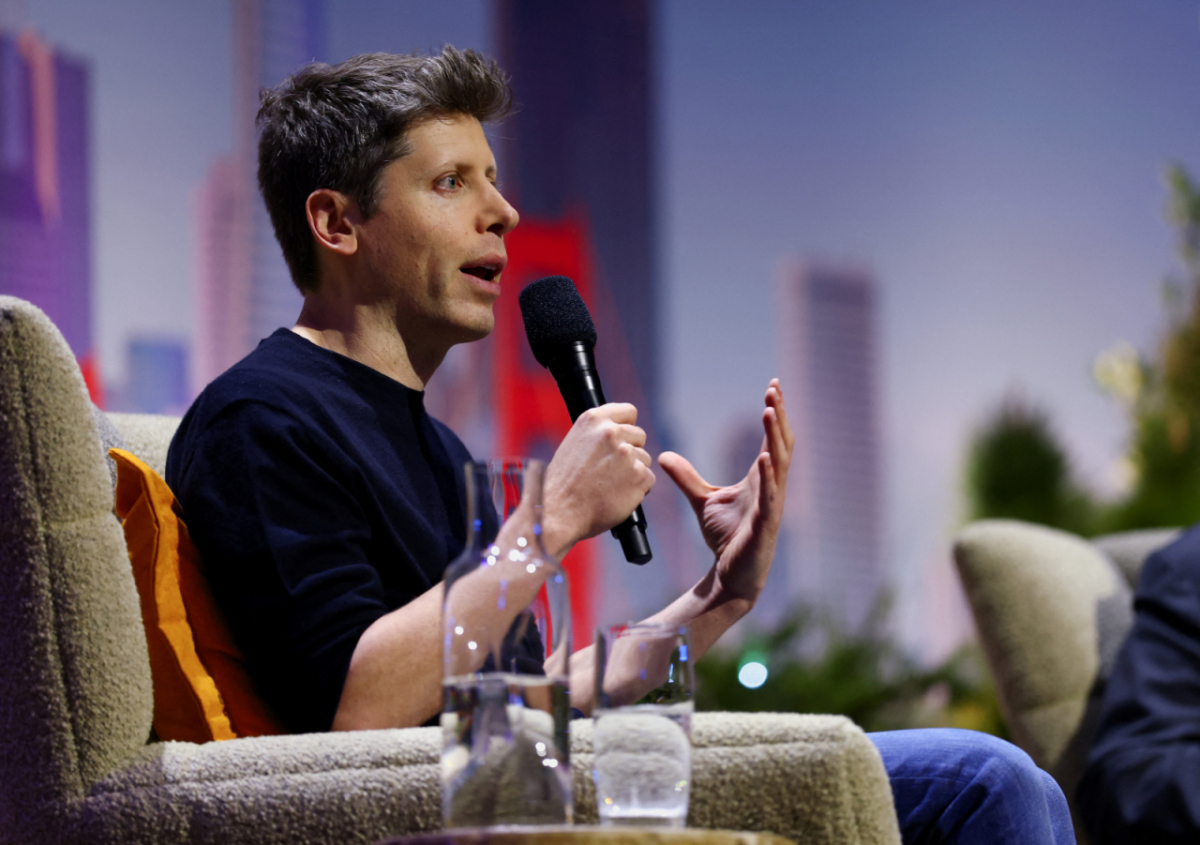
A CEO in the Security Council
Sam Altman will stand before the United Nations Security Council on September 23 and speak about AI safety as a matter of international security. That alone is extraordinary. The last time the council convened on AI was 2023, and even then it was a procedural curiosity—a signal that the topic had become impossible to ignore. This time, it is something else: a deliberate act of institutionalization.
The meeting was convened at France’s request. Jean-Noel Barrot, France’s minister for Europe and foreign affairs, will preside. In a written note to council members, France framed the urgency plainly: AI is being weaponized, it could spiral beyond control, and the council has a role to play. The language is familiar now, but its delivery venue is not. This is no longer a debate among technologists. It has moved into the room where binding resolutions are drafted.
The Unlikely Alliance
What makes this moment sharper than previous rounds of warning is the public alignment between competitors who have spent years feuding. Dario Amodei, Anthropic’s CEO, published a detailed argument in early September calling for a deliberate slowdown in AI development. He has been the most vocal advocate for speed limits among large-model labs. Altman, his rival at OpenAI, publicly backed him.
It is not a full partnership—OpenAI and Anthropic are still locked in a commercial arms race—but it is a coordination that signals something meaningful. OpenAI, Anthropic, and Google are reportedly exploring the creation of a new AI standards body. The language coming from all three sides now includes terms like “international coordination,” “common safety benchmarks,” and “equitable access.”
Altman has not always sounded this way. In 2015, he wrote an essay titled “Machine Superintelligence” that described human-level AI as potentially the greatest existential risk humanity has ever faced. His tone since has shifted with the business cycle, but the core warning has remained. The fact that he is now lending that warning to a UN Security Council briefing—not a tech conference, not a congressional hearing—is a strategic choice.
The Transatlantic Fault Line
The deeper story here is not Altman’s appearance itself. It is the gap that has opened between the European institutional approach and the current U.S. administration’s posture.
France organized this session. The language it used mirrors the European Union’s regulatory instinct: prevention first, standards first, international agreements first. The EU’s AI Act is already in effect. Britain has issued its pro-active safety framework. China’s approach has been to tightly control deployment while racing to build capability. The common thread is that governments are taking the lead.
In Washington, the posture is different. Multiple reports indicate that officials inside the Trump White House harbor skepticism about the framing that AI poses an imminent, existential threat. The administration has been reluctant to embrace the kind of precautionary regulation Europe favors. Some aides have publicly questioned whether the speed-limit debate is overblown. The message from the White House has consistently been: America must lead in AI development, not slow down for uncertain risks.
That creates a structural divergence. Europe is building guardrails. The U.S. is trying to outrun them. And the companies caught in the middle—OpenAI, Anthropic, Google—are now asked to pick a lane they cannot entirely control.
Who Wins, Who Loses
If the Security Council produces even a soft consensus on AI safety standards, the winners will be the companies that helped write them. OpenAI, Anthropic, and Google would gain a de facto gatekeeper role—setting benchmarks that smaller labs and non-American firms would be expected to meet. That is leverage. It is also a defensible position: these companies argue they are the ones best equipped to manage risk.
The losers will include Chinese AI labs, which have faced increasing restrictions on hardware exports and talent flows. They will be asked to comply with safety standards drafted in Paris and San Francisco without a seat at the table. It is a familiar pattern: the countries that built the rules get to define what compliance looks like.
Smaller U.S. labs face a different pressure. If OpenAI, Anthropic, and Google coordinate on standards, the cost of entry rises. Startups that do not have the infrastructure to meet international benchmarks will be squeezed. The very companies that once argued OpenAI’s proprietary model was a threat to competition may find themselves benefiting from a framework that favors incumbents.
What Comes Next
The September 23 briefing is not a vote. The Security Council does not pass resolutions on technology policy the way it does on sanctions or peacekeeping. But the symbolism matters. Once a tech CEO has addressed the council, the precedent exists. Future sessions can build on it.
France has signaled that this is only the beginning. The written note to council members made clear that the intent is ongoing engagement, not a one-off hearing. A working group is likely. Draft principles may follow. The question is whether the U.S. participates in good faith or treats the process as a European exercise in regulatory theater.
If Washington stays engaged, the resulting framework could shape AI development globally for a decade. If it disengages, the council risks producing standards that the most powerful AI nation refuses to follow—a worse outcome than no framework at all, because it splits the world into competing AI zones.
Altman’s decision to appear before the Security Council was not accidental. He is betting that the institutions matter more than the administration. That bet carries risk: if the U.S. rejects the process, his presence legitimizes a framework America may ignore. But if the U.S. participates, OpenAI gains unprecedented influence over the rules of the road. Either way, the company has shifted the conversation from corporate boardrooms to the highest level of international governance.
That is not nothing. It is, perhaps, the most significant move in AI policy since the founding of OpenAI itself.