America's Iran Financial Siege Has a New Timeline
US Treasury Secretary Bessent unveiled an escalating sanction schedule targeting Iran-linked banks this week and next, with specific operations already underway in the UAE. The move tightens the financial noose around Tehran—and tests allied coordination.
The Clock Is Ticking on Iran’s Financial Lifelines
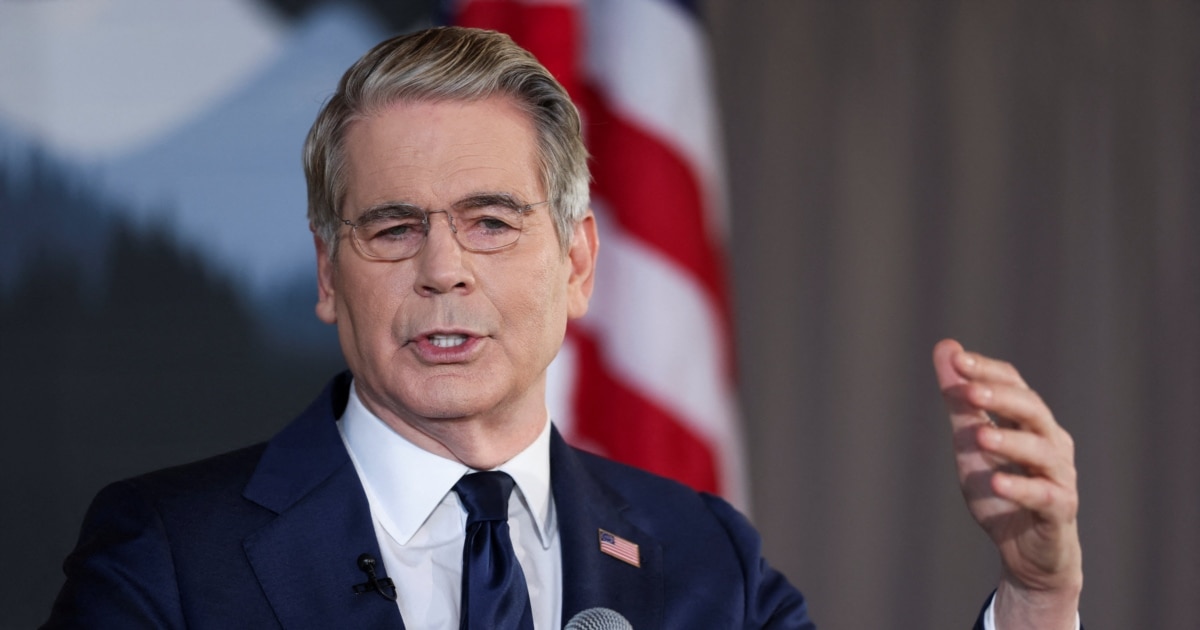
Scott Bessent did not leave much room for ambiguity. Speaking from the G20 finance ministers’ meeting in Asheville, North Carolina, the US Treasury secretary laid out a schedule that read more like a prosecutor’s calendar than diplomatic correspondence. Sanctions announcements this week and next, targeting Iran-linked financial institutions. He even told Fox Business’s Larry Kudlow that everyone should expect it, dropping the warning with the casual certainty of someone who had already cleared the legal and political obstacles.
The phrasing was deliberate. “We will be releasing one bank sanction probably this week, and then another one next week,” Bessent said. “Everyone should expect that.” The “probably” was the only hedge in an otherwise flat declaration, and it may have been strategic—leaving just enough wiggle room to manage market expectations without softening the threat.
That cadence matters. It signals an administration moving from signal to execution, and it gives markets and allies less time to adjust—or to look the other way. A staggered rollout forces continuous recalibration. Institutions cannot wait for a final tally; they must price in risk after every announcement, and the uncertainty itself becomes a tool of pressure.
The First Strike Already Hit
Washington has not been idle while the announcement schedule was being set. On May 28, the Treasury Department revealed it was shutting down a branch of Egypt’s Banque Misr in the United Arab Emirates. The reasoning was specific and severe: the branch had facilitated Iran’s access to the US dollar system, processing approximately $1.83 billion in transactions for 103 companies over two years that were likely connected to Iran’s informal financial network known as the Hawala system.
That figure—$1.83 billion—is not trivial. It represents a significant channel through which Iranian entities could move money in and out of the global banking system, despite existing sanctions. For context, that amount alone could fund a substantial portion of Iran’s regional proxy operations or prop up the rial, which has lost nearly half its value against the dollar since early 2025. Closing a single branch may seem like a surgical strike, but it also sends a message to every correspondent bank in the Gulf: the reach extends further than you think, and the penalties for non-compliance are immediate and non-negotiable.
The implications for Egyptian banks were swift. Shares of Banque Misr fell sharply in Cairo the morning after the announcement, and other Egyptian financial institutions with Gulf exposure began reviewing their correspondent relationships. The case also raised a broader question about the extraterritorial reach of US sanctions—whether a branch of a foreign bank operating in a third country can be shuttered by Washington for transactions that never touched American soil. The answer, increasingly, appears to be yes, provided the US dollar system was used at any point in the transaction chain.
Iran’s response was predictable. The foreign ministry called the measure an extension of the military operations begun by the US and Israel, and framed the use of the dollar as a tool of economic coercion against sovereign UN member states. The diplomatic rhetoric has become routine on both sides. What is less routine is the specificity of the enforcement—naming exact transaction volumes, identifying specific company counts, and detailing the mechanisms of circumvention. That granular approach suggests Treasury has invested heavily in financial intelligence, and it signals that future targets will face the same level of forensic scrutiny.
Who Is Next on the List
Bessent expanded the target scope beyond traditional banking. He said US authorities are tracking IRGC assets and could move against aviation leasing companies and “everyone who does business with” the IRGC. He claimed knowledge of offshore accounts in the British Virgin Islands and trusts holding up to $100 million in property globally, and said those assets would be frozen.
The BVI reference is worth noting. That jurisdiction has long served as a privacy haven for wealth storage, and publicly identifying it as a target suggests the US is prepared to pressure even traditional financial sanctuaries. The British Virgin Islands has been under FinCEN and Treasury scrutiny for years, but this marks a shift from regulatory pressure to direct asset targeting. The administration appears confident it can sustain that pressure without triggering a broader diplomatic crisis with UK-aligned jurisdictions.
The aviation leasing angle is equally significant. Iran has long sought to acquire commercial aircraft through complex leasing arrangements that obscure ownership and circumvent export controls. Targeting leasing companies—many of which are based in Ireland, Cyprus, or the UAE—would cut off a critical logistical pipeline. It also raises the stakes for European financial institutions, many of which have substantial leasing portfolios and will now face a choice between maintaining Iranian-linked clients and preserving their standing with US regulators.
The Alliances Under Strain
Bessent insisted that the campaign enjoys backing from the EU, the European Central Bank, the UK, the UAE, and Bahrain. That coalition, if accurate, represents a broad front. But several questions linger beneath the public unity.
The UAE is simultaneously a US security partner and a financial hub where Iranian trade has historically flowed through informal channels. An estimated 40 percent of Iran’s non-sanctioned trade with the Gulf runs through Emirati ports and free zones. Forcing the UAE to close banking relationships is one thing; enforcing compliance across the entire financial sector is another. The Banque Misr case shows Washington is willing to act unilaterally when allies move too slowly, and that willingness may erode trust over time. Dubai’s financial sector benefits from Iran-connected activity—not just through direct banking, but through real estate, retail, and trade finance. Sanctions that choke those flows will create domestic friction in the UAE government.
The EU and ECB face a similar tension. Their banks have long operated in Iran, and the US has repeatedly accused them of circumventing sanctions through specialized payment vehicles designed to sidestep US jurisdiction. SPV-2, the successor to the original Special Purpose Vehicle, has struggled to attract meaningful transaction volume. This latest round could either deepen transatlantic coordination or expose fresh fractures—particularly if European banks find themselves caught between US penalties and their own commercial interests in Tehran.
Bahrain, often the most compliant Gulf state on sanctions, may bear disproportionate cost. Its banking sector is smaller and more closely aligned with US policy, leaving less room to buffer against collateral damage. The question for Washington is whether it views Bahrain’s compliance as sufficient or whether it expects the kingdom to take risks that could destabilize its financial system.
The Collapsed Deal
Bessent attributed the failure of the June 18 provisional agreement to Iran’s leadership not being ready to negotiate. His stated mission is to make them want a deal. The sequencing of sanctions announcements—this week, next week—suggests the strategy is pressure first, negotiation second. The administration appears to be betting that cumulative financial pain will shift the cost-benefit calculation within the Iranian establishment.
That approach carries real risk. Economic strangulation can harden a regime’s posture rather than break it. Iran has shown repeatedly that it can absorb pain when it calculates survival is at stake. The 2018 reimposition of sanctions under Trump did not produce a new deal; it produced escalation, regional proxy warfare, and the eventual collapse of whatever diplomatic opening remained. The question now is whether the current cycle differs materially. The granularity of the enforcement, the speed of the rollout, and the explicit targeting of IRGC economic infrastructure suggest a more sophisticated strategy than the blunt instrument of blanket sanctions. But sophistication does not guarantee effectiveness. Iranian officials have adapted to sanctions before—building parallel banking systems, expanding barter trade, and deepening ties with China and Russia as alternative channels.
The Collateral Economy
There are second-order effects that Bessent’s timeline does not fully account for. When the US shuts down a banking channel, capital does not disappear—it migrates. Iranian traders andIRGC-affiliated enterprises will redirect flows through alternative corridors: Turkish banks with looser oversight, Omani ports with established connections, Pakistani and Afghan hawala networks that operate outside the dollar system entirely. Each diversion increases transaction costs, which ultimately gets baked into the price of goods and fuels that reach Iranian consumers and the regime’s security apparatus.
Those increased costs also create opportunities. Smugglers, intermediary brokers, and shadow bankers who can navigate the new landscape will profit from the disruption. China’s demand for discounted Iranian oil, already running at an estimated 1.5 million barrels per day, will likely intensify as Tehran seeks buyers willing to ignore secondary sanctions. The price discount on Iranian crude could widen, tightening supply elsewhere and putting additional upward pressure on global fuel costs.
Gulf insurers and reinsurance markets will also feel the shock. Theclosure of the Banque Misr branch disrupts established underwriting relationships, and other institutions may become reluctant to cover trade involving Iranian-connected entities. That withdrawal of capacity raises the cost of doing business across the entire region, not just for firms with direct Iranian ties.
What Happens Next
The immediate impact will be felt in the Gulf’s banking sector. Institutions with any Iranian exposure will reassess their correspondent relationships, particularly in the UAE and Bahrain. The $1.83 billion already processed through the Banque Misr branch indicates the scale of activity that is now under scrutiny, and compliance teams across the Gulf are likely already reviewing their books for similar patterns.
Oil markets will watch closely. Any disruption to Iranian trade routes or financial channels can tighten global supply expectations, particularly if the Strait of Hormuz remains a flashpoint alongside the financial pressure. A portion of the world’s liquefied natural gas transit passes through that strait, and any escalation there would reverberate far beyond energy markets.
Bessent’s promise of more announcements this week and next means the market will not have long to absorb each move. The administration appears to be stacking pressure in real time rather than announcing it all at once—a tactic that maximizes uncertainty for Tehran and keeps its allies on edge. Markets hate uncertainty more than they hate bad news, and the staggered rollout ensures that anxiety compounds with each announcement.
Iran’s next move is the critical variable. If Tehran interprets the sanctions as negotiable pressure, it may send signals through intermediaries in Oman or Qatar. If it sees them as an existential threat, it could escalate regionally—targeting shipping, accelerating its nuclear program, or directing proxies toward US assets in the Middle East. Either scenario would reshape the calculus for every participant in the Gulf.
One thing is clear: the era of incremental sanctions signaling is over. The next few weeks will show whether the financial siege can actually change Iranian behavior, or whether it simply deepens a standoff that has lasted decades. The administration has set a timetable. The question now is what happens when the clock runs out.