The Amur Fire: A Deadly Setback for Sino-Russian Energy
Seven workers dead and nine missing at Russia's flagship China partnership after a fire. A $10 billion project already wrestling with sanctions takes a cruel blow.
A $10 Billion Project on Fire
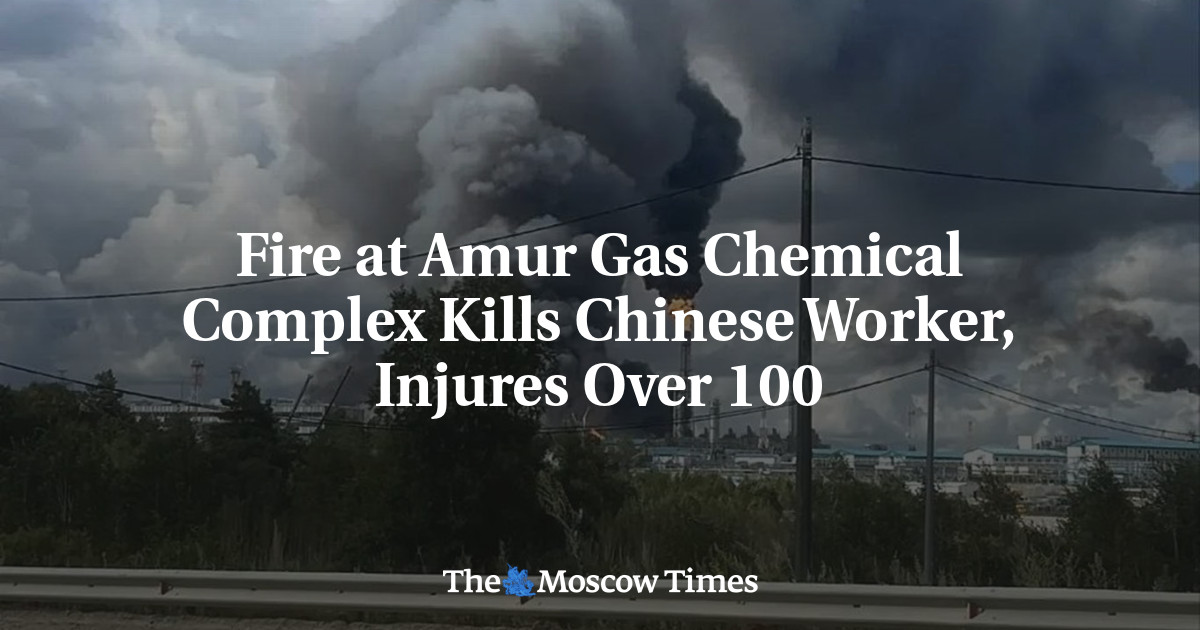
The blaze at the Amur Gas Chemical Complex did not touch the primary equipment. It tore through a support section of a pyrolysis unit on August 25, 2026, near the town of Svobodny in Russia’s Far East, and it killed seven people. Six were Chinese contractors. One was Russian. Nine more Chinese workers remain missing. Nineteen others were hospitalized with moderate to severe injuries. One hundred four received treatment for cuts and bruises.
The numbers alone are not the story. The story is what this project was supposed to be.
AGCC is the crown jewel of Putin’s pivot to Asia—a $10 billion joint venture between Russia’s Sibur and China’s state-owned Sinopec, designed to become one of the world’s largest polymer manufacturing facilities. It was two years from its planned launch in early 2027, sitting in final testing when the fire started. A commission has been formed to investigate the cause. Local air monitoring detected no toxic chemical spikes. The region’s government said nearby towns were not threatened.
None of that makes the death toll any easier to accept.
The Contractors Nobody Talks About
The fact that six of the dead were Chinese is worth paying attention to. Russia’s Far East has been drawing foreign labor for years—mainly from Central Asia and China—to fill gaps in construction and resource projects that Moscow cannot staff domestically. These workers occupy a different rung on the safety ladder. They are often employed through subcontracting chains that obscure accountability. They are less likely to report hazards. They are the ones who die in fires like this.
Nine Chinese contractors are still unaccounted for. Their fate is unknown. That detail alone should trigger a review of how Sinopec and its Russian partners manage contractor safety on a project this size.
The Kremlin has framed the Amur complex as proof that Russia’s energy ties with Beijing are deep, durable, and strategic. Casualties like these undermine that frame in a way that no press release can fix.
Sanctions Already Strangling the Project
AMUR sits inside a web of complications that have little to do with fire safety. Sanctions on Russian energy exports, secondary sanctions risk for foreign partners, and the chronic difficulty of routing payments through non-sanctioned banks have created a slow-moving crisis at AGCC long before this blaze.
Chinese firms, including Sinopec, have faced their own regulatory warnings from Washington. Beijing has urged its companies to keep working with Russia, but the practical reality for a state-owned enterprise like Sinopec is far more constrained. Every contract revision, every payment delay, every compliance check adds time and cost to a project that was already running behind schedule.
The fire compounds those delays. Final testing was supposed to precede a 2027 launch. Whatever schedule AGCC had before August 25 is now in question. Repairing support infrastructure in a remote part of the Amur region, while simultaneously investigating a fatal incident and honoring grieving families across two countries, will not be quick.
What This Means for the Gas Pipeline
AGCC is not isolated. It is the downstream counterpart to the Power of Siberia 2 pipeline, the massive natural gas project Beijing has been negotiating for years and Moscow has been eager to sell. The political architecture connecting the two is straightforward: Russia supplies the feed gas, China buys it and converts it into polymers at Amur, and both sides claim economic and strategic victory.
Delays at AGCC feed directly into that narrative. If the polymer complex is late, China has less immediate demand signal for additional gas volumes. If the pipeline deal remains unresolved—it still is, after more than a decade of talks—then Amur’s delays look less like a technical hiccup and more like a symptom of a partnership under structural stress.
Beijing holds leverage here. Russia needs the revenue. China does not urgently need new gas supplies when existing volumes from Power of Siberia 1 are already flowing and domestic demand growth has slowed. The power dynamic that Moscow hoped would shift in its favor has not materialized. Amur’s fire simply makes the imbalance more visible.
Who Wins, Who Loses
Sibur loses. Its flagship project is now on fire—literally and figuratively—with a death toll attached and a launch date slipping further away. Sinopec loses credibility with its own regulators and shareholders if it cannot demonstrate that the project is safe and on track. Chinese contractors and their families lose a brother or a son. Russian workers lose too: one Russian died alongside the six Chinese nationals.
Moscow gains nothing. The propaganda value of Amur as a symbol of Russia-China cooperation just lost a chapter. Beijing may use the delay to press harder on pricing and payment terms for Power of Siberia 2. Western sanctions enforcers will watch and note another project buckling under the weight they helped create.
What Happens Next
The investigation will take weeks, possibly months. Any formal findings will be shaped by the same incentives that govern Russian industrial accidents: minimize liability, protect state interests, avoid uncomfortable questions about foreign labor conditions. Expect a narrow report and little public accountability.
The launch delay is the more consequential outcome. Early 2027 was always ambitious. A fire during final testing pushes that further out. Every month of delay carries carrying costs for a $10 billion facility and signals to investors—Russian and Chinese—that execution risk is higher than advertised.
Power of Siberia 2 negotiations were already stalled. Amur’s troubles reinforce Beijing’s position that Russia cannot reliably deliver on its energy promises. If the pipeline deal eventually moves forward, it will do so on terms less favorable to Moscow than either side initially wanted.
Seven workers are dead. Nine may never be found. A project meant to showcase Sino-Russian solidarity now carries a different image: a remote Russian complex, foreign labor, sanctions pressure, and a fire that reached into the support systems nobody inspects closely enough until something goes wrong.
TheAmur complex was supposed to prove that Russia and China could build the future together. It is hard to see how that narrative survives this.