Anne Carson's Nobel Win Signals A New Era For Boundary-Breaking
The 76-year-old Canadian poet and classicist becomes the 19th woman to win the Nobel Literature Prize. Her genre-dismantling work — rooted in classical tradition yet fiercely contemporary — reshapes what literary prize juries value.
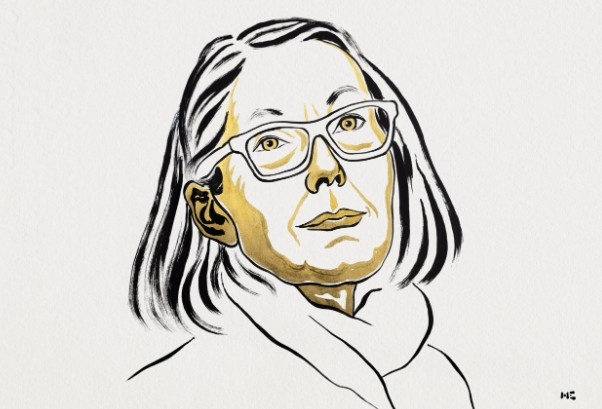
A Poet Who Dismantles What Literature Is For
The Swedish Academy handed the 2026 Nobel Literature Prize to Anne Carson on Thursday, citing a body of work that engages in playful dialogue with classical tradition while forging entirely new literary forms. The 76-year-old Canadian poet and classicist becomes the 19th woman to receive the honor and the fifth North American recipient, extending a pattern of gender alternation the Academy has quietly maintained over the past five cycles.
What makes this choice significant goes beyond the demographics. Carson has spent decades refusing to let readers know whether they are holding a poem, an essay, a novel, or a grief monument. Her work does not cross genre boundaries — it erases them. That is precisely the kind of literary courage that prizes like this tend to recognize only after an author has spent a lifetime making it clear no other path existed.
The Classical Ground She Walks On
Carson was born in Toronto in 1950 and grew up moving through small Canadian towns as her father, a bank clerk, took different positions. The mobility of her childhood did not prevent a deep immersion in ancient Greek literature and mythology, which she would later study at university and make the foundation of her entire creative practice. Classical texts are not mere decoration in her work. They are living material, pressed into service to examine queer desire, familial loss, and the architecture of language itself.
Her collection “Antigonick” — a reimagining of Sophocles’ tragedy through a fragmented, contemporary lens — became one of the defining literary events of the 2010s. It demonstrated that a text written nearly two thousand five hundred years ago could still generate fresh emotional voltage when freed from the constraints of scholarly reverence. Carson treats antiquity the way jazz musicians treat standards: not to reproduce them faithfully, but to find new notes inside them.
Grief As a Structural Principle
Perhaps no single work reveals Carson’s approach more starkly than “Nox” (2008), a book she spent twenty-two years constructing as an elegy for her older brother Thomas, who died in 1987 after a long separation. The volume was originally assembled as a handmade scrapbook of photographs, letters, postage stamps, and torn paper fragments. When published, it took the form of an accordion-bound notebook containing one hundred ninety-two pages, enclosed in a box — deliberately mimicking the physical object she had created in private.
The Korean edition, translated in 2022 by Bomnaldachim (Spring Day Books), became a minor publishing phenomenon precisely because it refused to be a conventional book. Traditional Korean movable-type artisans recreated the original format by hand, a decision that aligned the production process with the book’s conceptual content. Korean readers, many of whom encountered Carson for the first time through this edition, responded to the material honesty of the object. The book was about loss; its physical construction made that loss tangible.
This is not accidental craftsmanship. Carson has built a career on the premise that form is not a vessel for content — form is content. The same instinct animates “Autobiography of Red,” her novella-length poem that reimagines the legend of the red monster Geryon from Sappho’s fragments as a queer teenage boy in the modern world. It also shapes “The Beauty of the Husband,” a sequence of thirty-three lyric poems responding to a dissolving marriage, and “Glass, Irony and God,” which interweaves the myth of Icarus with fragments of memoir and critical reflection.
What The Academy Is Rewarding
The Academy’s citation emphasizes “playful dialogue” with tradition and the creation of “new forms.” That wording matters. The Swedish Nobel committee has, in recent years, shown a clear preference for writers who destabilize the categories through which we classify literature. Han Kang won in 2024 for work that similarly dissolved the line between witness and imagination, between the historical record and the fictional artifact.
Carson’s election continues this trajectory. But it also signals something more specific: the Academy is rewarding an author whose entire intellectual project — grounded in classical scholarship yet radically contemporary — proves that deep engagement with the past can produce formal innovation rather than nostalgia. The fear that academic classicism must be conservative is answered by Carson’s corpus. She reads ancient texts the way a street musician reads a song: as something already alive, waiting to be rearranged.
The prize money this year rose to twelve million Swedish kronor — roughly 1.8 billion Korean won — an increase of one million kronor over the 2025 award. The rising sum reflects the Academy’s growing willingness to invest symbolically in writers who challenge institutional definitions of what literature should look like.
Why This Matters Now
The literary world is currently navigating a moment of intense anxiety about genre, authority, and who gets to claim the label “writer.” AI-generated texts, algorithmic curation, and the fragmentation of publishing channels have destabilized traditional pathways to recognition. In this environment, Carson’s insistence on handmade materials, physical book objects, and the irreplaceable texture of lived experience carries quiet political weight.
Korean literary circles have been particularly attentive to Carson since the publication of “Nox” and “Autobiography of Red.” The way Korean artisans approached the reproduction of “Nox” — treating the book’s physical construction as inseparable from its emotional argument — mirrors a broader cultural sensibility about materiality and memory. This intersection between Carson’s work and Korean literary production deserves sustained attention beyond the Nobel announcement.
Carson’s next chapter as the Nobel Laureate remains unwritten. At seventy-six, with a body of work that has already reshaped Anglophone poetry, she enters this recognition having already completed most of the work that matters. The prize will amplify voices that were never silent — and that, perhaps, is exactly the point.