Anne Carson's Nobel Win Reshapes the Prize's Legacy
Canada's Anne Carson becomes the 19th woman to win the Nobel Prize in Literature, bringing a genre-defying career to its highest stage. Her victory signals a dramatic shift in the prize's literary tastes.
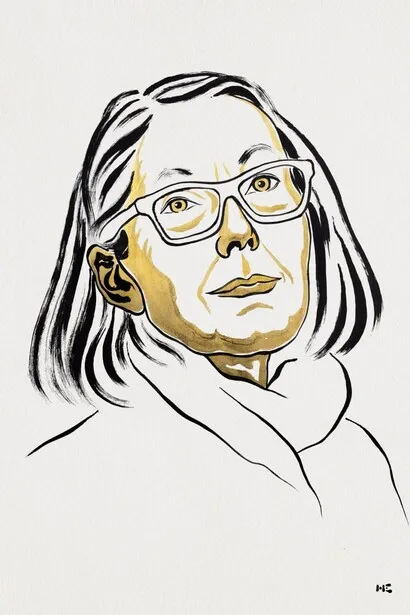
Anne Carson’s Nobel Win Reshapes the Prize’s Legacy
When Anne Carson won the 2026 Nobel Prize in Literature, the Swedish Academy did something it has rarely done before. It looked past the familiar names of realist fiction and gave the prize to a poet who writes across genres, translates ancient Greek, and builds her work from etymology rather than narrative.
Carson, 76, becomes only the 19th woman ever to receive the honor and only the second Canadian — after Alice Munro in 2013. That second Canadian is a detail that matters. Munro was celebrated for short fiction rooted in the everyday. Carson occupies the opposite end of the literary map: classical scholarship, experimental form, and a voice that treats the dictionary itself as raw material.
The Academy’s citation framed the win around Carson’s “bold and inventive” creation of new forms through dialogue with classical tradition. It noted that most of her work sits at the intersection where the linguist’s obsession with a word’s history meets the poet’s hunger for new meaning. Carson has said herself that etymological research is the starting point for everything she writes.
That is not a small claim. It suggests a writer for whom language is not merely a tool but the subject of the work itself. And that distinction explains why this prize will be debated for years.
For the last two decades, the Nobel in Literature has faced consistent criticism for favoring a particular kind of author — usually a novelist working in or near the realist tradition, often from marginalized geographies but writing in ways that feel legible to European committees. The list reads like a canon checklist: Murakami was snubbed repeatedly; Margaret Atwood waited decades; more recently, authors who blend high culture with genre, humor, and formal experimentation have been underrepresented.
Carson’s win cuts against all three patterns. She is neither a novelist nor a genre writer. She works in poetry, translation, essay, and autofiction simultaneously. Her most famous book, “Autobiography of Red,” is a novel-length poem recasting the lost Greek epic of the red-cloaked hero Geryon. It blends myth, queer desire, epistolary form, and classical scholarship into something the Academy called “a daring and original literary world.”
The choice also signals a generational and institutional shift. The Academy’s new secretary-general, who took office in June, delivered Carson’s news by phone while she was staying in Iceland, listening to wind outside her window. She said she was surprised but genuinely thrilled. Whether the new leadership is pushing the prize toward different kinds of writers remains to be seen, but this appointment is the latest evidence that the institution is trying to broaden its definition of what literature can be.
Carson’s background is as distinctive as her work. Born in Toronto in 1950, she studied classics and literary criticism at university and spent a career teaching at universities across North America and Europe. Her writing career has been defined by that same boundary-crossing: Greek translation, lyric essay, the fragment, the footnote as narrative engine. She has published seven books in Korean translation, including “Short Talks,” “Plainwater,” “Eros the Bittersweet,” “The Beauty of the Husband,” “Float,” “Nox,” and “Autobiography of Red.”
That last title deserves special attention. Published in 2001, it reimagines the story of Geryon, the red-winged giant from Greek mythology, as a coming-of-age tale told through poems, letters, and fragments. It is exactly the kind of work that the Nobel has historically undervalued — too much poetry for a fiction prize, too much myth for a contemporary one, too playful for its solemn reputation.
The win also reframes the conversation about women in the Nobel Prize. Nineteen women have won out of 123 total recipients. That number feels low for a prize claiming to represent world literature. For context, the last five winners include only one woman — Han Kang in 2024 — yet the pool of living writers eligible for the prize is overwhelmingly female. The pattern of exclusion is structural, not accidental.
Carson’s inclusion joins a group that includes Louise Glück, Olga Tokarczuk, Annie Ernaux, and Han Kang, but her specific achievements set her apart. She is not primarily known for novelistic realism or memoir-style autofiction. She is known for stretching language itself and for making translation a creative act rather than a secondary craft. That distinction matters for how the prize is perceived internationally.
What this means for the literary world is still unfolding. Publishers worldwide will rush to bring Carson’s back catalog into new translations. University courses on contemporary poetry will add her syllabi. Younger writers who blend classical learning with genre-fluid form will see their path validated. And the Nobel’s credibility among literary circles that have grown skeptical of its choices will receive a significant boost.
What remains uncertain is whether this signals a one-time correction or a sustained pivot. If the Academy awards another experimentally minded, non-novelistic writer next year, the pattern will be clear. If this stands alone, it may be read as a compromise gesture toward a figure many consider overdue rather than a genuine shift in taste.
The December ceremony in Stockholm will mark the official recognition. But the real test comes in the months and years after — in how the prize is discussed, in which writers are compared to Carson, and in whether the Academy feels emboldened to take similar risks going forward.
One thing is already certain: the 2026 Nobel in Literature will be remembered as the year the prize stopped asking writers to choose between depth and daring.