South Korea's Conservatives Try to Block Film at International
South Korea's ruling conservative party is demanding international film festivals pull the movie Assassins, which has drawn 2 million viewers in 11 days. The move reveals how deep the culture-war fault line has become — and what it means for Korean cinema's global standing.
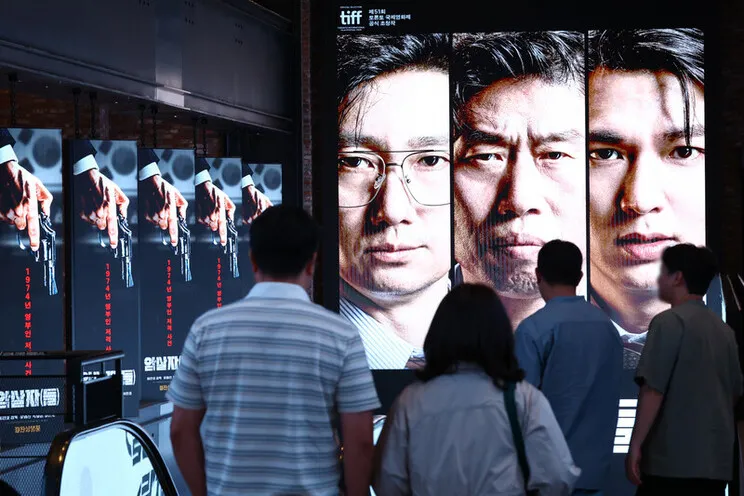
The Party That Wants to Outlaw Its Own Film
Not since the military era has a South Korean political party tried to pressure a foreign film festival into cancelling a domestic production. Yet that is exactly what the People Power Party is doing with Assassins, a film about the 1974 assassination of First Lady Yuk Young-soo by a North Korean agent. The request letter, sent in the names of all PPP lawmakers, went to the Singapore International Film Festival on April 4 — the same day the party announced it would also approach organizers in Brazil and Toronto.
The stunt is unprecedented in post-democratic Korea. It is also a clear signal that the cultural fault lines in this country have widened from debate into something closer to warfare.
The Numbers Behind the Backlash
Before the political machinery started grinding, Assassins was already proving it could move audiences. It crossed 2 million admissions in just 11 days — a strong opening for any Korean film and one that makes the party’s intervention feel less like civic concern and more like panic over a product its voters are consuming enthusiastically. Box office success and political condemnation have run on parallel tracks.
The film’s central controversy is its dramatic interpretation of the Yuk assassination, a event etched into South Korea’s modern memory. Conservative outlets and lawmakers have labelled the film “patricidal” and “treasonous.” Conservative groups including the New Liberal Alliance and Beladona held a protest outside lead actor Yoo Hae-jin’s home in Seongbuk District, demanding the film be withdrawn and the cast publicly apologise. They have also launched a boycott of Burger King and Kiwoom Securities, two of Yoo’s advertising partners.
The attack has gone beyond criticism of the film itself. It has targeted the people who made it.
Who Is Behind the Letter
The letter-writing campaign was coordinated by PPP lawmaker Ju Jin-woo, who told reporters on April 4 that screening the film internationally was “an insult to the nation” and that the party would block it. The party’s chief spokesperson, Choi Bo-yoon, framed the effort as a response to public sentiment rather than party initiative, saying many citizens had “voluntarily” joined the call. That framing matters — it signals the party is trying to position itself as a voice of the people rather than the instigator.
Party leader Jang Dong-hyuk visited Yuk Young-soo’s birthplace in Okcheon, North Chungcheong Province on April 5, further cementing the link between the film and the party’s political narrative. Meanwhile, the PPP has floated allegations that the Blue Dragon Film Awards and other review bodies were manipulated and that state-owned banks — the Korea Development Bank and the Industrial Bank of Korea — were complicit in the film’s production under the Lee Jae-myung administration. None of these claims have been substantiated in public reporting.
The Backlash From the Other Side
The ruling Democratic Party responded with a single term: “영틀막 정당” — a play on words suggesting the PPP wanted to control every frame of Korean cinema. Spokesperson Jeon Eun-soo called the intervention “censorship” and questioned whether the party intended to dictate what art could and could not be shown.
Cho Kuk, a former justice minister and leader of the reformist Jooguk Innovation Party, took the argument further, calling it a “far-right culture war” and urging the government to declassify all Central Intelligence Agency files on the Yuk assassination, including reportedly held bullet fragments.
The Korean Film Directors Association issued a statement on April 4 warning that the party’s attacks had crossed from criticism into personal threats against creators and actors. The Korean Producers Association and the Korean Film Producers Guild issued similar statements. The message from all three was the same: art can be criticised, but creators should not face ruin.
Why This Matters Beyond Korea
Film festivals are not neutral ground. They are diplomatic channels — informal but real. When a political party asks a foreign festival to cancel a screening, it is asking that country’s cultural institutions to take a side in a domestic dispute. That is a move with reputational cost for the festival as much as for the party.
Singapore’s festival, like most in the circuit, has a mandate to program films on artistic merit. Cancelling Assassins under political pressure would set a precedent that any government could invoke against any film it dislikes. Refusing the request, meanwhile, puts the festival in the middle of a Korean domestic controversy it never asked to enter.
The same calculus applies in Toronto and elsewhere. Canadian and Brazilian festivals have long positioned themselves as venues where controversial work is welcome, precisely because domestic politics elsewhere makes such screenings difficult. A cancellation here would be felt far beyond East Asia.
The Bigger Picture
South Korea has never fully resolved its reckoning with authoritarian history. The Yuk assassination was a turning point — it led to the consolidation of Park Chung-hee’s rule, the eventual rise of military dictatorship, and decades of democratic struggle. How a film interprets that moment is inherently political. But politics has always been part of Korean cinema; what is new is the willingness of an elected party to use international platforms as battlegrounds.
The fact that Assassins reached 2 million admissions before the party began its campaign suggests something else: Korean audiences are willing to engage with difficult history, even when politicians tell them not to. The backlash may strengthen the film’s profile abroad. It may also harden the party’s base. Either outcome is a loss for a cinema sector that has spent the last two decades building global reputation through artistic risk-taking.
What happens next depends on whether Singapore, Toronto and other festivals treat the request as a matter of principle or political convenience. The industry is watching.