Why the Nobel Prize Just Chose a Genre-Bending Poet
Anne Carson's Nobel win is the first time the prize has gone to an author who openly questions whether she even is a poet. What that means for literature, translation, and the cultural machinery behind major prizes.
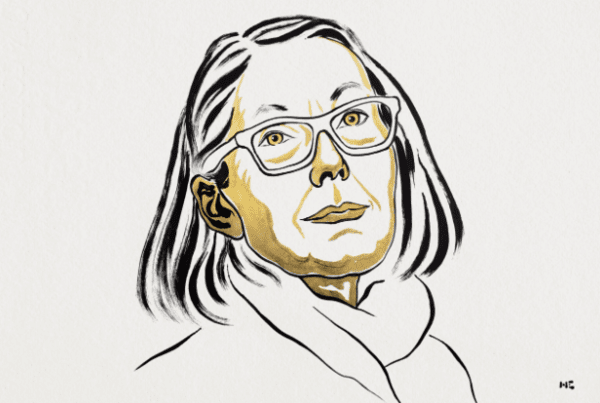
The Nobel Prize Just Chose Someone Who Isn’t Sure She’s a Poet
On September 8, 2026, the Swedish Academy announced that the Nobel Prize in Literature would go to Anne Carson. Not to a novelist whose last book had dominated the charts. Not to a national literary figurehead. To a 76-year-old Canadian poet-classical scholar who has spent her career dismantling the walls between genres and then, when asked what she does, replying — in her characteristic deadpan — that she’s not sure she even is a poet.
It is exactly the kind of choice that will make the cultural commentators nervous and the readers quietly delighted.
What Makes Carson Different — It’s Not Just That She Breaks Rules
Carson’s work refuses to be contained by any single form. She writes books that look like poems but read like essays, novels that are structured as poetry collections, translations of Ancient Greek fragments that become acts of literary archaeology. Her most famous works — “Autobiography of Red,” a novel-length poem retelling the myth of Geryon from Sappho’s fragments; “Nox,” a book-length elegy for her brother that takes the form of a shoebox containing loose papers; “The Beauty of the Husband” — all operate outside the taxonomy that literary prizes and publishers rely on.
The Swedish Academy’s citation noted that Carson has “spent her lifetime exploring the boundaries of poetry and built a unique literary world.” But the more interesting thing about that citation is what it implies: the Academy is now honoring an author whose primary gesture has been to refuse categorization. This is not a minor distinction. A prize that defines itself by recognizing singular literary achievement has now chosen someone whose achievement is precisely the destabilization of the categories we use to judge achievement.
The Sappho Connection Is More Than Literary
Carson’s relationship with Ancient Greek began at 15, when she stumbled across a volume of Sappho’s fragments in a mall bookstore. She persuaded her high school teacher to let her study Ancient Greek during lunch periods. That teacher became her conduit into a classical tradition that had, for most of modern Western literature, been preserved in academic silos — studied by scholars but rarely treated as living material for contemporary art.
This matters because the Nobel Prize in Literature has, over its 120-year history, repeatedly chosen authors who write in their mother tongue and operate firmly within established national literary traditions. Carson’s trajectory is different: she writes in English but draws her central creative resource from a dead language, from fragments of Greek poetry that were barely legible two thousand years ago. Her translations of Sappho, of Euripides, of other ancient voices are not scholarly exercises. They are acts of literary invention — she fills gaps in the fragments with speculation, empathy, and formal experimentation.
When Carson translates Sappho, she is not rendering Greek into English. She is making Sappho speak again, in a voice that feels both ancient and urgently present. This is the kind of work that English-language literary circles often undervalue because it doesn’t fit the novel-short story cycle that dominates prize consideration. But it is also the kind of work that reaches across cultures in a way that most fiction never does.
The Real Story Is What This Win Means for Translation
The most consequential implication of Carson’s Nobel — and the one that will be least discussed in the celebratory coverage — is what it signals about translation. Carson is, at heart, a translator. Her most celebrated books are built from translational acts. Yet the Nobel committee has never before honored an author whose primary mode of originality is translational. This is a structural blind spot in how the literary world evaluates contribution, and Carson’s win forces a reckoning with it.
Translation has long been treated as secondary work — a service industry for literature rather than literature itself. When the Nobel goes to someone whose creative identity is inseparable from translation, it effectively reclassifies translational creativity as primary literary creation. That shift will reverberate through publishing houses, university programs, and literary magazines. It gives institutional weight to the argument that translating a dead language into living verse is not craftsmanship but creation.
The Humble Acceptance Wasn’t Performative
Carson’s response to winning was characteristically understated. According to reports, she told people she was most pleased by messages from old friends. She went out for soup with her husband instead of attending any formal celebration. When a large rainbow appeared over her house, she described it as something like “the universe sending congratulations.”
She also repeated her famous refrain — “I don’t even know if I’m a poet” — which, rather than being false modesty, is actually the most accurate description of her creative practice available. Carson has never claimed the authority of a poet in the traditional sense. She has claimed the right to investigate language, to follow etymology as far as it will take her, to let a word’s history become the subject of a poem. The title “poet” feels insufficient because it suggests a person who works within a tradition of lyrical expression when what Carson actually does is much messier: she collects, she translates, she interrogates, she rebuilds.
Who Wins and Who Loses From This Moment
The winners are readers who have long felt that literature prizes were stuck in an outdated taxonomy. They are classical scholars whose work has been treated as academic infrastructure rather than creative source material. They are translators operating in a field that still pays less and values less than original composition. They are young writers in Canada, in the US, in anywhere that English is spoken but whose reference points include languages and traditions that English literary institutions have historically ignored.
The losers are the gatekeepers — the editors, publishers, and prize committees who benefit from clear categories. Genre-bending work is harder to market. Translational work is harder to place on a bookshelf. An author who writes in poetry-novel-essay-fragment hybrid forms is harder to profile in a magazine interview. The literary establishment has always preferred authors who fit neatly into a recognizable pattern. Carson’s Nobel prize disrupts that pattern by making the disruption itself the criterion for recognition.
What Happens Next in Global Literature
The immediate aftermath will be what it always is after a Nobel announcement: a surge in sales for the winner’s backlist, renewed interest in their translators, and a wave of articles explaining who this person is to readers who haven’t encountered their work. Carson’s sales reportedly jumped 138 times the previous week’s figures — a number that underscores how much literary taste in English-speaking markets has been shaped by forms that Carson refuses to occupy.
But the longer-term impact will be quieter and more significant. Carson’s win raises the question that has been lurking in literary prize culture for decades: why have we treated translation, classical erudition, and genre experimentation as secondary accomplishments rather than as central creative achievements? The answer, for 120 years, has been that prizes reward authors who fit a particular model of literary production. Carson’s selection changes that model from the top down.
In an era when literary prizes increasingly face scrutiny for their cultural blind spots — for favoring established national canons, for marginalizing translated work, for privileging certain formats over others — Carson’s Nobel is both a correction and a complication. It corrects the record by honoring an author whose work transcends every boundary the prize system has relied on. It complicates the future by asking whether a prize built on categories can meaningfully recognize an author whose entire career has been an argument against categories.
That tension is exactly where the most interesting conversations about literature will happen next.