Antarctica’s Hidden Ecosystem Survived Beneath Ice for Centuries — and It Changes Everything
When iceberg A-84 calved from the George VI Ice Shelf, scientists found a thriving dark-water ecosystem below. The discovery reframes ice-shelf collapse as potentially sustaining life, not just destroying it.
The Iceberg That Opened a Door
In mid-January 2025, a slab of ice the size of Chicago tore free from Antarctica’s George VI Ice Shelf and drifted into the Bellingshausen Sea. The event made headlines for the right reasons — it was a stark reminder of a continent under pressure. But what happened next was far more interesting than the headline.
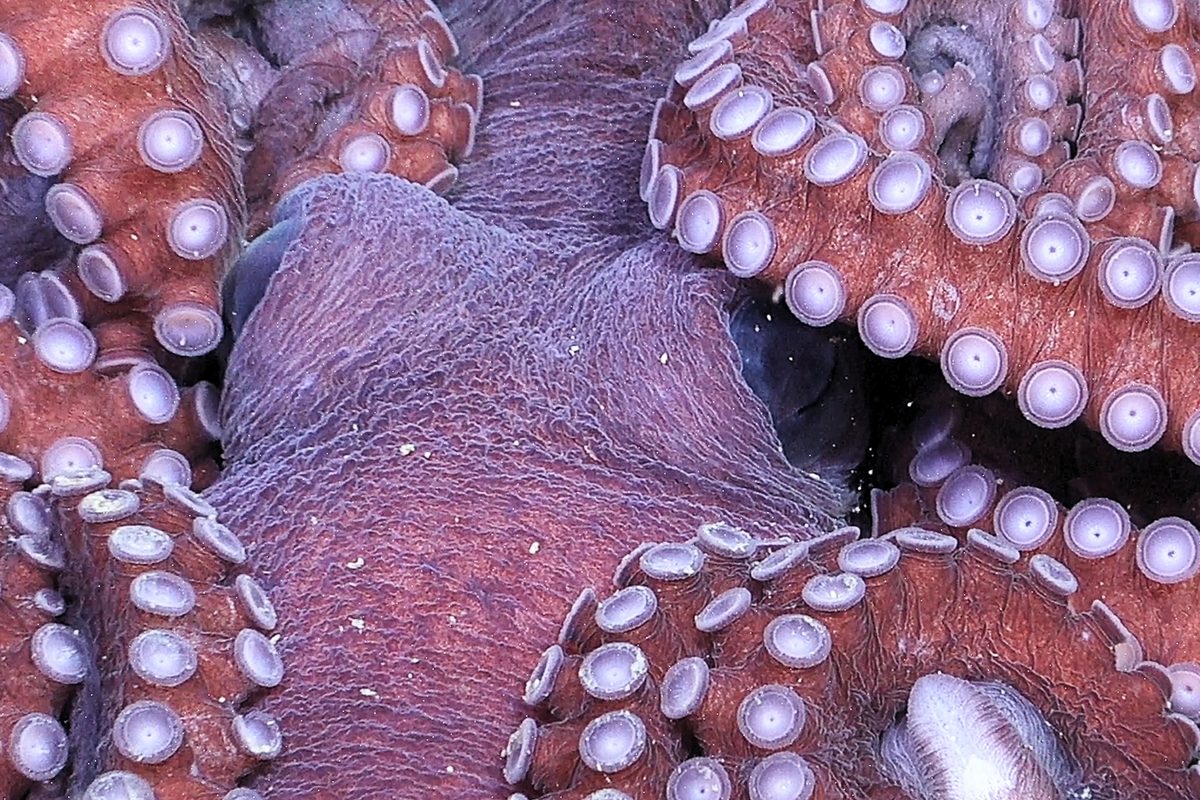
Eight weeks later, a team aboard the R/V Falkor (too) dropped a remotely operated vehicle called SuBastian into the newly exposed seafloor. They expected barren sediment, the kind of sterile canvas you’d anticipate after a glacier retreats. Instead they found an octopus resting on a sponge at 1,150 metres depth. Nearby, a giant phantom jellyfish — its oral arms stretching over ten metres — drifted through water that had never seen sunlight. Brittle stars climbed coral structures. A squid ate another fish. And the scientists realised they were looking at a community that had been running in complete darkness for decades, maybe centuries.
“We didn’t expect to find such a beautiful, thriving ecosystem,” said Dr Patricia Esquete, the expedition scientist. “Based on the size of the animals, the communities we observed have been there for decades, maybe even hundreds of years.”
That single sentence changes the conversation about Antarctica.
Why This Matters Beyond Antarctica
The prevailing narrative around ice-shelf collapse is straightforward and well-established: ice disappears, sea levels rise, ecosystems suffer. It is not wrong. But it is incomplete.
What the A-84 expedition revealed is that ice shelves are not simply lids sealing off the ocean below. For long stretches of geological time, they have been preserving entire worlds. The creatures found beneath A-84 were not colonisers arriving after the ice retreated. They were residents — organisms that had established themselves in a stable, dark, cold environment and stayed there.
This reframes the relationship between ice loss and marine biodiversity in a way that deserves serious attention.
Consider the mechanism. These organisms survive in total darkness, roughly 150 metres beneath a floating sheet of ice, at depths exceeding a kilometre. They cannot rely on photosynthesis. The team’s working hypothesis is that ocean currents are transporting nutrients — organic matter, dissolved minerals, possibly chemosynthetic energy sources — into this sealed environment. The ice shelf is not starving the ecosystem below; it is redirecting the flow of life into a different channel.
If that hypothesis holds up under scrutiny, it means collapsing ice shelves do something more complex than open a blank slate. They release communities that have been structuring the seafloor for generations, potentially creating sudden pulses of biological productivity in regions that were previously inert.
The Giant Phantom Jellyfish
One of the most striking discoveries was the giant phantom jellyfish, a species documented in the Bellingshausen Sea that can grow up to a metre across, with four ribbon-like oral arms exceeding ten metres in length. These are not tiny, transient drifters. They are large, slow-moving predators or filter-feeders that require sustained energy inputs over long periods.
Their presence suggests the ecosystem beneath A-84 was not merely surviving — it was functioning at a level of complexity that implies stability over extended timescales. An organism of that size does not appear in a habitat that has been recently disturbed. It appears in one that has been quietly productive for a long time.
The team also filmed icefish — a group of Antarctic species uniquely adapted to cold, oxygen-rich waters — huge sea spiders, dense clusters of anemones, and extensive sponge communities. All of these indicate a benthic zone that was already structured before the iceberg calved.
What Happens When the Ice Goes
Here is where the story gets complicated.
The scientists on the Falkor (too) mission were clear about what they did not know. They suspected several species may be new to science. They deployed autonomous underwater gliders to measure how glacial meltwater is altering the region’s chemistry and currents. Preliminary readings showed heightened biological productivity and a significant influx of meltwater from the retreating shelf.
That last point is critical. Meltwater is not neutral. It changes salinity, temperature gradients, and nutrient distribution. The ecosystem that existed beneath the ice may not be the ecosystem that exists after the ice is gone. Some species will persist. Others will shift. New communities may arrive from adjacent waters.
Dr Sasha Montelli, also on the expedition, framed this carefully: “The ice loss from the Antarctic Ice Sheet is a major contributor to sea level rise worldwide. Our work is critical for providing longer-term context of these recent changes, improving our ability to make projections of future change — projections that can inform actionable policies.”
The word “context” does heavy lifting here. The A-84 discovery is not evidence that ice loss is net-positive for marine life. It is evidence that the relationship between ice and life is more intricate than simple binary thinking allows. Collapse does not always equal death. Sometimes it equals exposure — and exposure can reveal what was already there, thriving in ways we never knew to look.
The Bigger Picture: Challenger 150 and the Deep Sea
This mission is part of Challenger 150, a UNESCO-endorsed global initiative named for the voyage that first mapped the ocean floor. Dr Jyotika Virmani, executive director of the Schmidt Ocean Institute, called the A-84 event “a rare scientific opportunity” and noted that “serendipitous moments are part of the excitement of research at sea.”
Serendipity is not the same as insignificance. The fact that scientists were already operating in the Bellingshausen Sea when A-84 broke away allowed them to capture images of a ecosystem that would otherwise remain undocumented for years, perhaps decades. It also meant they could deploy instruments quickly — a crucial advantage when studying a environment that is actively changing.
What Comes Next
The data from this expedition is still being analysed. Several species are under review and may be formally described as new to science. The glider measurements of meltwater chemistry will feed into broader models of how Antarctic shelves respond to warming.
One thing is already clear: the assumption that ice-shelf collapse uniformly harms marine ecosystems needs revision. The reality is messier. Some habitats will be destroyed. Others will be liberated — temporarily or permanently — from the conditions that constrained them. The creatures beneath A-84 were not waiting to die. They were waiting to be seen.
That is a small shift in framing, but in science, framing is everything.