Japan Used Anthropic’s Secret AI to Solve an 18-Year Quantum Math
A Japanese AI physics startup cracked a major open conjecture in quantum computing using Anthropic's undisclosed internal model. What the proof reveals about closed-source AI's actual capabilities—and who stands to benefit.
A Japanese Startup Proved a 2008 Conjecture Using Anthropic’s Unreleased Model
The news arrived quietly on November 6, 2026. Physical Superintelligence (PSI), an AI physics startup based in Japan, announced it had resolved the Aaronson-Ambainis conjecture—an eighteen-year-old open problem in theoretical computer science concerning the power of quantum computation.
But the detail most people missed is not that the conjecture was solved. It is that the proof was generated by an AI system built around Anthropic’s unpublished internal model. Nothing like this has been publicly documented before. Anthropic has consistently framed its product strategy around openness and interpretability. Yet its most advanced, unreleased capability appears to have done the heavy lifting inside a Japanese lab.
Why This Conjecture Matters
Scott Aaronson and Andris Ambainis posed their conjecture in 2008 as a way of formalizing a gut feeling that had haunted quantum computing researchers for years: does quantum speedup require hidden structure?
Shor’s algorithm, discovered in 1994, could factor large integers exponentially faster than any known classical method. But it works only because modular exponentiation contains a periodic structure that the quantum Fourier transform can exploit. For random inputs with no such pattern, no one knew whether a quantum computer could still gain an exponential advantage.
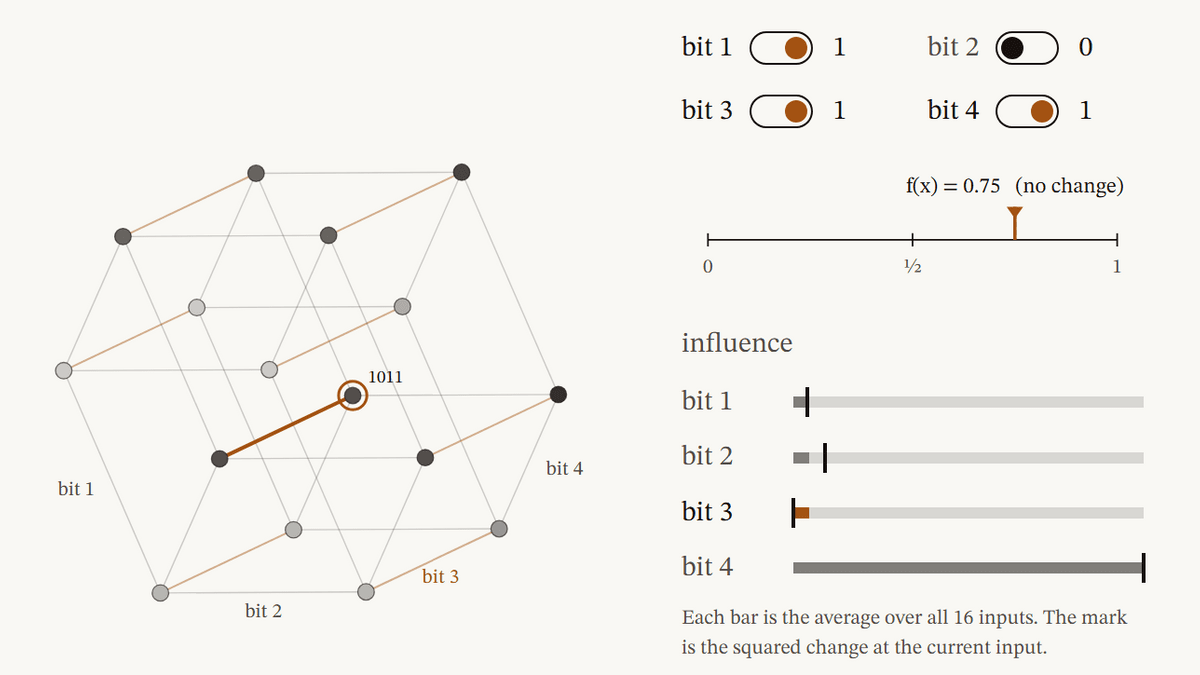
The Aaronson-Ambainis conjecture answered that question in the negative. If true, it states that for most random inputs, a quantum computer cannot complete a computation using exponentially fewer queries than a classical computer. In plain terms: quantum speedups are not free lunch. They demand a problem with specific mathematical architecture. Without it, the quantum computer collapses back toward classical performance.
This is not merely a technical curiosity. The conjecture sits at the boundary between what we can prove about quantum advantage and what we suspect but cannot show. A proof would tighten the theoretical foundations upon which every claim about quantum supremacy rests.
How the Proof Was Produced
According to PSI’s announcement, their custom AI research system incorporated Anthropic’s unreleased internal model. Researchers set up the problem, ran it through their own computational environment, and by the third day the system produced a complete proof.
Over subsequent investigation into related mathematical problems, the proof was refined twice before reaching its final form. That timeline—a full proof emerging within seventy-two hours—is the part that should make AI researchers uncomfortable.
To ensure correctness, PSI translated the proof into Lean 4, a theorem prover designed to catch logical gaps that human reviewers might miss. The formalization succeeded without incomplete sections or additional axioms. Two independent verification programs confirmed the result. All source material, including the Lean source code and verification logs, was published on GitHub.
The People Who Verified It
Henry Yuen, a quantum computing researcher at the University of Toronto, called the resolution “a beautiful problem.” Paata Ivanisvili, a mathematician who has worked on related questions himself, wrote: “Congratulations—this would be a major result if it holds.” He added that a positive resolution implies quantum algorithms can be classically simulated in polynomial time across a broad class of problems, a consequence that reframes the practical boundary between quantum and classical computing.
Stanford researchers who had previously proved a special case of the conjecture in August 2026 also verified the result and are preparing an expert-level explanation for the community.
No critic has yet published a flaw. But the convention in formalized mathematics is that time, not announcements, separates breakthroughs from errors. The Lean verification is strong evidence—not a guarantee that nothing will emerge.
The Real Story Is About Anthropic’s Closed Model
PSI did not name which Anthropic model powered their system. Anthropic itself has not publicly confirmed involvement. What is clear is that an unpublished, non-commercial model developed by one of the most strategically cautious AI labs in the world performed work that top-tier theorists had been unable to accomplish for nearly two decades.
This matters for reasons that extend beyond quantum computing.
Anthropic’s public narrative emphasizes transparency, constitutional AI, and making sure its models remain understandable. Its commercial products—Claude—are deliberately more constrained than competing systems. The unreleased model used here represents something qualitatively different: a version of its research stack optimized for raw reasoning rather than alignment fine-tuning or product safety margins.
If that unreleased variant can generate verified mathematical proofs at this level, then the gap between Anthropic’s public capability and its private capability is larger than anyone outside the company knows. And if PSI was able to harness it, then other well-resourced organizations almost certainly have, too.
Who Wins, Who Loses
For quantum computing theorists, the win is straightforward: a major conjecture is resolved, and the field now has a tighter bound on where quantum advantage can legitimately appear.
For PSI, the win is reputational. The startup demonstrated that a small team with access to frontier proprietary models can produce results that rival what academic institutions take years to achieve. The GitHub repository, the Lean verification, and the endorsements from established researchers give the work institutional weight far beyond what a typical startup announcement carries.
For Anthropic, the win is ambiguous. The company benefits from association with a genuine scientific achievement. But the same visibility raises questions it has spent years trying to avoid: which model was it? What capabilities does it possess that Claude does not? Why was a closed model used for a proof meant to be universally scrutinized?
The loss falls on researchers who work under the assumption that the most powerful AI tools are accessible through public APIs. PSI’s result suggests otherwise. Frontier-grade reasoning能力的 is currently concentrated inside companies that do not publish benchmarks, do not release weights, and do not invite independent evaluation. A Japanese startup accessed it through a relationship or a partnership that will never be disclosed.
What Happens Next
Expect rapid follow-up work. Researchers who have resisted applying AI to pure mathematics will now face pressure to engage with tools proven capable of generating verified proofs. The Aaronson-Ambainis conjecture is not the last open problem sitting at the edge of what these systems can reach.
Formalized verification via Lean should become standard practice for any future AI-generated proof in this space. The PSiGitHub repository already demonstrates that the workflow is viable. Other teams will adopt it.
Meanwhile, the broader implication for the AI industry is harder to ignore. Public benchmarks do not reflect the current state of proprietary capability. Every high-profile proof produced with a closed model reinforces a reality that open-weight advocates have warned about: the most capable systems will continue to operate behind paywalls and NDAs, visible only through the results they leave behind.