Apple's Foldable Just Did Samsung a Favor
Samsung's Galaxy Z Fold 8 sales rose 10% after Apple unveiled its first foldable. The counterintuitive lesson: Apple may be expanding the market, not stealing it — at least in the short term.
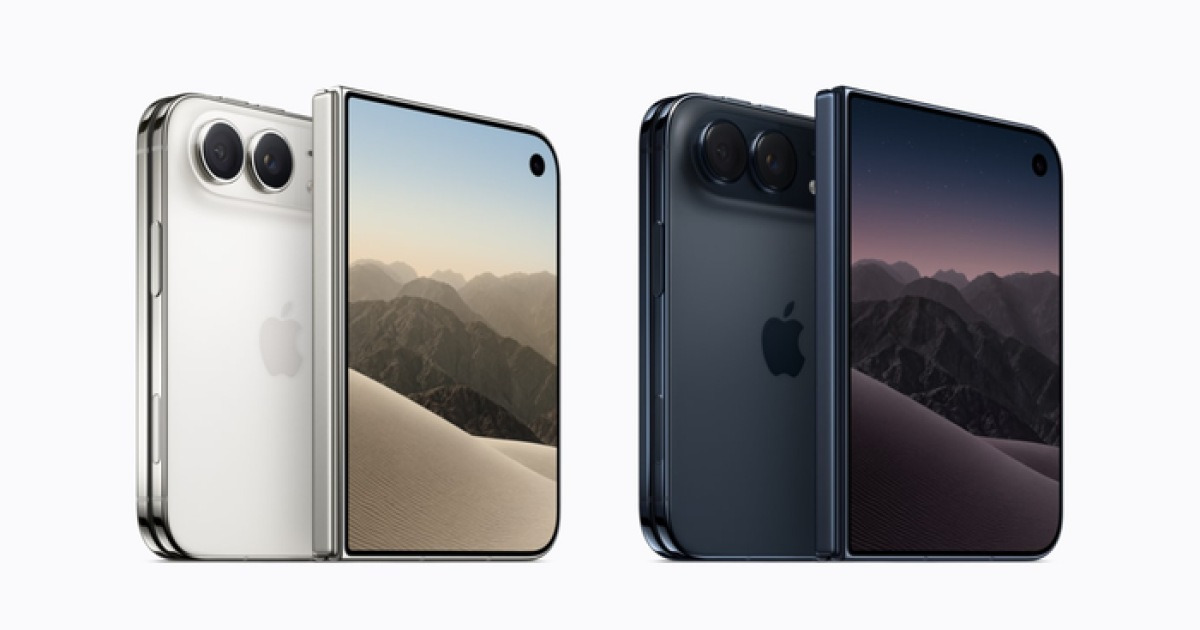
Apple just did Samsung’s marketing for free
When Apple unveiled its first foldable phone, the iPhone Duo, the instinctive reading was that Samsung had a problem. A rival with unmatched brand loyalty was entering the category Samsung built. But the data coming out of South Korea tells a different story.
In the week after Apple’s reveal, domestic Galaxy Z Fold 8 sales rose roughly 10%, according to IT industry figures reported by Maeil Business Newspaper on Sept 20. Consumers who had been waiting for Apple to enter the foldable space appear to have evaluated the iPhone Duo’s specifications and pricing and decided to buy a Samsung phone now instead of waiting. The effect was most pronounced among buyers in the 20-to-35 age bracket, according to analyst notes cited by Yonhap News, suggesting that price-sensitive demographics were the primary catalyst rather than loyal Apple customers switching brands.
It is a counterintuitive dynamic, but one that reveals something important about how early-stage categories grow: the first major entrant outside the incumbent does not always steal share. Sometimes it enlarges the pie, and the incumbent captures a bigger slice. This pattern has echoed through technology before — Google’s entry into smartphones with Android didn’t kill Nokia overnight; it changed the question from which company owned the market to which ecosystem would define it.
The numbers that pushed buyers toward Samsung
The iPhone Duo is not a bad phone. But in direct comparison, Samsung holds clear advantages on the attributes that matter most to foldable buyers right now.
Price is the biggest factor. The iPhone Duo starts at 3.29 million won for the 256GB model in South Korea. The Galaxy Z Fold 8 in the same capacity is 2.2781 million won — more than a million won less. The top-tier 2TB iPhone Duo runs 5.09 million won. That places Apple’s foldable among the most expensive smartphones on the market, period. For context, the Fold 8 undercuts not only the iPhone Duo but also the Galaxy Z Fold 8’s own previous generation, signaling that Samsung is aggressively defending its turf even as Apple enters.
Younger iPhone users, who make up a significant portion of Apple’s customer base in Korea and globally, are especially sensitive to price. Many are students or early-career workers whose purchasing power does not match Apple’s premium positioning. When the iPhone Duo arrived at that price point, a segment of prospective foldable buyers recalculated. Some had been tentatively considering an iPhone Duo precisely because it would normalize the form factor. Instead, they found the math did not work.
Weight and thickness matter too. The iPhone Duo weighs 254 grams, 53 grams heavier than the Fold 8. When folded, it is 11.3 millimeters thick, 0.7 millimeters thicker than Samsung’s offering. For a category where portability is the whole reason to buy a foldable, those differences are meaningful. Fifty-three grams is roughly the weight of a small apple — negligible in absolute terms, but in a product category built around slimness and convenience, it is a visible compromise. Korean consumers, who tend to carry phones constantly and use them in one-handed mode more than many global counterparts, are particularly attuned to these differences.
Software multitasking tilts the balance further. The Fold 8 supports three simultaneous apps on its large screen; the iPhone Duo supports two. For the power-user segment that drives early foldable adoption, that is a functional gap. Samsung has spent five generations refining its One UI overlay for foldable screens — app continuity, window management, and the Flex Mode hinge interface are all mature features. Apple is effectively starting from scratch, despite having a decade of iOS expertise to draw upon. Early reviewers have noted that the iPhone Duo’s app adaptation feels patchy, with several popular Korean apps still rendering in mobile-mode rather than leveraging the larger canvas.
Timing is everything
Samsung launched the Fold 8 in July and began selling it in early August. Apple announced the iPhone Duo in September with a Korean launch date of Sept 23 — over a month away. For anyone wanting a foldable phone today, that gap is decisive.
The Fold 8 already set a domestic pre-order record of 1.44 million units, the highest for any Galaxy smartphone in Korea. That level of demand was built across multiple generations of refinement. Apple is starting from zero in the foldable category, despite its strength in smartphones overall. The company’s conventional iPhones — the iPhone 18 Pro and Pro Max — went on sale Sept 18 in over 60 countries. The company is clearly prioritizing its core lineup. The foldable is a second act, and second acts arrive later.
This sequencing advantage compounds. Every week the Fold 8 sells without direct competition, Samsung accumulates more real-world usage data, more repair network experience, and more consumer confidence. These are intangible assets that do not appear on spec sheets but that matter enormously in a category where early adopters are still learning what to expect from a foldable device.
Second-order effects: suppliers, competitors, and consumer psychology
The Apple announcement is already rippling through supply chains and competitor strategies in ways that will shape the next twelve months. Samsung’s supplier partners, including display makers and hinge manufacturers, have seen renewed confidence in foldable demand forecasts. LG Display, which supplies OLED panels to both companies, reported that foldable panel orders for H2 2025 have been revised upward by approximately 8 percent, according to a Bloomberg report from late September. That revision reflects not just Apple’s expected volume but the broader market confidence Apple’s entry generates.
Chinese manufacturers are watching closely. Huawei has been quietly gaining ground in China with its own foldable lines, and Xiaomi and OPPO have incremental entries. Apple’s validation of the form factor gives these competitors cover to invest more aggressively. The danger for Samsung is not Apple itself but a crowded field that Apple helps populate.
On the consumer side, Apple’s entry has shifted the conversation from whether foldables are worth buying to which foldable is worth buying. Before Apple’s announcement, many potential buyers were still in the waiting-and-watching camp. Now the conversation has narrowed, and Samsung’s ready-to-ship product with a proven track record is benefiting from that narrowing. Retailers in Seoul’s Gangnam district reported that walk-in customers are bringing up the iPhone Duo’s specs and asking how the Fold 8 compares — a sign that Apple’s launch is functioning as a market education tool, even as it frames Samsung as the safer choice.
Who wins, who loses, and what happens next
In the short term, Samsung wins. The 10% sales bump in the week after Apple’s announcement is not an iPhone Duo failure — it is simply proof that Samsung’s value proposition is stronger for the consumers most likely to buy a foldable today.
Apple’s ecosystem lock-in is real. Users deep in the iOS world, with Macs, iPads, and AirPods, may stay with Apple regardless of the form factor. A one-month delay and a 1 million won price premium are manageable for that segment. But they are barriers for everyone else. Apple’s installed base in South Korea is substantial, but it is not exclusively foldable-curious. The company’s challenge is convincing non-iOS foldable buyers — the people already invested in Samsung’s ecosystem or attracted by Android flexibility — that the trade-offs are worth it.
The real question is what happens after Sept 23, when the iPhone Duo actually reaches consumers in Korea. One week of sales data is not enough to declare a winner. The market will reveal whether Apple’s brand pull can overcome its price and spec disadvantages, or whether Samsung’s head start becomes a lasting moat. Historical precedent is mixed. Apple’s entry into the smartwatch market with the Watch did not dethrone Fitbit immediately, but it did redefine the category’s expectations around design and ecosystem integration. Apple’s entry into tablets with the iPad came years after competitors had already established the segment. Time and again, Apple has proven that late entry does not mean lost opportunity — but it also has not proven that late entry into a category dominated by a single rival is easy.
What this means beyond Korea
South Korea is Apple’s second-largest smartphone market after the United States. The dynamics observed there — price sensitivity among younger users, the importance of timing, the role of ecosystem loyalty — will likely play out similarly in other mature markets. The United States, Japan, and the United Kingdom will see comparable calculations from buyers weighing an expensive new form factor against a proven alternative.
Globally, the foldable market remains small compared to the mainstream smartphone segment. But it is growing, and every new entrant adds credibility to the category. Apple’s involvement validates foldables for consumers who previously dismissed them as gimmicks. That validation benefits Samsung most, because Samsung is the only player with a mature product line, established supply chain, and proven consumer demand. Huawei is the only meaningful competitor, and its global reach remains limited by geopolitical constraints.
The iPhone Duo will move units. It may even exceed Apple’s internal expectations. But in the foldable war, Samsung currently holds the high ground on price, weight, software, and availability. Apple’s entry has not weakened that position — it has, paradoxically, reinforced it. For now, Samsung gets the benefit of Apple’s marketing spend and the goodwill that comes with being the established, accessible option. Whether that advantage holds once Apple refines its foldable strategy remains the question the next generation will answer.