Apple's Foldable Entry Changes Everything for Korean Display Makers
Apple's first foldable iPhone sends a wave of optimism through Samsung Display and LG Display as H2 earnings forecasts surge. But the real story is what Apple's demand signals for the global OLED supply chain.
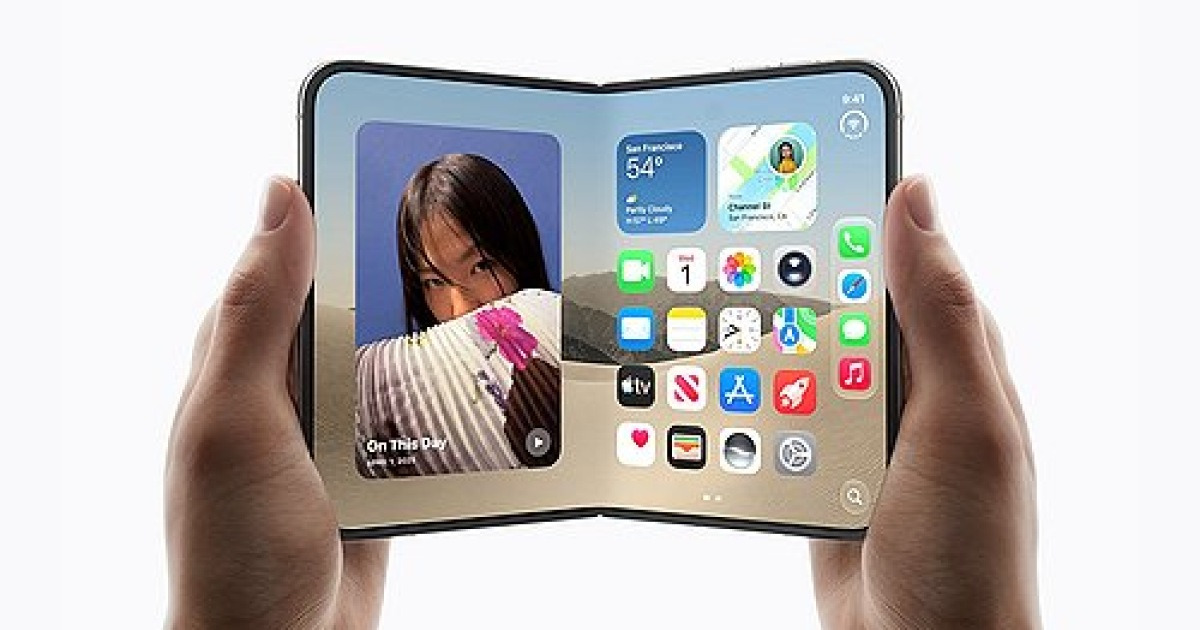
Apple’s Foldable Bet Changes the Rules
Apple’s first foldable phone — the iPhone Duo, unveiled at Apple Park on September 9 — is more than a product launch. It is a structural shift in who controls the OLED supply chain.
The immediate effect is already visible in the numbers. Samsung Display and LG Display, the two Korean panel makers that have long been the quiet backbone of Apple’s iPhone displays, are now riding a new wave of demand that goes well beyond standard OLED panels. And the market is pricing it in.
Samsung Display expects H2 operating profit to roughly double from 1.1 trillion won in H1 to between 2 and 3 trillion won, with revenue climbing to 17–18 trillion won. LG Display projects a 47 percent jump in its mobile segment revenue — from 3.8 trillion won to 5.6 trillion won — and operating profit more than doubling to around 900 billion won. These are not modest upgrades. They are re-pricings.
But here is what the headlines miss: Apple’s move into foldables forces a renegotiation of power within the display supply chain that extends far beyond these earnings beats.
Who Wins, Who Loses
Samsung Display wins outright. Apple has reportedly committed the iPhone Duo’s foldable OLED panels entirely to Samsung Display. That is a clean allocation — no shared supplier for the most ambitious new product Apple has attempted. Samsung holds the exclusive rights to produce the flexible, foldable OLED stack for what could become Apple’s fastest-growing product category.
LG Display, meanwhile, retains its position as a supplier for the iPhone 18 Pro and Pro Max straight-panel OLEDs, but it is locked out of the foldable segment for now. The gap matters. Foldable panels command higher margins and carry less volume risk than standard smartphone displays. LG’s 47 percent mobile revenue growth looks strong, but it is built on panels Apple already buys in bulk from other suppliers.
The real loser may be BOE and other Chinese display makers. For years, the narrative in tech circles has been that Chinese panel makers are closing the gap on Korean OLED production. BOE has been expanding its own foldable OLED capacity aggressively, betting that Samsung and LG would eventually face capacity constraints that would force Apple to diversify its supply base.
Apple choosing Samsung for the iPhone Duo — even on its first foldable — signals that the Cupertino company still sees Korean technology as the only viable path for a premium foldable. That is a message that reverberates through the entire industry. Chinese panel makers, who have been pitching themselves as the cost-effective alternative for companies looking to reduce dependence on Samsung and LG, just lost a major reference case.
What This Means for the Supply Chain
There is a second-order effect worth watching. Apple’s panel supply typically ramps from Q3 into a Q4 peak. The iPhone Duo changes the calculus by adding a completely new product line that shares the same supply chain but demands more complex manufacturing processes. Foldable OLEDs require different deposition equipment, more stringent yield management, and a different handling protocol than rigid displays.
Samsung Display is absorbing all of this alone. That is a capacity risk as much as a revenue opportunity. If Samsung can ramp production efficiently, it consolidates its position as the premier OLED supplier for high-end devices globally — not just Apple. If yield problems emerge, Apple’s foldable launch could stumble, and Samsung’s reputation as a technology leader takes a hit.
LG Display is in a safer position but a less lucrative one. Its panel line is proven, its relationships with Apple are long-standing, and its growth comes from volume expansion rather than technological differentiation. That is fine for steady earnings but not for catching up to Samsung.
The Numbers Tell a Different Story Than the Headlines
The Korean media is framing this as a straightforward earnings upgrade story. Samsung Display’s Q3–Q4 profit range of 2–3 trillion won against H1’s 1.1 trillion looks impressive on paper. LG Display’s jump from 390 billion won to 900 billion won operating profit in H2 also reads as a turnaround narrative.
But consider the baseline. Both companies have been in earnings correction cycles since mid-2024, when demand for smartphone OLED panels softened globally. What you are seeing here is not an explosion of new demand so much as Apple’s single client pulling both suppliers out of a trough.
That creates a vulnerability. Apple accounts for a significant share of both Samsung Display’s and LG Display’s smartphone OLED business. When a single customer doubles its order book, the supplier’s fortunes become tightly coupled to that customer’s product cycle. Any delay, any design change, any supply disruption at Apple translates directly into earnings volatility for the panel makers.
The Bigger Picture
Apple entering the foldable space with its first attempt is itself a bet. The company has historically been cautious about adopting technologies until they reach a level of maturity that matches its quality standards. The iPhone Duo is not just a new form factor — it is Apple’s acknowledgment that the foldable market has moved past the novelty stage into something consumers will adopt at scale.
n
For Samsung Display, the implication is clear: Apple trusts its foldable OLED technology enough to make it the sole supplier for the company’s most important new product category. That trust, earned through years of R&D investment, is now translating directly into margin and market share gains that Chinese competitors will find extremely difficult to displace in the near term.
The earnings story this week is real. But the structural story — who controls the premium foldable display supply chain for the next generation of smartphones — is where the actual shift is happening.