Apple HomeView Smart Display Enters Market Siri AI at $299
Apple's first smart display launches at $299 with Siri AI and a 7-inch Liquid Retina screen. Can one product crack a category where Amazon and Google have entrenched themselves?
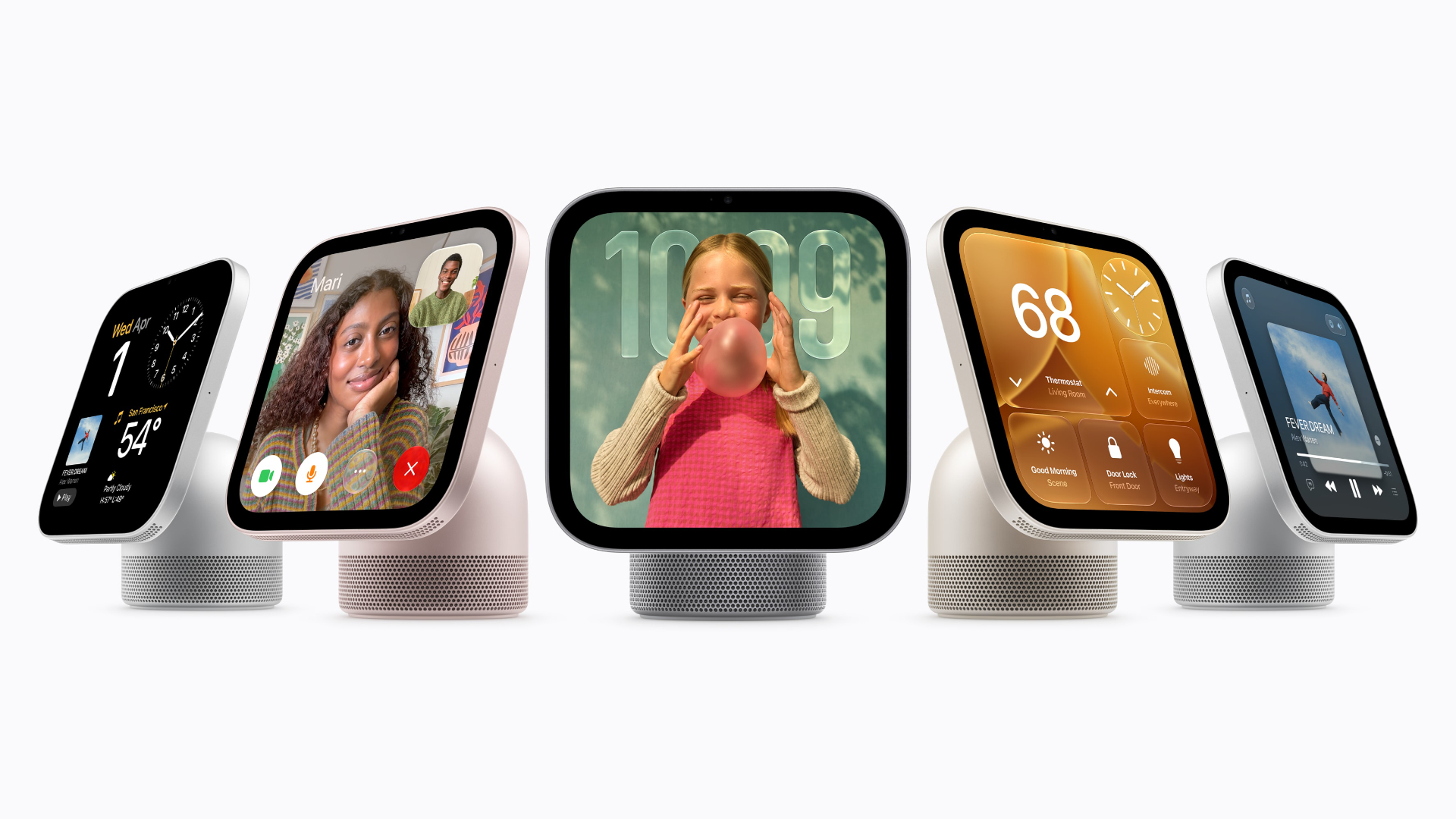
Apple’s Smart Display Gamble: Why HomeView Matters Beyond the Ecosystem
Apple finally has a smart display. And after years of watching Amazon and Google dominate the category, the timing could not be worse—or perhaps, it could not be better.
The HomeView launched October 13 with a $299 price tag, a 7-inch Liquid Retina display, and Apple Intelligence baked in. It is designed to sit on your countertop, recognize up to six household members, and serve as both a communication hub and a smart home control center. On paper, it checks every box Apple needs. In practice, Apple faces a question its competitors already answered: Why would anyone buy this when they already have an Echo Show or Nest Hub?
The answer, Apple is clearly hoping, is Siri AI.
The AI Angle
Apple Intelligence is the differentiator. Siri now supports natural conversation, on-screen recognition, and context-aware actions tied to your iPhone and iPad. Conversations sync through iCloud, so you can pick up a discussion on one device wherever you are. The A18 chip processes microphone and camera data through a dedicated Secure Enclave, keeping sensitive information isolated from the main system.
Privacy is a major selling point. Messages and calendar details only appear when a paired iPhone or iPad is nearby, recently unlocked, and the registered user’s face is recognized. It is the Apple playbook: throw AI at a product, then wrap it in privacy. But the question remains whether privacy matters enough to move people away from devices they already own and trust.
Who Wins, Who Loses
Apple wins attention. This is its first smart display, and the company has been conspicuously absent from a category Amazon and Google have owned since roughly 2017. The HomeView forces those competitors to respond to a new player with deep pockets, a loyal ecosystem, and a history of making products that feel more premium than they are.
Amazon and Google lose nothing immediate. Their installs are entrenched. Most consumers who want a smart display already have one. Apple is entering a market where the easy customers are gone.
But the long game matters more. Apple is not launching the HomeView to sell units in volume. It is launching it to make Apple Home more sticky, to keep users inside the ecosystem when they upgrade, and to give Siri a physical presence in the home. Smart speakers and displays are the only category where Apple does not currently compete. Every room in your house without an Apple device is a room where Amazon or Google is learning about your habits.
There is a second-order effect here that extends beyond hardware. By establishing a foothold in the smart display category, Apple gains a new interface layer for services—Apple TV+, Music, Fitness+, and its growing suite of productivity tools can all reach users through a always-on display they choose to engage with voluntarily. That changes the revenue calculus. Smart displays are not just about device sales; they are about sustained engagement with an ecosystem that monetizes through content, subscriptions, and services. If Apple can convert even a fraction of its existing iPhone user base into smart display owners, the long-term service revenue potential becomes significant.
The Hardware
The HomeView uses a 7-inch Liquid Retina display with True Tone, adjustable from 0.3 to 500 cd/m². The aluminum enclosure sits on a dome-shaped speaker base with dual custom full-range drivers, a downward-firing woofer, and dual force-canceling passive radiators. A stainless steel hinge lets you adjust the angle. A wall-mount version is sold separately.
It also includes a FaceTime camera with center-frame support and an intercom function that sends messages to other HomeView units, HomePods, or iPhones. As a speaker, it competes with the HomePod Mini in quality but not in size. As a display, it competes with the Nest Hub Max on screen real estate but not on price flexibility—Google offers a smaller screen at a lower cost.
The hardware choices reveal Apple’s positioning strategy. The premium materials—aluminum, stainless steel, Liquid Retina—signal that this is not a budget appliance but a lifestyle product. The adjustable hinge and wall-mount option suggest Apple is thinking about placement variety, acknowledging that countertops are not the only viable location. The separate wall-mount accessory is a deliberate margin play, echoing Apple’s approach with stands and accessories across its product lines.
The Real Challenge
The HomeView works with Apple Home Collection, Works with Apple Home, and Matter-compatible devices. It controls lights and door locks via touch or voice. If you are already in the Apple smart home ecosystem, the device fits seamlessly. If you are not, the friction is immediate: HomeView requires an iPhone or iPad, an Apple ID, and a home set up through the Apple Home app.
This is Apple’s historical weakness in smart home products. It builds excellent devices for people who are already inside the walled garden. It struggles to pull people in. Amazon and Google have spent years making their displays work with any ecosystem, any brand, any standard. Apple is betting that its AI capabilities and privacy features will outweigh the convenience gap.
The friction is real and measurable. A recent GfK survey found that 43 percent of smart display owners cite ease of setup and cross-brand compatibility as their top purchasing criteria. Apple’s insistence on device pairing and Apple ID authentication will alienate casual buyers who simply want a display that works out of the box. This is not a new problem for Apple—it has faced the same tension with HomeKit-enabled products for years—but it is acute in a category where competitors have spent nine years lowering barriers to entry.
What Happens Next
Apple has a track record of entering categories late and winning anyway. The Apple Watch did not arrive until 2015, three years after Samsung and Fitbit had established the smartwatch market. The HomePod arrived in 2018, nearly a decade after Amazon and Google launched smart speakers. Both products were initially mocked and underperforming. Both eventually found their audience.
HomeView will follow a similar trajectory. It may not shift market share dramatically in its first year. But it signals that Apple takes the smart home seriously, and it gives the company a foothold in a category it previously ignored. For Apple loyalists who already own an iPhone and a few smart home devices, the HomeView is a natural upgrade. For everyone else, it is a reminder that Apple is still deciding which rooms in your house it wants to own.
Looking further ahead, the HomeView’s success will likely depend on software iterations more than hardware specs. Apple typically sharpens its products through subsequent generations, refining AI capabilities, expanding Matter support, and reducing price. The first-year user base will provide valuable telemetry on real-world usage patterns—how often people actually use the intercom feature, whether face recognition improves with multiple users, how Siri AI handles complex multi-step commands in a home environment. Those data points will shape the HomeView 2, which is expected within 18 to 24 months.
The $299 price is aggressive for a first-generation product in a crowded space. If Apple plans to undercut future generations or bundle services, the margin pressure is real. If it treats the HomeView as a premium ecosystem play, the strategy makes more sense. Either way, the smart display market just got a new player—and that alone makes this launch worth watching.
Apple may not win this category quickly, but it is now in the fight. And for the first time, the rooms you leave unmonitored are the ones Apple is actively trying to enter.