Samsung's AMD Memory Partnership Could Redefine AI Hardware
Samsung is pairing HBM5 and CXL-based memory expansion with AMD in a move that could ease the AI chip bottleneck. The question isn't whether it works — it's who benefits first.
Samsung Just Changed the Memory Game for AI Chips
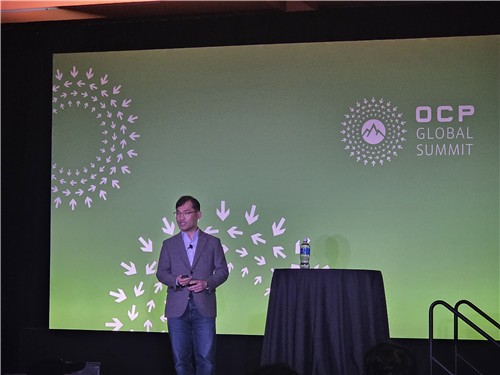
The semiconductor world moved fast this week, but not fast enough for the people building next-generation AI systems. Samsung announced a three-pronged memory strategy at the OCP Global Summit in San Jose, and while the press release reads like a standard product roadmap, the real story is what it reveals about where the industry is actually stuck.
HBM supply constraints are no longer a bottleneck for one or two companies. They’re a bottleneck for everyone building AI at scale — and Samsung’s response, particularly the AMD partnership, signals that memory capacity has finally become the primary constraint in the AI hardware stack.
The Problem Nobody Was Talking About Loudly Enough
AI models aren’t just getting bigger. They’re demanding more from memory in ways that bandwidth alone doesn’t solve. As Senior Vice President Sim Ho-jun explained at the summit, inference workloads — not just training — are driving a surge in KV cache requirements and data volumes that push beyond raw bandwidth into the realm of pure capacity. You can have the fastest memory in the world, but if it can’t hold the working set, none of that speed matters.
This is the distinction that matters. The industry spent years chasing bandwidth. Now it’s hitting a wall of capacity. Samsung’s three strategies — HBM5 speed, CXL memory expansion, and persistent storage — are essentially an admission that no single technology solves the AI memory problem.
HBM5 Is the Easy Part
Samsung’s HBM5 announcement is notable but not surprising. High-bandwidth memory has been on a predictable upgrade path, and Samsung has been competitive with SK Hynix for some time. The real question isn’t whether HBM5 delivers higher bandwidth — it does — but whether Samsung can scale production fast enough to meet demand that currently outstrips supply by a significant margin.
What’s more interesting is the mention of zHBM, which stacks memory directly on top of the compute chip. This approach reduces the distance data travels between memory and processing, effectively buying back some of the bandwidth penalty that capacity constraints create. It’s a hardware solution to a software-driven problem, which means it only helps if your chip architecture supports it.
PIM — processing-in-memory — is the most ambitious of the three. Performing simple computations inside the memory array itself is a concept that’s been around for decades but never achieved mainstream adoption. If Samsung can deliver a practical PIM implementation at scale, it would shift the performance equation for inference workloads that dominate production AI systems today.
The CXL Partnership With AMD Is the Real Story
The Samsung-AMD collaboration on CXL-based memory expansion is what distinguishes this announcement from every other memory roadmap. CXL (Compute Express Link) allows systems to attach memory modules independently of the processor, effectively turning memory into a commodity resource that can be pooled, scaled, and shared across workloads.
For AI data centers, this matters because it decouples memory capacity from compute capacity. Right now, if you want more memory, you need more expensive accelerator cards with integrated HBM. With CXL memory modules — Samsung’s CMM-D (CXL Memory Module-DRAM) — you can add memory separately, potentially at lower cost and with more flexibility.
The AMD partnership is strategic on both sides. AMD’s MI300 series already integrates substantial HBM, but the company has also been developing CXL support for its EPYC processors. Samsung gets a first-mover advantage in the CXL memory module space with a major GPU vendor, and AMD gets early access to a competitor’s memory technology without having to manufacture it themselves.
But here’s what’s less discussed: CXL-based memory expansion only works if the memory hierarchy is handled efficiently. Adding remote memory introduces latency. For training workloads that already struggle with data movement, naive CXL implementations could actually hurt performance. The systems architects who figure out how to make CXL memory feel local to the GPU will have a meaningful edge.
Persistent Storage Completes the Triangle
Samsung’s third pillar — next-generation enterprise SSDs for AI data persistence — might seem like the least exciting part of the announcement, but it’s arguably the most important for the long term. AI inference isn’t just about running models. It’s about serving them, caching results, managing KV states across sessions, and storing training data at petabyte scale.
The gap between volatile memory (DRAM/HBM) and non-volatile storage (SSD) is where data spends most of its life, and where the biggest latency penalties occur. Samsung’s push into persistent storage technologies is a bet that the AI data center of the future will be defined by how efficiently it moves data across that entire hierarchy — not just how fast the GPU can process it.
This is also where the economics get interesting. Enterprise SSDs with AI-optimized workloads are a high-margin business, and Samsung has been slow to compete with Solidigm (the Intel-Kioxia joint venture) in this space. A push into next-gen AI-optimized storage could force a competitive response that benefits buyers.
Who Wins and Who Loses
AI system builders who’ve been constrained by HBM availability lose less — or potentially gain. If Samsung and AMD’s CXL approach works, it creates an alternative pathway to memory capacity that doesn’t depend solely on HBM supply chains dominated by a handful of manufacturers.
SK Hynix, currently the preferred HBM supplier for NVIDIA’s highest-end chips, faces indirect pressure. Not because Samsung’s CXL replaces HBM — it doesn’t — but because the conversation around AI memory is shifting from “who has the fastest HBM” to “who can deliver the most efficient memory hierarchy.” That’s a broader and potentially more competitive landscape.
NVIDIA isn’t mentioned in Samsung’s announcement, which speaks volumes. The company’s dominant position in AI accelerators depends on tight integration between GPU and HBM. CXL-based memory expansion is fundamentally a different architecture, and while NVIDIA can adopt it, it undermines the value proposition of buying the most expensive NVIDIA GPUs precisely because they come with the most HBM.
Data center operators are the clear winners in the near term. More memory capacity, more flexibility in how it’s provisioned, and potentially lower total cost of ownership. The question is whether Samsung can deliver on the roadmap quickly enough to matter.
The Timeline Matters More Than the Technology
Samsung’s OCP announcement is a roadmap, not a product launch. HBM5 samples are expected later this year, with volume production in 2027. CXL memory modules with AMD are still in demonstration form. The persistent storage strategies are incremental rather than revolutionary.
What makes this announcement significant isn’t the individual technologies — they’re all incremental improvements on existing directions — but the coordination. Samsung is explicitly positioning memory expansion as a systems-level problem that requires multiple solutions working together. That’s a more mature understanding of the AI hardware challenge than the industry has shown previously.
The companies that treat this as a competition between HBM, CXL, and persistent storage will miss the point. The AI memory bottleneck isn’t going away. It’s evolving. And Samsung’s strategy suggests it’s betting that the winners will be the ones who optimize across the entire memory hierarchy, not the ones who chase a single specification.
That’s a thesis worth watching — and one that could reshape how the industry thinks about AI hardware constraints for the next several years.