Apple's New CEO Is a Hardware Guy in an AI World
John Ternus takes over from Tim Cook at Apple, bringing a hardware-first background that could reshape the company's AI strategy. The transition raises questions about product direction and chip supply chains.
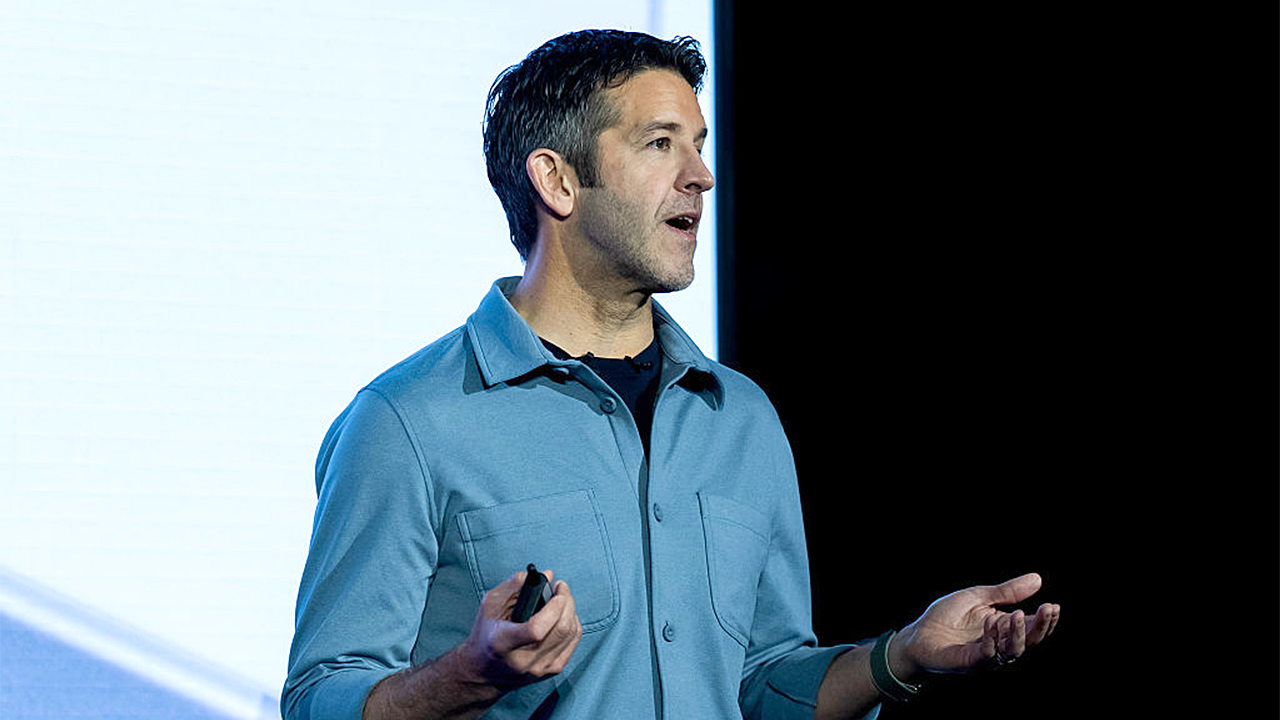
A Hardware Architect Steps Into the CEO Chair
John Ternus became Apple’s third CEO on Tuesday, assuming leadership from Tim Cook after 15 years at the helm. The handoff marks a generational shift in how Apple views its most fundamental question: what is this company, and what does it make?
Cook built Apple into a $4.75 trillion juggernaut. He diversified the product line with the Apple Watch and AirPods, pushed hard into services with Apple Pay and subscription bundles, and oversaw Apple’s ascent to become the first publicly traded U.S. company to crack the $1 trillion market cap mark in 2018. Today, that figure sits roughly four and a half times higher.
Ternus brings something different to the role. He has been at Apple since 2001. His entire career has been spent in product design and hardware engineering — not finance, not operations, not services. He designed hardware for the Mac, iPad, iPhone, Apple Watch, and AirPods. He managed the transition to Apple Silicon, the in-house chips that have redefined the company’s product lineup. Leander Kahney, editor of Cult of Mac and author of six books on Apple, called Ternus “the consummate product guy” and drew a direct line from Steve Jobs through Cook and now to Ternus: a continuum of product focus.
That continuity is both reassuring and quietly disruptive. Reassuring because Apple has never thrived on managerial whiplash. Disruptive because the product-focused mindset that built the company may not be the instinct that solves its next problem.
The AI Question That Looms
The most pressing uncertainty surrounding Ternus’s appointment isn’t whether he understands hardware — he clearly does — but whether that expertise translates to the question everyone is asking about Apple right now: where is Apple Intelligence?
While Google deployed Gemini, OpenAI pushed ChatGPT, and Microsoft waded into AI assistants with Copilot, Apple moved slowly. Deliberately. The company avoided the privacy controversies that have dogged competitors who process user data on servers. It built neural engines into its chips instead. It created what Kahney called “an enormous installed base of very, very capable AI devices” — iPhones, Macs, and iPads that can run AI models locally, without sending everything to the cloud.
The strategy makes sense if you view AI as a hardware problem rather than a software one. Apple doesn’t need to race to deploy the biggest language model. It needs devices smart enough to run competent models efficiently, and the software to make them feel native. That’s Ternus’s world.
But there’s a risk. The window for Apple to establish itself as an AI player is narrowing. Google and Microsoft have already embedded their assistants into productivity tools that millions use daily. Apple’s cautious approach has kept its privacy promises intact, but it hasn’t generated the excitement that artificial intelligence has inspired across the rest of tech. Ternus inherits a moment where patience may be read as hesitation.
The Chip Supply Crisis
While AI strategy will dominate headlines, the more immediate challenge facing Ternus may be simpler: keeping Apple’s products on shelves.
Apple recently raised prices on iPads and MacBook Air models as memory chip costs surged. The shortage isn’t Apple-specific. Every consumer electronics company is feeling it. AI hyperscalers are pouring enormous capital into data center buildouts, gobbling up the same advanced chips that Apple needs for its own devices. TSMC, Apple’s primary chipmaking partner, is struggling to meet demand from both sides.
Apple’s response has been pragmatic. It’s diversifying its supplier base by bringing Intel back into the fold — the company Apple relied on exclusively for more than a decade before shifting to in-house chip design. It’s also working with Intel on chip design and production in the United States, a move tied to broader geopolitical efforts to reshore semiconductor manufacturing.
Kahney called the Intel relationship “smart,” noting that Apple supported a former partner that had been highly successful before things went sideways. The logic is sound: having multiple sources for critical components reduces risk in an era where supply chain fragility is the new normal.
But building new fab capacity takes time. TSMC’s Arizona plants aren’t expected to produce cutting-edge chips for years. In the interim, Apple will navigate whatever shortages exist, and Ternus will have to manage product announcements, pricing, and inventory with constraints that no CEO in the Cook era has faced at this scale.
Continuity With a Different Temperament
Tim Cook’s Apple was a company that optimized. It refined supply chains, expanded services revenue, and grew margins. Cook was the master of execution — making sure Apple delivered the products it promised, on time, at scale.
Ternus’s Apple may need to be a company that experiments. The AI transition, the chip supply diversification, the question of whether Apple should pursue entirely new product categories — these aren’t problems of optimization. They’re problems of direction.
Kahney noted that Ternus is “deep in the weeds” of Apple’s product history and “deeply invested in Apple culture.” That familiarity is an asset. It means he won’t arrive with blind spots about what makes Apple, Apple. But it also means his instincts will be shaped by the company’s hardware DNA, not by the operational playbook that Cook refined over fifteen years.
The question isn’t whether Ternus will continue Cook’s trajectory. It’s whether the next chapter of Apple requires a different kind of leader — one who can balance product passion with the kind of strategic pivots that hardware alone can’t solve.
The market will find out soon enough.