Samsung Employees Want Their Own Stock Crushed — and That Should
Samsung DS division employees are openly hoping their company's stock falls further, not out of malice but because their bonus is paid in shares. The insider posts on Blind reveal a structural conflict of interest that global investors barely understand.
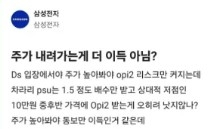
The Post That Broke the Internet — and the Boardroom
On a day when Samsung Electronics shares plummeted nearly 9.5 percent, closing at roughly 210,000 won, something unusual surfaced on Blind, South Korea’s anonymous workplace forum. Several posts from what appeared to be Samsung Device Solution (DS) division employees cheered the decline. One read: “Let the stock hit 100,000 won.” Another simply stated: “A falling stock price is more beneficial.”
The reactions from retail investors were immediate and furious. Comments called the posts “breach of trust” and “embezzlement.” Some vowed to block the special bonus proposal at next year’s shareholder meeting. A few even predicted a return to the era when Samsung traded at barely 90,000 won per share — a level not seen in years.
What they were witnessing was not a conspiracy. It was a compensation structure that quietly aligns the financial interests of semiconductor workers against the very shareholders funding the company’s growth.
How the Math Works — and Why It Creates Conflict
Samsung’s labor-management agreement this year set the DS division’s special management performance bonus (known internally as OPI2) at 10.5 percent of the division’s operating profit. The payout is made in Samsung stock, distributed between late March and early April 2027. Crucially, the number of shares each employee receives is determined by the stock price at the time of conversion.
The arithmetic is unforgivingly simple. Assume an employee’s after-tax bonus equals 100 million won. At a stock price of 250,000 won, that buys 400 shares. At 200,000 won, it buys 500. The same payout, 25 percent more shares. For workers whose livelihoods depend on this bonus, there is a powerful incentive to prefer a depressed stock price in the months leading up to distribution.
This is not hypothetical. The DS division is Samsung’s semiconductor arm — the part of the company responsible for memory chips, foundry operations, and the advanced process nodes that will determine whether Samsung remains relevant in the AI hardware race. These are high-skill, high-stress jobs. The bonus is a meaningful slice of total compensation. And the timing — spread across a full year ending in spring 2027 — gives employees a long runway to hope, and arguably manipulate sentiment around, the stock price.
What This Reveals About Samsung’s Internal Culture
The blind forum posts are striking not because they reveal wrongdoing but because they reveal confidence. These employees are not nervous about the semiconductor cycle. They are not worried that DRAM prices will collapse or that TSMC will widen its process lead. They are calculating how to maximize their own payout within an existing rule set. That is a specific kind of corporate psychology — one that separates the workers from the investors in a way most global analysts do not track.
For international readers, this is a cultural signal worth decoding. Samsung’s DS division has been through a brutal downturn. Memory chip prices cratered in 2023 and early 2024 before a partial recovery driven by AI demand. The stock has fallen nearly 44 percent from its June high of 374,500 won. Retail investors who bought near those levels are underwater by a significant margin. And yet inside the company, the mood appears to be one of opportunism rather than fear.
That disconnect matters. It suggests that the people closest to Samsung’s semiconductor operations — the engineers, the process teams, the fab workers — have a fundamentally different relationship with the stock price than external shareholders. To them, a lower price is not a crisis. It is a better entry point for their deferred compensation.
The Governance Question No One Is Asking
The most consequential issue here is not the posts themselves but the structure that produced them. Samsung’s board approved a bonus system that pays semiconductor workers in company stock at a future date determined by an unknown share price. The system creates a direct conflict between employee incentives and shareholder value. It is not illegal. It is not unusual in Korean corporate practice. But it is almost never discussed in English-language coverage of Samsung or Korean equities.
The conflict is especially sharp because Samsung’s semiconductor division is the strategic heart of the company. Its performance drives margins, its technology roadmap sets Samsung’s competitive position, and its workforce is irreplaceable in the short term. When the people who run that division can benefit financially from a weaker stock price, the question becomes: who bears the cost?
The answer is clear. It is the retail investor. It is the foreign fund holding Samsung shares as a proxy for Korean semiconductor exposure. It is the pension fund that sees Samsung as a stable dividend payer rather than a company whose internal incentive structure subtly rewards share price stagnation.
Why Global Investors Should Care
Samsung Electronics is one of the largest holdings in virtually every emerging market fund and a staple of Korea-focused equity portfolios worldwide. Most international investors understand the company’s financials. Far fewer understand the compensation structures that shape its internal dynamics.
The OPI2 system is not unique to Samsung. Similar bonus-in-stock arrangements exist across Korean conglomerates. But Samsung’s scale and the strategic importance of its DS division make the conflict more visible and more consequential. When Samsung’s stock falls — as it has this year — the backlash from shareholders is real. But so is the structural incentive for employees to welcome that decline.
The posts on Blind will likely be deleted or moderated. The individuals may face internal discipline. But the system remains. And until Samsung’s board restructures how semiconductor workers are compensated — perhaps by tying bonuses to total shareholder return, or by locking in share prices at grant date rather than payout date — the conflict will persist.
The Bigger Picture
This episode is small in isolation. A handful of forum posts, a compensation formula, a stock that dropped 9 percent on weak trading data. But it points to something larger about how Korean corporations allocate risk and reward. The semiconductor cycle is entering a new phase. Demand for AI-related memory is booming. Yet the stock has not reflected that optimism as strongly as some analysts expected. Part of the explanation is macro. Part is sector-specific. And part, apparently, is structural — embedded in the way Samsung’s own workers are paid.
For global investors, the lesson is simple: understand the incentive architecture before you buy the stock. Samsung’s employees are not your enemies. They are acting rationally within the rules they were given. But those rules were designed without much regard for the people holding the shares.