Apple's Post-Cook Era: A Hardware Engineer Steps In for the AI Battle
Tim Cook hands the reins to hardware engineer Jon Turners just as Apple faces its steepest competitive challenge — AI. The leadership shift signals a pivot from management precision to product-led innovation, with the foldable iPhone serving as Turners' first test.
The Quiet Rupture at Apple’s Core
Tim Cook is stepping down after fifteen years as Apple’s CEO, but the story isn’t just about tenure. It’s about what kind of leader Apple needs next — and whether the company can afford to bet on a hardware engineer during the most disruptive technological shift in smartphones since the iPhone itself.
Cook, who took over from Steve Jobs in August 2011 when Apple was worth roughly $35 billion, has turned the company into a $4 trillion enterprise. His mastery was operational: supply chain optimization, margin expansion, and the quiet orchestration of services revenue that eventually rivaled iPhone sales. Under his watch, Apple Silicon replaced Intel chips, and the product ecosystem expanded from phones into watches, earbuds, and tablets. The playbook was disciplined, incremental, and relentlessly profitable.
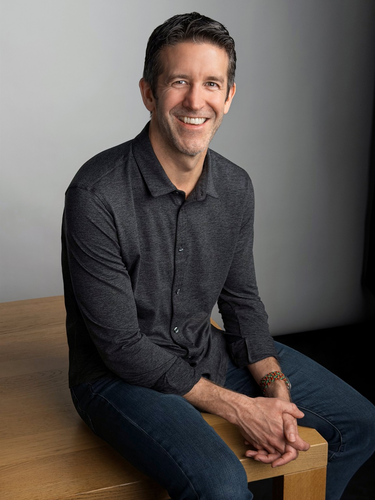
Jon Turners, his successor, is a completely different archetype. He comes from the hardware engineering side — a senior vice president who has spent his career inside Apple’s core product groups rather than its logistics machine. The leadership transition, announced on the company’s social channels last month, is a deliberate signal: Apple is moving from the age of operational mastery to the age of technological reckoning.
The Foldable iPhone: Turners’ First Exam
Turners inherits his first major product moment on September 9, when Apple is expected to unveil the iPhone 18 Pro and Pro Max alongside what would be its first foldable iPhone. The timing is not accidental. A hardware engineer leading product strategy at the exact moment Apple re-enters a category Samsung and Chinese manufacturers have already monopolized sends a clear message about where the company thinks its advantage lies.
Samsung launched its first foldable phone in 2019. Chinese brands — Huawei, Xiaomi, OPPO — have since released multiple generations with refined hinges, thinner profiles, and more aggressive pricing. Apple is entering this market years late, with no proprietary hinge technology of its own to point to. The competitive question is not whether Apple can build a foldable phone — it can — but whether the experience inside that form factor justifies waiting this long.
The answer likely depends on how deeply Apple integrates its ecosystem into the foldable experience. A hinge is a mechanical problem; the real value is in what the software does when the screen folds. That is Apple’s historical strength, and it is exactly the kind of challenge a hardware-savvy CEO who understands both components and user experience is positioned to tackle.
The AI Gap Is the Real Inheritance
But the foldable phone is only the opening act. The structural challenge Turners faces is Apple’s lag in generative AI. While Google embedded AI across Search, YouTube, and its Pixel phones, and OpenAI built the most capable models in the world, Apple’s AI strategy has been comparatively cautious. Siri, the company’s voice assistant, has been widely criticized for falling behind competitors. Apple Intelligence, the company’s own AI platform, arrived later than expected and has been rolled out incrementally across devices.
Apple’s advantage — and Turners’ strategic canvas — is that the company controls the full stack: its own chips, its own operating systems across iPhone, Mac, iPad, and Wearables, and its own services. No other company in the smartphone space has that degree of vertical integration. The competitive strategy, according to industry observers cited in Korean reporting, is not to race toward the most powerful general-purpose AI model but to deepen Apple’s unique selling proposition: a seamless experience across devices where AI feels invisible rather than intrusive.
That is a defensible position, but it is also a slow game. Google and OpenAI are racing toward agentic AI — systems that can act autonomously across apps and services. Apple’s approach prioritizes privacy and on-device processing, which constrains capability in the short term but may prove differentiated as regulatory pressure mounts around data collection and AI transparency.
The Supply Chain Pivot Continues
Turners also inherits a supply chain in flux. Apple has been quietly diversifying production away from China for years, expanding manufacturing in India and Southeast Asia. The political dimension has only intensified under the Trump administration’s push for domestic production, creating competing demands on a company that cannot realistically move its entire manufacturing base to the United States without catastrophic cost implications.
Cook’s transition to executive chairman is significant because it preserves his role in government relations and policy navigation — areas where his fifteen years of institutional knowledge and relationships are irreplaceable. The division of labor appears settled: Turners leads product and technology from the front, while Cook handles external relations and government strategy from the boardroom. It is a complementary split, not a clean handoff.
What This Means for the Market
The leadership change matters globally because Apple remains one of only two companies — alongside Samsung — that sets the terms for the premium smartphone market. Every strategic decision Apple makes about form factor, AI, and supply chain ripples through the entire hardware industry. A hardware-engineer CEO at a time when AI is reshaping what phones can do suggests Apple is betting that the next wave of competition will be won on device experience, not model parameters.
Whether that bet pays off depends on execution. The September 9 event will show whether Apple’s foldable iPhone can justify its existence beyond novelty. Over the next twelve months, the pace of Apple’s AI integration across its device stack will reveal whether vertical integration remains a competitive moat or becomes a bottleneck.
Cook built an empire on operational excellence. Turners’ task is to keep it relevant in an era where the definition of a smartphone is about to change again.