Why SK Hynix's Crash Matters More Than Cha Tae-won's Losses
Cha Tae-won's SK Hynix purchase turned red as the stock cratered 11%. But the real story is what this divergence reveals about Korea's semiconductor sector and global supply fears.
The Stock Tanked 11%. Here’s What Actually Broke.
SK Hynix shares dropped 11.06% on the day, closing at 1.262 million won. The KOSPI followed hard, falling 7.57% to 5,554 and briefly testing the 5,500 level — a visceral scene in a market where major indices rarely shed double digits in a single session without a catalyst. When it happens, algorithms amplify it. Retail panic compounds it. By afternoon, the selling had become self-reinforcing, the kind of cascade that leaves no buyers on the other side.
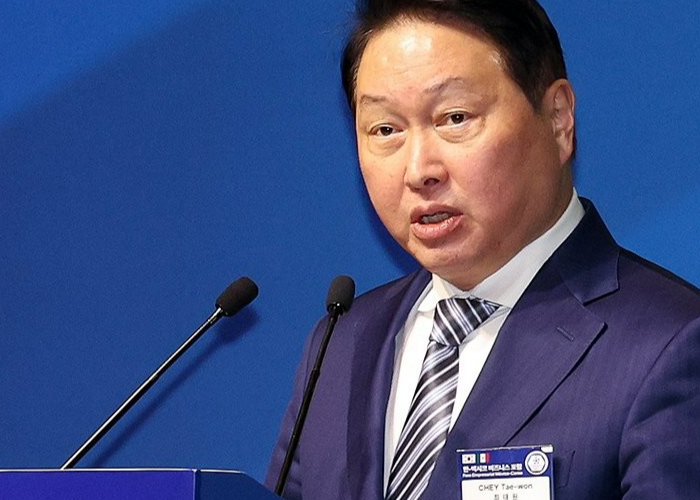
But the detail that caught attention wasn’t the market’s panic. It was Cha Tae-won’s position. In July, the SK Group chairman purchased 3,620 SK Hynix shares at an average price of 1,353,677 won each — roughly 4.9 billion won. At the time, it was notable: Cha had never before bought SK Hynix stock in his own name. That alone triggered a wave of commentary across Korean financial media, with analysts reading the move as a signal that the conglomerate’s leadership saw value at those levels.
A day after his purchase, SK Hynix surged nearly 30% to 1.718 million won, turning the 4.9 billion won investment into a paper gain of roughly 1.3 billion won within 24 hours. For a few hours, Cha looked prescient — the kind of insider move that makes headlines and validates the narrative he’d tried to project.
Now, even by a conservative estimate, that gain has reversed. If Cha still holds all 3,620 shares — and there’s no public indication he hasn’t — their current value sits at approximately 4.57 billion won. That’s a paper loss of roughly 330 million won on a position he bought just months ago to signal confidence. His own words from July ring differently now. “Don’t buy and sell,” he’d said. “Just hold. Memory will always be needed — over time, it trends upward.”
The market didn’t agree. And the divergence between SK Hynix and Samsung Electronics tells a story that Cha’s personal holding pattern only hints at.
The Real Split: SK Hynix vs. Samsung
Korea’s two chip giants are no longer moving in lockstep, and that matters more than any single investor’s gains or losses. This is the first time in decades that the relationship between SK Hynix and Samsung Electronics has decoupled so cleanly — a development that would have been nearly unthinkable during the memory supercycle that peaked in 2022 and 2023.
Samsung Electronics has been climbing. Its HBM3E memory chips — the same high-bandwidth memory critical for AI accelerators from NVIDIA to AMD — are flowing into production at scale. Samsung’s foundry and memory divisions are reporting revenue resilience even as global demand softens elsewhere. The company’s strategy of vertical integration — designing its own processors, fabricating them in-house, and packaging them alongside memory — gives it margins that SK Hynix, focused almost entirely on memory, cannot match.
SK Hynix is doing the opposite. Despite being the dominant supplier of HBM3E to NVIDIA — the very chip driving the AI boom — its stock has been hammered. The gap isn’t about technology. SK Hynix’s HBM is still the gold standard for AI training. The gap is about expectations, valuation multiples, and a growing unease about what comes next.
Here’s what English-language readers often miss: SK Hynix’s stock pressure isn’t just Korean market psychology. It reflects a global shift in how buyers price memory risk. When China imposed new export controls on advanced chipmaking equipment in early 2025, SK Hynix — which had been aggressively expanding memory production capacity in China — faced a sudden wall. Revenue projections were cut. Supply chain strategies were re-evaluated overnight. The company’s Chinese fabs, which had accounted for a meaningful share of its DRAM output, became stranded assets under the new regulatory regime.
Samsung, by contrast, had already diversified its capacity footprint and was further along in securing non-Chinese demand for its advanced nodes. Its fabs in Hwaseong and Pyeongtaek, supplemented by newer capacity in Texas, placed it in a structurally stronger position. The divergence started months before Cha’s July purchase. His timing simply made it visible.
Who Wins, Who Loses
The winners here are clear: customers who can lock in supply agreements with Samsung while SK Hynix is distracted by domestic selling pressure. NVIDIA’s reliance on SK Hynix for HBM remains substantial — roughly 60% of its HBM supply as of recent estimates — but that dependency is now a liability for SK Hynix’s valuation. Buyers know it. Sellers know it. The market prices accordingly. And NVIDIA is quietly accelerating its qualification of Samsung as a second source, a move that would further erode SK Hynix’s pricing power if it materializes at scale.
Micron is another watcher in this space. The American memory maker has been gaining ground in HBM3E production, and every quarter of delay from SK Hynix hands Micron more leverage in negotiations. The result is a subtle but real compression of SK Hynix’s margin profile that hasn’t yet appeared in quarterly reports but is being factored into forward earnings estimates by Seoul-based analysts.
Domestic retail investors are the other obvious losers. The KOSPI’s single-day drop of over 7% — the kind of move that triggers circuit breakers in some markets — wiped billions from household portfolios. SK Hynix alone accounts for roughly 4% of KOSPI weight. When it stumbles, the index drags. But the pain runs deeper than index weights. SK Hynix is one of the most widely held stocks among Korean retail investors, often treated as a proxy for national technological pride. The psychological blow of seeing that holding bleed is harder to quantify than any market cap decline.
Cha Tae-won is neither winner nor loser in any material sense. A 330 million won paper loss on a 4.9 billion won position is noise at his wealth level. What matters is the signal his purchase was meant to send: that the SK Group chairman believed SK Hynix was undervalued. The fact that the stock subsequently fell another 26% from its post-purchase peak suggests the market disagreed — and disagreed forcefully.
Second-Order Effects You Won’t See in Headlines
The implications extend beyond SK Hynix’s balance sheet. Korean policy makers are already feeling the pressure. The Ministry of Trade, Industry and Energy has convened emergency meetings with semiconductor industry leaders, exploring whether targeted fiscal support — tax incentives, subsidized R&D programs, or direct procurement guarantees — could stabilize the sector. Nothing has been announced yet, but the fact that such discussions are happening at this level signals how seriously officials view the deterioration.
Employment effects are also starting to surface. SK Hynix’s Wancle campus in Suwon, one of the largest semiconductor fabrication sites in the country, has reportedly frozen hiring for 2026. Other fabs linked to the SK Group supply chain are following suit. In a labor market where semiconductor jobs carry premium salaries and strong benefits, these freezes ripple outward — affecting recruitment agencies, housing markets near fab cities, and even local restaurant and service businesses that depend on semiconductor worker spending.
There is also a geopolitical dimension. SK Hynix’s Chinese exposure isn’t just a commercial problem — it’s a strategic vulnerability in a region where semiconductor sovereignty has become a national security priority. The U.S. CHIPS Act framework, which conditions subsidies on supply chain relocation away from China, places SK Hynix in an increasingly awkward position. The company benefits from Chinese demand for legacy memory chips while simultaneously needing to demonstrate alignment with Western export controls. That tension is unlikely to resolve quickly, and it will continue to weigh on investor sentiment.
What Global Buyers Should Watch Next
Two things. First, SK Hynix’s HBM order book. Any sign that NVIDIA or AMD is qualifying second-source suppliers beyond SK Hynix — especially from Samsung or Micron — will accelerate the valuation gap. Second, China’s next move on chip equipment. Every new restriction tightens SK Hynix’s margins on memory produced in Chinese fabs.
The Korea Semiconductor Index has fallen roughly 20% from its 2025 peak. SK Hynix is down harder than Samsung. The gap isn’t temporary. It’s structural.
Cha’s shares may recover. The sector’s problems are deeper than one chairman’s portfolio. The question for global buyers and investors isn’t whether SK Hynix will bounce back — it’s whether the company can reposition itself fast enough to avoid becoming a second-tier memory supplier in an AI-driven market that rewards vertical integration and supply chain flexibility over raw technical excellence alone.