Arm's First Self-Made Chip Pits It Directly Against Its Own Customers
Arm announced it will sell its own AI processor starting in late 2026, turning a relationship built on licensing into direct competition. Meta is the first customer. What this means for the entire chip ecosystem.
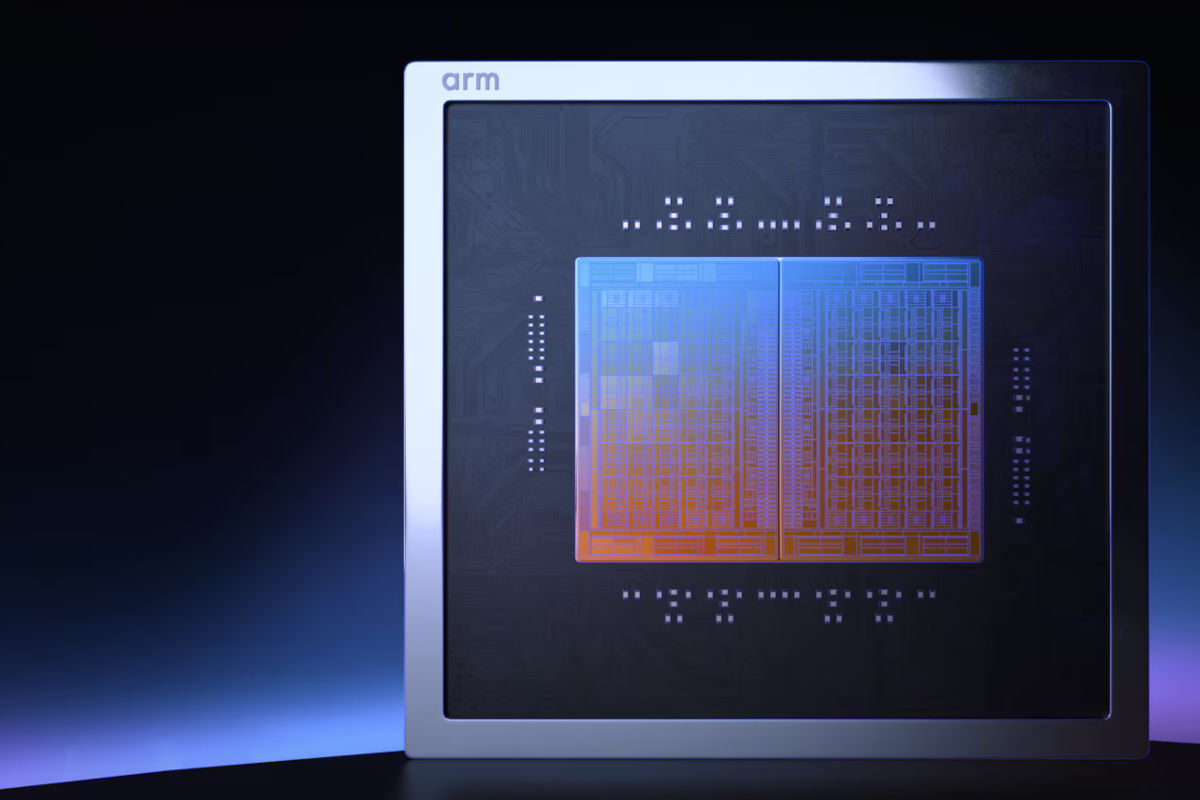
Arm Stops Being the Architect. Now It’s Building Too.
For thirty-five years, Arm’s deal was simple: design the blueprints, license them to everyone, collect the royalties. No manufacturing risk. No direct competition. Just silicon DNA sold to clients who would turn those designs into products.
On March 24, that ended. Arm Holdings announced it will begin selling its own microprocessor—dubbed the Arm AGI CPU—directly to data center operators, with full supply slated for the second half of 2026. The first known customer is Meta. This is not a licensing deal. It is Arm stepping onto the same field it once only supplied maps for.
The irony is almost too neat. Meta builds its own silicon. It invests billions in data centers. And now it will also buy processors from a company whose architecture it depends on to run them. The same company that designs the cores Meta uses inside its custom chips.
Why This Isn’t Just Another Chip Launch
Nvidia’s dominance in AI hardware is near-total. The company overtook Apple by market capitalization in November 2024 and passed Microsoft in June 2025. xAI’s Colossus supercomputer publicly committed to Nvidia GPUs only. The AI chip market has few contenders and even fewer viable alternatives. That concentration is what makes Arm’s move significant—not because Arm is likely to unseat Nvidia tomorrow, but because the structural rules of the market are changing.
Arm’s entry signals that even the most entrenched position in AI hardware is contestable. The company is not claiming it will beat Nvidia on raw training performance. Its pitch is different: power efficiency rooted in decades of RISC design philosophy, originally shaped by Nokia-era mobile processors. The argument is that data center operators drowning in electricity costs and cooling constraints should consider an alternative that trades some peak throughput for dramatically better performance-per-watt.
That argument has traction. Meta’s own infrastructure challenges—energy budgets, capital allocation, the need to diversify beyond a single supplier—are precisely the conditions where an efficiency-focused alternative becomes rational, not aspirational.
The Relationship Is Now Paradoxical
Here is what English-language coverage has largely missed: the depth of the entanglement. Arm does not just license standard cores to Meta. It provides the foundational IP that underpins Meta’s custom silicon designs. By entering the processor market itself, Arm becomes both the supplier of the underlying architecture and a competitor selling complete chips. Meta is buying from a company whose designs it already depends on—but also competing with directly.
This dual role creates incentives that did not exist before. Arm now has a direct commercial interest in making its own processors competitive, but it also benefits when its licensing customers succeed. The more Meta ships efficient silicon, the more demand there is for Arm’s architecture. The more Arm’s own chips sell, the more pressure it puts on Meta’s in-house efforts. These forces are not irreconcilable, but they are no longer aligned in the simple way they were.
The same tension will hit every other Arm licensee that considers entering the AI chip market: Qualcomm, Amazon with its Graviton line, Apple with its custom silicon. All of them now share an ecosystem with a company that can observe their production volumes, performance trajectories, and failure modes firsthand—because Arm is building the same kind of product.
What Changes Next
The immediate effect is small. Two initial systems are already in partial deployment. Full supply arrives in late 2026. Arm’s AGI CPU will occupy a niche—likely targeting inference workloads and energy-constrained deployments rather than the massive training clusters where Nvidia reigns. But the precedent is the real product.
Once Arm establishes itself as a chip seller, the licensing model undergoes a permanent recalibration. Licensees will negotiate from a weaker position. They can no longer assume Arm’s success depends exclusively on their success. Every royalty-bearing design they ship now exists alongside a competing product from the same company.
Arm’s leadership has framed this as natural evolution: collecting real-world performance data from deployed chips will improve the IP offered to all licensees. That claim has merit. But it also means Arm’s own processor division becomes a research laboratory funded by the very customers it competes with. The data flow runs both ways, and the advantages will not be shared equally.
Who Wins, Who Loses
Meta wins in the short term by securing an alternative supply path and reducing single-vendor dependency. It also gains leverage against Nvidia’s pricing power. But it accepts a long-term relationship where its chief architecture provider is also its processor competitor.
Arm wins by entering a market with enormous demand and limited competition, converting intellectual property into tangible revenue streams, and closing the feedback loop between design and deployment.
Nvidia loses margin of safety. Even if Arm captures only a small share of the data center AI chip market, the symbolism matters. A company that built its dominance on the premise that AI hardware had one viable path now faces a second architecture with serious backing and a first-mover advantage in the efficiency segment.
Other licensees lose leverage. Qualcomm, Amazon, and any company considering custom AI silicon now negotiate with a rival that understands their architectures at the transistor level.
The Bigger Picture
The AI hardware market has been sold as a zero-sum game dominated by a single winner. Nvidia’s stock performance and the public allegiances of companies like xAI reinforce that narrative. Arm’s AGI CPU announcement does not shatter that narrative, but it cracks it open. It proves that the architecture layer—the deepest layer of the stack—is no longer neutral. It has a commercial interest. It has competitors. It has something to sell.
That shift will reverberate through every data center built over the next five years. The question is not whether Arm’s chip will outsell Nvidia. The question is whether the industry ever returns to a world where the company that designs the foundation stays off the battlefield.