Artex Hacking Tool Pulled After Korea Bank Attacks — Too Late?
A Chinese AI penetration-testing tool designed for defensive security testing was weaponized in attacks on South Korean banks — and its developer shut it down only after the code was already in attackers' hands.
The Artex Paradox
A tool built to help companies find their own security weaknesses was used to break into South Korea’s financial sector. Then its creator pulled it from the internet. This is not a story about regulation — it’s a story about how fast useful code becomes dangerous code, and how little anyone can do once that flip happens.
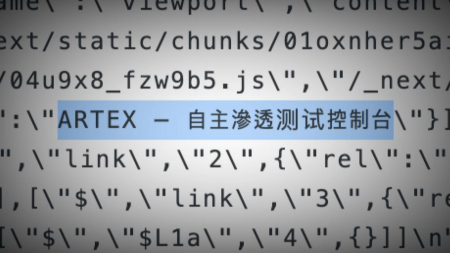
Artex (아르텍스) was developed as a penetration-testing tool. In the world of enterprise security, these are the programs that red teams use to simulate attacks, find gaps, and fix them before real criminals do. They are supposed to be defensive. The developer, operating under the codename “Autumn-27,” is reportedly a 26-year-old in China’s Guangdong province.
Last week, Autumn-27 announced on the eighth that Artex would no longer receive updates and no further versions would be released. The project page was deleted from GitHub. By that point, however, the tool had already been used in a series of coordinated hacking attacks against South Korean financial institutions, according to U.S. security firm CrowdStrike.
What makes Artex notable is not just its function but its design. Unlike traditional penetration-testing frameworks that require significant manual configuration, Artex incorporated AI-driven automation that could scan, identify vulnerabilities, and attempt exploitation with minimal human intervention. That efficiency — the very feature that made it valuable to defensive teams — is what accelerated its weaponization. Within days of the tool’s public release, variants appeared in hacker forums. Within weeks, they were being deployed against banking infrastructure in South Korea.
Who Built It, Who Used It
CrowdStrike’s analysis, reported by AFP and Reuters, found that the attackers combined Artex with large language models — essentially using AI to automate and scale the exploitation process. The profile of the suspect points to someone with ties to a Chinese DDoS hacking collective known as “Godnet Vitas,” according to domestic security firm Logpresso’s investigation.
Logpresso’s research traced command-and-control traffic back to IP addresses registered in Guangdong province, consistent with Autumn-27’s reported location. The firm also identified that the attackers modified Artex’s source code to target specific vulnerabilities in Korean banking systems — including outdated authentication modules and misconfigured API endpoints that many financial institutions had left exposed during a period of rapid digital expansion.
China’s Foreign Ministry held a press conference to deny the allegations. Spokesperson Mao Ning said she did not know the specific facts being referenced and emphasized that China opposes hacking activities according to law.
The denial itself is almost secondary to what it reveals: in the world of cyber weapons, attribution is murky, plausible deniability is built into the architecture, and by the time a government is asked to comment, the code has already spread. The Chinese government’s position — that it opposes unauthorized hacking — is technically true but functionally hollow. It does nothing to address the fact that private individuals in China can develop and distribute exploit tools without immediate legal consequence, and that once those tools leave domestic jurisdiction, enforcement becomes nearly impossible.
The Regulation Problem Is Real, But Wrong
What happened with Artex is being cited in South Korea as proof that regulation of AI security tools is trailing deployment. That framing is easy to understand but misses the deeper issue. The problem is not that regulators were slow. The problem is that the tool was never really under anyone’s control once it hit GitHub.
When Artex’s source code was made public, it became what security researchers call an “open-source exploit.” Unlike a commercial vulnerability that a vendor can patch, or a zero-day that a nation-state hoards, open-source exploits can be copied, modified, and deployed by anyone with an internet connection and basic coding skills. The cost of replication is near zero. The cost of destruction is not.
Making Artex private after the fact does not undo that. It makes it harder for new users to access the code — but the code already exists in repositories, in backups, in the hands of the attackers who used it. CrowdStrike and Logpresso both noted this explicitly. The tool cannot be recalled.
This dynamic creates a perverse incentive structure. Developers who publish defensive tools face no liability for how those tools are used — but once harm occurs, they bear the reputational cost of having enabled it. Autumn-27’s decision to shut down Artex was likely driven by that pressure, not by any belief that deletion would prevent further attacks. The gesture signals responsibility without delivering it.
The Speed Gap
The Artex case illustrates a pattern that is becoming more common: defensive tools are developed, published, and then weaponized within days or weeks. The timeline is compressing. What once took months of reconnaissance and manual exploitation can now be automated by AI-assisted tools that any motivated actor can download.
This is not unique to Artex. Similar cases have appeared in other markets — penetration-testing frameworks repurposed for ransomware deployment, vulnerability scanners turned into scanning services sold on dark-web forums, encryption tools flipped into locking mechanisms. The mechanism is always the same: a tool designed for one purpose finds its way to an actor with different intentions.
The difference with AI is the scale. Large language models can now interpret, adapt, and deploy exploit code without the actor needing deep technical expertise. The barrier to entry is falling. The barrier to defense is rising.
Consider what this means for financial institutions. A bank in South Korea that spent months hardening its infrastructure against traditional attack vectors now faces threats that can be launched by a single operator using an automated tool downloaded from a public repository. The economics of offense have shifted dramatically. The cost of launching a coordinated attack has dropped from tens of thousands of dollars in specialized infrastructure and skilled labor to near zero in software and cloud computing time.
Second-Order Effects
The fallout from Artex extends beyond the immediate attacks. South Korea’s Financial Services Commission has already begun reviewing whether penetration-testing tools should be subject to licensing requirements — a move that would raise complex questions about oversight, transparency, and the chilling effect on legitimate security research.
Some developers are quietly moving their projects to private repositories or removing documentation that explains how vulnerabilities are exploited. The message is clear: when public tools attract this kind of attention, visibility becomes a liability. That trend risks making the broader cybersecurity ecosystem less transparent, not more secure.
Insurance providers are also reassessing their positions. Cyber liability policies for financial institutions may now require proof that third-party security tools have undergone vetting — a standard that is difficult to enforce and easier to fake. The market response will shape behavior more effectively than any regulation.
Meanwhile, South Korean banks are accelerating their migration to AI-driven defensive systems, creating an arms race where both offense and defense are increasingly automated. This raises the stakes for every vulnerability discovered and every patch delayed. In this environment, the margin for error shrinks with every iteration.
What Happens Next
For South Korea, the immediate question is whether the financial sector’s security posture improves. The attacks have already occurred. The code is already in circulation. New patches may be deployed, but the underlying vulnerability — the gap between how fast tools spread and how fast defenses can be built — remains.
For the broader cybersecurity industry, the Artex case is a reminder that “open source” does not mean “safe.” It means “visible.” And visibility cuts both ways: defenders can see the tools, but so can attackers. The question is no longer whether these tools will be misused. It is how quickly the ecosystem can adapt to a reality where the cost of offense is lower than the cost of defense.
China’s denial, CrowdStrike’s attribution, Logpresso’s investigation — these are the signals of a system trying to make sense of an event that happened faster than any process could track it. That is not a failure of regulation. That is the nature of the problem.
Artex’s public page is gone. The code lingers in mirrors and caches and on attacker machines. Autumn-27 may never publish again — or may return under a different name, with a different tool, following the same arc. The shutdown was a signal that the developer understood the consequences. But signals arrive after the fact. The attacks they reference have already happened.
The next incident will not wait for regulation to catch up.