China's CXMT Just Threatened Samsung and SK Hynix's DRAM Empire
Chinese memory maker CXMT claims breakthrough progress on 4F² DRAM technology, targeting a 2026 launch that could challenge the Korean duopoly. The move signals a fundamental shift in global memory chip dynamics.
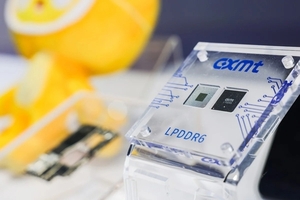
China Just Found a Crack in Korea’s Memory Fortress
The Korean memory empire has stood unshaken for decades. Samsung and SK Hynix together command roughly two-thirds of the global DRAM market, a dominance built on relentless innovation, deep pockets, and a tight alliance with U.S. design standards. In May 2024, a quiet announcement from Shanghai slipped through the wires and most Western desks never picked it up.
Chao Kangyu, president of ChangXin Memory Technologies — known as CXMT — told attendees at a semiconductor industry event in Shanghai that his company had achieved “meaningful progress” in developing 4F² cell structure technology for server-grade DRAM. The target: a commercial product by the end of 2026.
That timeline is the shocker. Samsung and SK Hynix have both publicly roadmaped 4F² DRAM, but neither has committed to a launch date before 2028. CXMT is essentially claiming it will beat the world’s two largest memory makers to a technology node that defines the next generation of AI server memory.
What 4F² Actually Means
To understand why this matters, you need to understand the geometry. DRAM cells are the tiny capacitors that store data inside a chip. The industry standard for years has been the 6F² structure, where F represents the minimum feature size — the smallest line a manufacturer can print on a silicon wafer. Six times F squared is the space a single memory cell occupies.
4F² cuts that footprint dramatically. According to the South China Morning Post, which first reported on Chao’s comments, the 4F² structure can reduce cell area by more than 30 percent compared to the 6F² standard. On a single 300mm wafer, that density gain translates directly into more chips per wafer — or equivalently, more capacity in the same physical footprint.
For AI data centers, where memory capacity per rack is the bottleneck, that 30 percent density improvement is not incremental. It is the difference between upgrading your cluster and buying a new building.
The VSG Secret
CXMT is pinning its 4F² bet on a transistor architecture called VSG — Vertical Surrounding Gate. In plain terms, the company says it has moved away from the traditional horizontal channel structure used in conventional DRAM and switched entirely to a vertical design. The vertical arrangement addresses a problem that gets worse as cells shrink: current leakage. When you pack memory cells tighter, electricity leaks between them, burning power and corrupting data. The VSG design, CXMT claims, solves this leakage problem while dramatically improving the performance-per-watt ratio.
The company also said it completely redesigned its existing production processes to accommodate the new architecture. That is a huge operational undertaking — not just a research lab exercise. Rearranging a fab’s process flow is expensive, time-consuming, and risky. If CXMT has actually done this, it is not merely designing a new chip; it is running a parallel manufacturing line.
Why 2026 Is a Shockingly Early Date
Samsung and SK Hynix are not sleeping. SK Hynix unveiled its 4F² roadmap in late 2024, and Samsung is targeting sub-10nm DRAM with 4F² architecture for volume production around 2028. Both companies have decades of process know-how, access to ASML’s newest EUV lithography tools, and deep relationships with every major cloud provider.
CXMT, by contrast, has been operating under severe constraints. The company was placed on the U.S. Commerce Department’s Entity List in 2023, restricting its access to American semiconductor equipment. It was added to the U.S. Bureau of Industry and Security’s list in 2024, further limiting its ability to purchase advanced lithography and inspection tools from U.S. suppliers.
Yet CXMT claims it has been researching 4F² technology since its founding in 2016 and currently holds more than 300 patents related to the architecture. The company also plans to showcase a DDR5 RDIMM product using its proprietary 4F² technology later this year — a full year before its end-of-2026 commercial target.
If CXMT delivers even a fraction of what it promises, it forces a reckoning. The Korean duopoly has assumed that process leadership would always keep them ahead. A Chinese competitor closing that gap on a compressed timeline upends that assumption.
Who Wins, Who Loses
The immediate winner, if CXMT executes, is anyone who buys servers. Chinese cloud providers, domestic AI startups, and government-backed data center projects gain access to a second source for high-density memory — one that does not run through Seoul or Samsung’s supply chain. That diversification has strategic value beyond price.
For Samsung and SK Hynix, the threat is real but not yet existential. CXMT’s products are not yet in the market. Patent portfolios do not equal fab output. And the Entity List restrictions mean CXMT still lacks access to the most advanced manufacturing equipment, which will constrain yield rates and volume for the foreseeable future.
But the psychological impact is significant. For years, the narrative has been simple: China can design chips, but it cannot manufacture them at scale. CXMT’s 4F² progress, even if delayed or compromised, complicates that story. It signals that Chinese memory manufacturers are moving up the value chain rather than remaining stuck in commodity nodes.
The Supply Chain Implication
The deeper consequence of CXMT’s move is structural. The global DRAM market has been remarkably concentrated — two companies, one country (South Korea) controlling the majority of supply. That concentration creates fragility. Geopolitical disruptions, natural disasters, or even ordinary demand swings can send prices spiraling. A third major player, even an imperfect one, introduces competition that disciplines pricing and reduces single-source dependency.
For Western buyers — and this is the angle most English-language coverage misses — CXMT’s progress is not simply a Chinese success story. It is a signal that the memory supply chain is about to fragment along geopolitical lines. Chinese buyers may increasingly prefer CXMT products for domestic projects. Western buyers may continue with Samsung and SK Hynix for security and compliance reasons. The result is not one unified global market but two partially decoupled ones.
That division benefits no one efficiently, but it is already underway. CXMT’s 4F² advance accelerates it.
What Happens Next
The next twelve months will be decisive. CXMT plans to show a DDR5 RDIMM product this year. If that module reaches actual customers — even in small volumes — it will be the first tangible proof that the company can move from patent filings to shippable hardware. If the product stalls or fails qualification, the 2026 timeline collapses and the threat dissipates.
Samsung and SK Hynix will respond. They have the capital, the fabs, and the customer relationships. Expect aggressive pricing, accelerated timelines, and potentially more aggressive patent litigation. The memory business has always been a war of margins, and CXMT’s entrance forces both Korean giants to fight harder on price and performance simultaneously.
For the broader semiconductor industry, the CXMT story is a reminder that technology leadership is not permanently inherited. It is earned, and it can be contested. The Korean memory empire was built on decades of discipline. It can be unmade faster than anyone assumes — provided someone is willing to spend the money and take the risk. CXMT is making that bet right now.