Asia Braces as US-Iran War Spirals Into New Phase
Trump warns Iran faces far worse retaliation if it strikes back — but Asian economies are already absorbing the shock. A single escalation between Washington and Tehran is reverberating through supply chains, bond markets, and energy grids far from the Persian Gulf.
The Alert That Nobody in London or New York Is Yet Hearing
The United States has widened its military campaign against Iran. Central Command confirmed fresh strikes on IRGC positions on the first of the month, targeting missile launch sites on Larak Island after intercepting Iranian forces preparing to deploy naval mines into the Strait of Hormuz. Trump called it a measured response — and then immediately said the measured response was over.
What Western wires are still processing as a diplomatic incident, Asian markets have already priced as an energy crisis.
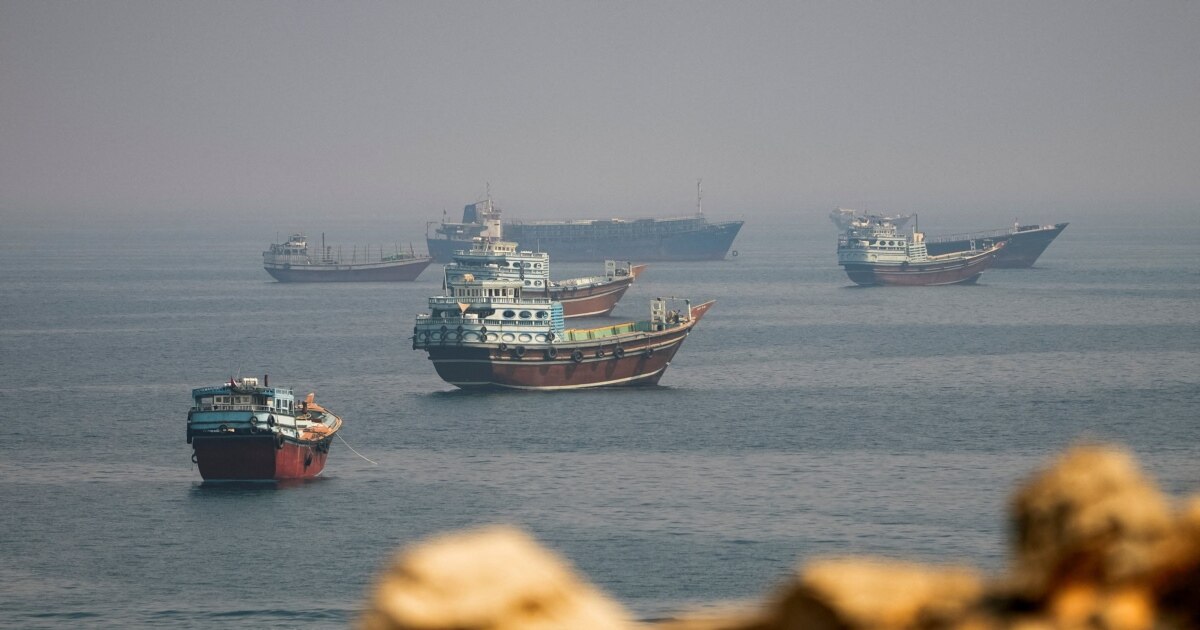
The tankers hit two days earlier off Hormuz were not an anomaly. They were a preview. Two Saudi crude carriers struck within minutes of each other by unidentified projectiles. Six attacks on commercial shipping in the strait since late August. The Strait of Hormuz moves roughly 21 million barrels of oil a day — nearly a fifth of global consumption. When it chokes, Seoul, Tokyo, and Mumbai feel it before Washington issues its next press briefing.
Who Is Already Paying the Price
South Korea and Japan import more than 70 percent of their crude through the Hormuz corridor. That is not marginal energy trade. That is the difference between a functioning economy and a shutdown. Chinese imports from the Persian Gulf follow a similar pattern, though Beijing’s diversified shipping routes offer slightly more cushion.
Korean refiners absorbed the first wave of panic when the initial US strikes began in early July. The pause on July 29 gave markets a false sense of relief. Today’s escalation — hitting precisely when tankers were still absorbing the tanker attacks — erased that comfort. The韩国원유수입조합 reported futures spreads widening sharply overnight, a signal that forward delivery contracts were being re-priced for disruption risk that no model fully captures.
Japan’s METI scrambled emergency consultations on August 31. India’s refining sector, built on cheap Iranian and Gulf crude, watched spot premiums jump on the same timeline. These are not secondary effects. They are the primary effects. The Middle East is where Asian energy security gets decided, and it is being decided right now under fire.
The Bond Selloff No One Is Writing About
Meanwhile, Asian government bond markets sold off on the same day CENTCOM announced the strikes. South Korea’s 10-year yield spiked. Japanese institutional investors rotated out of Middle East-adjacent risk. The won weakened against the dollar not on trade data or Bank of Japan commentary but on geopolitical rerating.
This is the channel Western analysts keep missing. They track oil. They track diplomacy. They do not track how a missile intercepted over Jordan re prices Korean sovereign debt.
The reason is structural. Asian central banks and pension funds hold massive positions in Gulf-adjacent emerging market paper. When Iran fires at Jordan and the UAE, when the US intercepts everything and then bombs Larak Island, the risk premium does not stay in the Persian Gulf. It migrates along every corridor that money uses to reach Asia.
What Trump’s Warning Actually Means for the Region
Trump’s post on Truth Social contained the sharpest escalation signal yet. He did not frame the latest strikes as deterrence. He framed them as序曲 — the opening act. Iran, he said, would face attacks of a scale not yet deployed if it retaliates. And what comes after that, he suggested, would leave the Islamic Republic with nearly nothing remaining.
That is not language aimed at shaping Iranian behavior. That is language aimed at reshaping the regional order. It tells Tehran that the calculus of limited retaliation no longer applies. It tells Riyadh and Abu Dhabi that the US will escalate without red lines. It tells every Asian importer that the next escalation could close the strait entirely.
The IRGC’s decision to try mining the strait was always the highest-risk move Iran had available. It was also the most rational. Deny the chokepoint, force the world to choose between escalation and accommodation. The US chose escalation. Asia chose to brace.
What Comes Next — And Why It Matters for Everyone
CENTCOM confirmed that IRGC forces were caught preparing the mine-laying operation before they could execute it. That means US intelligence has eyes on Iranian tactical movements inside Iranian territory. That is a capability shift, not a one-off strike. The next round of operations will not be reactive. They will be preemptive.
Iran’s retaliation through Jordan and the UAE failed to land targets. But the fact that it happened — that Iranian missiles crossed three sovereign borders in a single night — changes the threat model for the entire region. Israel is now openly under Iranian missile range from multiple vectors. Gulf states hosting US bases face daily attack risk. Japan and South Korea face energy supply risk that compounds the first two.
The seven-week gap between the July 8 strikes and the July 29 pause gave markets a breathing room that never materialized. Iran used it to redirect missile and drone attacks toward Kuwait, Bahrain, and Jordan. The US used it to reposition. Both sides are now resuming combat at higher intensity, and neither has exhausted its options.
Asian energy ministries are running contingency scenarios that assume Hormuz closure for 30 days, 60 days, 90 days. The ones assuming 30 days will be wrong. The ones assuming 90 days will be closer to reality if Trump’s latest warning is any indicator. The question is not whether the strait stays open. The question is how long it stays open before the next attack makes it impossible to insure the ships that run through it.