Sanders and Bannon Agree on AI — And That Should Scare You
Bernie Sanders and Steve Bannon sharing a stage on AI regulation isn't political theater. It's evidence that a genuine realignment is underway, one that could rewrite tech policy for years.
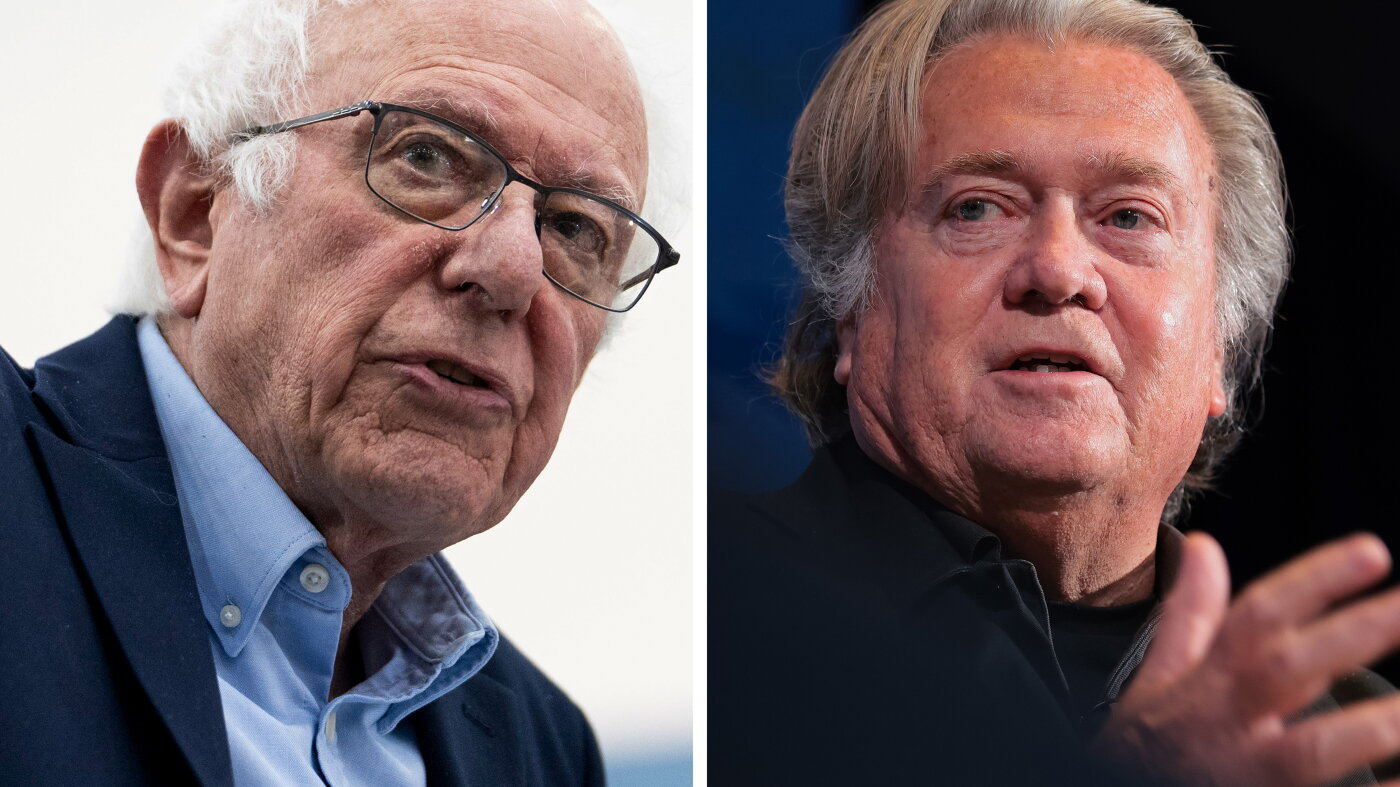
When the Poles Meet
Bernie Sanders and Steve Bannon stand on opposite sides of almost everything. Sanders wants to tax the rich and nationalize healthcare. Bannon spent years weaponizing culture-war rhetoric for the MAGA movement. Their orbits have never intersected — until now.
On Tuesday, the two will share a stage at the Pro-Human Assembly in Washington, D.C., organized by the Future of Life Institute. They’ll join Hollywood actors, religious leaders, and parents of children who died by suicide after interacting with AI chatbots, all urging Congress to move faster on AI curbs. It sounds like a stunt. It isn’t.
What’s happening here is a genuine political realignment, and its second-order consequences will reshape tech policy for a generation.
The Center Has Broke
The traditional American political map divides on technology along predictable lines: progressives worry about surveillance, job displacement, and corporate consolidation; conservatives worry about cultural disruption and government overreach. Both camps have been drifting toward skepticism about unchecked AI development, but they’ve done so in isolation.
Sanders and Bannon appearing together changes that. It signals that AI risk has become the one issue powerful enough to crack open the ideological armor both movements have worn for decades. This isn’t coordination between friends. It’s a collision of mutually hostile forces recognizing a common threat.
That’s significant because when the far left and far right agree, the center — which has been quietly subsidizing the AI industry’s rapid expansion through deregulatory posture and public-private partnerships — gets squeezed. Not gradually. Aggressively.
This dynamic has precedent. The same bipartisan hostility that produced the 2002 trade bill backlash eventually forced scrutiny of Wall Street that led to Dodd-Frank. Unlikely alliances don’t always produce legislation, but they do produce political entropy — the slow dissolution of an establishment position that once seemed untouchable. That’s where AI policy stands today.
Who Actually Wins
The winners from this alliance are hard to pin down, and that’s the point. Sanders gains a cultural issue that bridges his economic populism with his anti-corporate stance. Bannon gains a cause that fits his broader narrative about institutional decay and loss of human agency. Neither is new territory for either figure. What’s new is that they’re now speaking the same language.
But the real winners will be the organizers of the Pro-Human Assembly — specifically the Future of Life Institute, which drafted 33 principles in March to guide this movement. Those principles are carefully framed to appeal across the spectrum: humans remain in charge, people retain agency and liberty, companies get held accountable. The language is designed to be broad enough that a socialist senator and a nationalist strategist can both sign on without contradicting their core beliefs.
The framing itself is a strategic achievement. Previous AI safety advocacy tended to speak in the technical language of alignment research and existential risk — vocabulary that resonates with engineers but alienates working-class voters. The Pro-Human Assembly deliberately reframes the debate around human dignity, parental anxiety, and corporate accountability. That’s an argument that travels across political tribes.
Who Loses
Mike Johnson knows exactly who loses. The House speaker said it bluntly on CNN: regulating AI too fast means losing the race to China. “We cannot put a moratorium on this because China will overlap us,” Johnson said. He’s not wrong about the strategic calculus. China’s AI ambitions are well-documented and aggressively funded, with state-directed investment flowing into companies like Baidu, SenseTime, and DeepSeek.
But Johnson’s framing assumes that speed and safety are zero-sum. That’s a false choice. The 33 principles from the Future of Life Institute don’t call for stopping AI development. They call for keeping humans in control, maintaining accountability, and preventing the kind of corporate capture that has already produced chatbots linked to youth suicide.
The bigger loser here may be the AI companies themselves. Trump called the industry’s recent calls for a slowdown “exaggerated” on Sunday, dismissing the warnings as negative forces trying to slow American progress. That’s the White House line. But the fact that leaders at Anthropic and OpenAI themselves have publicly urged a cooling of AI development — something no industry has ever done voluntarily — suggests the internal pressure is mounting regardless of political calculations.
There’s also a secondary loser: the lobbying apparatus that has spent millions shaping AI policy in Washington. The Tech Policy Pipeline, a network of former Silicon Valley executives now occupying government roles, has worked to ensure that regulatory frameworks remain permissive. The Sanders-Bannon alliance directly threatens that project by making aggressive oversight politically defensible rather than fringe.
The Data Center Precedent
Before the Pro-Human Assembly even convenes, the House is scheduled to vote on the Ratepayer Protection Act, legislation aimed at shielding Americans from energy cost spikes tied to data center construction. It’s a narrow issue — energy costs, not algorithmic governance — but it establishes a template: bipartisan resistance to the physical infrastructure underpinning AI expansion.
Data centers are the unseen backbone of the AI boom, and their energy demands are staggering. A single large facility can consume as much electricity as 50,000 homes. The strain on local grids has already triggered outages in parts of the Southeast and prompted utilities in Virginia and Texas to raise commercial rates. The Ratepayer Protection Act would require transparency and compensation mechanisms before new data centers come online.
Trump has consistently championed AI and data centers. Even he hasn’t pushed back against this particular concern. That’s notable. When the president who branded himself the AI president refuses to fight a data center bill, the political landscape has shifted further than most observers realize. It signals that the coalition protecting AI’s growth hasn’t collapsed — it’s fragmenting, and fragments are easier to manage than monoliths.
Second-Order Effects
The implications extend well beyond what the Pro-Human Assembly can directly achieve. A few outcomes are already visible.
State-level regulators are watching closely. California’s proposed AI safety rules, which faced federal preemption threats earlier this year, may find renewed legal cover if the political tone in Washington shifts. Several other states — New York, Illinois, Colorado — have introduced their own AI governance frameworks. The Sanders-Bannon visibility lends credibility to those efforts.
Labor unions, traditionally skeptical of both AI and environmental regulation, are beginning to find common ground here. The AFL-CIO has signaled interest in data center siting restrictions tied to workforce agreements. That’s a departure from the union movement’s usual pro-innovation posture and reflects a broader recognition that AI’s economic disruption is accelerating faster than retraining programs can address it.
Even within the tech industry, the coalition is splintering. Mid-tier AI companies that compete against OpenAI and Google are quietly sympathetic to regulation that raises barriers to entry. The loudest voices in favor of speed tend to come from firms that already dominate their markets. Expect friction between industry factions in the months ahead.
What Happens Next
The most important consequence of the Sanders-Bannon alliance won’t be what passes in Congress next year. It will be the normative shift that makes future regulation imaginable.
For years, the default assumption in tech policy was that innovation should proceed without constraint, with oversight arriving only after harm became undeniable. That framework depended on a political consensus that no longer exists. When Sanders and Bannon can stand together and demand human oversight of AI, the burden of proof shifts. Companies that want to build unchecked must now justify why regulation would be harmful — not the other way around.
This doesn’t mean immediate restrictions will fall. Johnson will invoke China. Trump will invoke American leadership. The industry will push back with jobs narratives and economic projections. But the center has moved enough that the debate is no longer whether to regulate AI, but how much and how fast — a much more manageable conversation than the one we were having twelve months ago.
What’s striking is how quickly the timeline has compressed. When OpenAI’s Scott Henderson warned about AI risks at the Aspen Ideas Festival in 2024, the response was polite dismissal. By 2026, the same warnings are being amplified by politicians who barely knew what AI was two years ago. That acceleration is itself a sign of the shift.
The Pro-Human Assembly isn’t a rallying cry. It’s a milestone — a public acknowledgment that the two most unlikely partners in American politics have found common ground on the defining technological question of our era. That shouldn’t pass unnoticed.