Blizzard's Comeback: StarCraft Goes Open-World, Diablo V Confirmed
Three years in the making, BlizzCon 2026 unveiled a StarCraft reboot reimagined as an open-world shooter set in 2030 and confirmed Diablo V launching in early 2029. The reveals mark Blizzard's boldest pivot yet — and a signal that the franchise still carries outsized weight in East Asia.
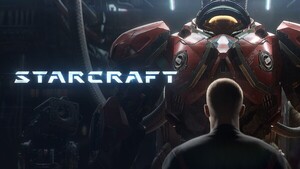
Blizzard Is Back — But Not As You Remember It
Three years passed between BlizzCons. In that window, Blizzard stumbled through layoffs, project cancellations, and a reputation that had gone from bulletproof to brittle. The convention floor at Anaheim this week was quiet proof that the company still commands loyalty it does not deserve — or perhaps, more accurately, it proved that loyalty outlives management decisions.
The headline news was immediate: a StarCraft reboot and Diablo V, both given concrete release windows. The subtext — what matters for the people who have actually lived with these games — is far more interesting.
StarCraft Reboot Goes Open-World, Drops RTS Format Entirely
The StarCraft new title, set in 2030, will not be a real-time strategy game. It is being built as a story-driven open-world shooter, helmed by Dan Hay, formerly of the Far Cry development team. Spring 2030 is the target.
Let that land for a moment. StarCraft — the franchise that defined competitive gaming in South Korea, the game that produced Park Jung-bo, Lee “Flash” Young-ho, and the Jeon “Protoss God” Soon-yong dynasty — is being reborn as an open-world shooter.
This is a pivot that will confuse Western readers who know StarCraft only through the lens of a genre-defining RTS. But in Korea, the cultural gravity of StarCraft has never been about its mechanics. It has been about identity. StarCraft created an entire professional sports ecosystem: televised matches, player contracts, stadium events, national heroes. The Zerg rush is still a meme in Korean internet culture two decades later. An open-world shooter with a StarCraft skin is a gamble that treats a competitive esport as a cinematic IP property — and that choice alone tells you everything about where Blizzard’s priorities sit now.
Dan Hay’s pedigree from Far Cry’s development team signals a different kind of ambition: single-player-heavy, narrative-first, designed for passive consumption rather than tournament play. The 2030 timeline gives Blizzard a long runway. But it also means the company is betting its most iconic Korean franchise on a format that actively abandons the gameplay loop that built it.
Diablo V: Sequel to a Victory That Never Happened
Diablo V takes a bolder narrative stance. It is set after Diablo, the Prime Evil, has won. The world is already damned. This is a sequel to triumph, not tragedy — and it makes the franchise’s latest entry a genuine departure from the series’ core premise of resisting an apocalypse that always ultimately fails.
Early 2029 is the planned release window. The announced class roster includes the Plague Knight as a new addition, alongside the Demon Hunter and Monk returning. For a series that has spent the last decade polishing its endgame loops, this narrative choice suggests Blizzard is willing to take tonal risks again — something the studio has not been known for since the Diablo III launch.
The Diablo 4 expansion roadmap, meanwhile, shows a company trying to retain its existing player base while building toward the next flagship. The Season of Infernal Heritage begins September 15, the Amazon class pack arrives in early 2027, and a Netflix animated series is in development. That streaming strategy is not new for Blizzard — World of Warcraft already proved animated IPs could carry a franchise beyond its player base. But it does signal a company diversifying its revenue engines faster than its game development cycle can keep pace.
World of Warcraft Gets a New Classic Server and a Final Expansion Tease
World of Warcraft: Forever drops November 4 — a new classic service offering the Skyborne race, three new zones, over a thousand quests, and nine dungeons. Beta testing begins September 17. This is Blizzard’s play to lock in nostalgic players who do not want the modern WoW experience but are tired of waiting for something better than the current classic offerings.
The Last Titan expansion, set to be detailed in early 2027, is billed as the conclusion to the World Soul saga. If that narrative payoff lands, it could matter for players in every market. If it fumbles, the entire modern WoW era goes down as an ambitious false start.
Overwatch Wraps Its Biggest Story Arc
Overwatch ends its year-long Talon storyline after this season. A new support hero, Doktrine, arrives alongside map and hero reworks for Sombra and Roadhog. The Overwatch Spotlight event in February 2027 will presumably chart the next direction. A competitive FPS franchise ending its longest continuous narrative chapter is both a sign of maturity and a sign that Blizzard is running out of ideas for what Overwatch should be.
The Bigger Picture: A Studio Rebuilding While Pivoting Hard
BlizzCon 2026 reads like a company doing two things simultaneously: servicing the fans who stayed through the rough years, and quietly building toward a franchise strategy that looks nothing like the one that made Blizzard famous.
The StarCraft reboot is the clearest example. Western gaming press is likely to treat it as a curious misstep — why turn StarCraft into a Far Cry clone? — but in Korea the question carries different weight. StarCraft is not just a game there. It is a cultural institution. Rebooting it as a narrative shooter may alienate competitive players, but it also opens the door to audiences who would never pick up an RTS. That audience is larger globally, even if it is smaller in the country where the franchise matters most.
Diablo V, meanwhile, has the rare luxury of a built-in audience that does not need persuasion. The question is whether a post-apocalyptic Diablo story can sustain three years of development without becoming safe.
Blizzard’s CEO Johanna Faries framed this BlizzCon as a chance to remind the world why games matter. The announcements suggest she is right about the need — but the strategy going forward will determine whether that reminder comes too late.