BTS's Sold-Out Stadium Run Proves K-Pop Isn't a Phase
BTS wrapped its 'Arirang' North American leg with 31 all-sold-out shows and 1.92 million fans. The numbers matter less than what they signal: K-pop's stadium economics are now permanent, and the group's solo members inherit a blueprint nobody else can match.
The Numbers Were Never the Point
Thirty-one shows. Twelve markets. Zero empty seats. One point nine two million fans filling arenas and stadiums across North America, generating roughly 42.5 billion won — that is about 320 million dollars at current rates.
Those are the figures that fill press releases. The real story sits underneath them, in the structural implications no box score captures.
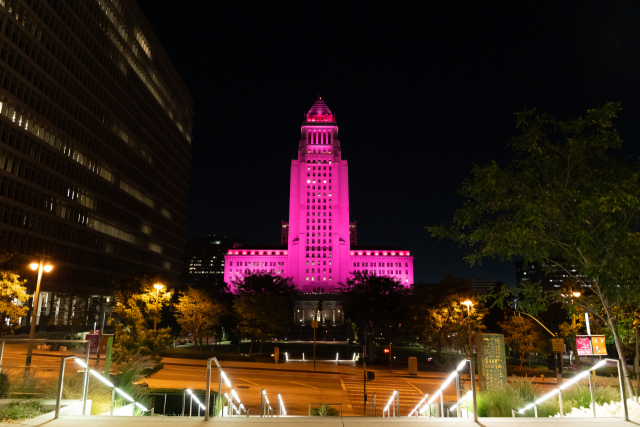
When BTS opened four nights at Los Angeles’ SoFi Stadium this past August, the city formally declared September 1 through 8 “BTS Week” and lit City Hall in the group’s signature red. The ceremonial gesture mattered less than what it represented: a major American municipality treating a Korean act’s visit with the same institutional recognition typically reserved for legacy rock acts or pop titans. By completing those four performances, BTS tied its own record at that venue, joining its earlier 2021 PERMISSION TO DANCE run for eight total concerts at SoFi and nearly half a million cumulative attendees — the most in the stadium’s history.
No act built its career outside the Anglo-American pop circuit has done this before, at this scale, from this starting point. The comparison set matters. The Beatles played stadiums, but they emerged from within the English-language mainstream. U2 played them, but they were a Irish rock band crossing over, not a Korean pop group breaking in. BTS occupied territory that promoters had assumed belonged exclusively to artists already fluent in the cultural language of Western stadium rock.
The Stadium Question Is Finally Settled
For years, Western ticketing outlets and booking agents treated K-pop stadium shows as an experiment worth running once, maybe twice, with one eye already on the exit. You test a Korean act in a large venue, you see whether the fanbase can sustain the commitment beyond the initial novelty of proving a point, and then you decide whether to commit major infrastructure — staging, sound, security, broadcast — to the next attempt. The implicit assumption was that K-pop fans would show up for one spectacular event and then dry up, leaving promoters holding expensive production contracts and inflated venue guarantees.
That calibration period is over, and the data is now too clean to ignore.
Thirty-one consecutive sellouts across different cities, different venues, different logistical setups, operating at a tempo that left no room for the kind of mid-tour attrition that typically exposes a hype cycle. A Weverse livestream of the LA shows reaching viewers in 177 countries. Local press — the LA Times among them — framing the tour not as a cultural novelty but as a genuine stress test of K-pop’s permanence in the American market, and finding that it passed with room to spare.
The secondary effects are already visible. Venue operators who initially resisted K-pop stadium dates are now proactively pitching Korean acts for available slots. Production companies that previously treated K-pop touring as a specialized niche with limited scale are building out the infrastructure to service it as a mainstream category. Ticketing platforms have adjusted their pre-sale architectures to accommodate the flash-bid behavior that Korean fandoms demonstrate, which in turn has improved the experience for other fan-driven acts that previously got squeezed by the same systems.
This is not a temporary surge sustained by momentum and media narrative. The infrastructure is already in place, the relationships are already established, and the demand pattern is already proven across multiple markets. Nashville, Toronto, Chicago, East Rutherford — those 12 markets absorbed the demand without a single show breaking even below capacity. That level of consistency is what separates a viral moment from a structural shift. A viral moment peaks and dissipates. A structural shift recalibrates expectations for years.
What Happens Next Matters More Than What Just Happened
The North American leg is finished. The tour restarts September 2 in Bogotá, Colombia, before moving through Lima, Santiago, Buenos Aires, and São Paulo — five additional stadium markets in a region that has consistently outperformed expectations for K-pop demand despite economic headwinds that would deter most touring acts.
This sequencing tells you something important about how BTS and Big Hit Music now think about their audience. North America was never the ceiling. It was the anchor — the market that proved the model and then became the foundation upon which everything else rests. South America is where the next test of stadium-level demand will play out, and the dynamics are meaningfully different. Colombian and Argentine fans have sustained K-pop interest through peso devaluation, inflation spikes, and currency instability that makes international touring economics brutally difficult. If BTS can replicate even half the sellout rate there, the economic implications for Latin American touring infrastructure will be significant. Promoters in that region will have demonstrated proof that K-pop stadium economics work in markets where dollars don’t go far, which changes how the entire industry approaches the region going forward.
Then there is the solo question, and it is the one that will determine whether BTS’s stadium run was a peak or a platform. Jeongguk’s self-composed track “Still With You” just crossed 500 million streams on Spotify — a milestone reached by a song originally posted as a free SoundCloud upload in 2020 and only formally released in 2023. It charted in 83 countries. The trajectory of that song’s growth, independent of any promotional machinery, speaks to a level of organic audience attachment that translates directly into ticket revenue.
RM’s birthday was celebrated mid-tour on stage, a detail that sounds like fan culture folklore until you remember it happened inside a stadium holding 70,000 people. The intimacy of that moment, played out to a capacity crowd, is the kind of image that reinforces fan loyalty and generates the social content that drives future ticket demand. Each member now carries a solo portfolio strong enough to support arena tours independently. The difference is that BTS’s group infrastructure — ticketing priority, venue relationships, production budgets, broadcast partners — was built at a stadium scale that no other K-pop act has matched. When those members branch out, they do not start from zero. They inherit a system calibrated for capacity crowds, and that inheritance is transferable.
The Real Winner Is the Model
Western live music has spent the past two years recalibrating around a post-pandemic reality: demand outpaces supply at the top tier, and promoters are learning to price accordingly. BTS proved that a non-English-language act can sit at the apex of that demand curve without anglicizing its product, without softening its edges, without performing cultural translation for audiences that would rather have the original. The Arirang folk melody on “Body to Body” played to a stadium full of waving South Korean flags. That is not compromise. That is the strategy working as intended — and it changes the calculus for every act that comes after.
The metric that will matter in twelve months is not another sellout count. It is whether other Korean acts can access the same venue tier on their own tours, or whether BTS’s run simply reset the ceiling once and then closed behind it. The second outcome would make this a milestone — impressive, historic, but ultimately singular. The first would make it a turning point, a moment when the door stopped being opened by one act and started staying open for everyone.
So far, the evidence points toward the latter. Big Hit Music has been publicly developing second-tier acts with stadium trajectories in mind. Production teams that worked the Arirang tour are now applying that infrastructure to other Korean releases. International promoters who were skeptical six months ago are building Korean acts into their season planning rather than treating them as special circumstances. The answer will come in the next tour cycle, not the current one — but the direction is clear, and it is not pointing back.