Buffett Steps Down as Berkshire Chairman — What Comes Next
Warren Buffett has relinquished the Berkshire Hathaway chairmanship after 56 years, passing it to his son Howard. The move cements the end of an era — but what does it mean for the investment philosophy that built a trillion-dollar empire?
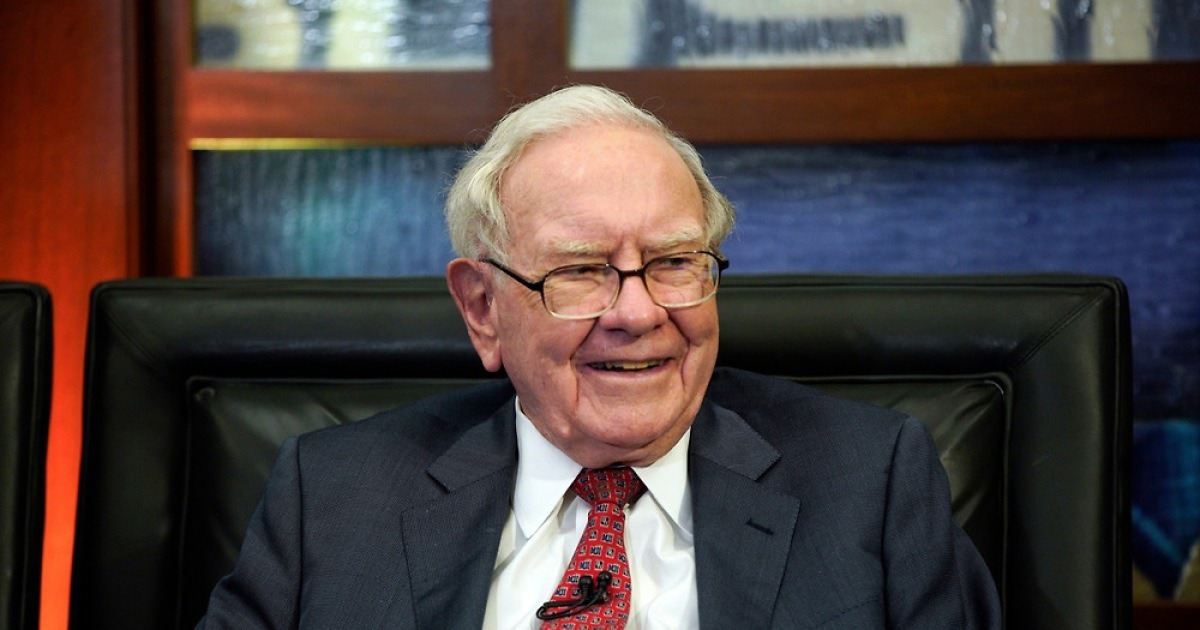
The Chairmanship Ends. The Philosophy Survives — For Now.
Warren Buffett has officially stepped down as chairman of Berkshire Hathaway, capping a 56-year tenure that transformed a struggling New England textile mill into one of the most valuable companies on Earth. His son Howard Buffett has been named the new chairman, while his father remains on the board as honorary chairman — a role that sounds ceremonial but carries weight in a company where Buffett’s word has long been law.
The timeline matters. Buffett had already resigned as CEO on January 1, 2026, passing operational control to Greg Abel. This second move — from chairman to honorary chairman — completes the formal removal of Buffett’s name from two of the three critical titles he held for more than half a century. He still controls none of them by title alone, yet his influence persists through relationships built over five decades, personal friendships with CEOs across every major industry, and the gravitational pull of a mind that shaped how generations think about capital allocation.
What makes this moment significant goes beyond the headline numbers. It marks the first time since 1970 that Berkshire Hathaway has operated without Buffett at the helm of its boardroom. No living investor has presided over a single enterprise for anywhere near this duration. The company he inherited had $25 million in assets and was hemorrhaging money. The company he leaves behind holds roughly $1 trillion in market capitalization, with operating businesses spanning insurance, railroads, energy, retail, and manufacturing — all while maintaining an investment portfolio worth over $350 billion.
The symbolic transfer is complete. The practical question now is whether the intellectual architecture survives intact.
A Different Kind of Leadership Transfer
Most corporate successions are messy. This one has been choreographed with unusual precision. Greg Abel took the CEO role in January. Howard Buffett now takes the chairman seat. The remaining key positions — including the investment committee that will guide Berkshire’s capital allocation — have been filled by long-tenured lieutenants like Todd Combs and Ted Weschler.
The pattern is deliberate. These are not surprise hires or external recruits. They are people who have worked alongside Buffett for years, who have absorbed his investment philosophy through osmosis rather than instruction manuals. The five-year head start on this transition — visible to anyone watching from 2021 onward — gave the organization time to adjust, recruit internally, and build institutional muscle memory around decentralized decision-making.
But absorption is not the same as replication. There is a difference between someone who practiced Buffett’s methodology and someone who invented it. That distinction will define the next decade for Berkshire shareholders.
Buffett’s approach to investing was never fully codified. He wrote about it in annual letters, gave interviews, and spoke at shareholder meetings, but the actual decision-making — when to buy, when to sell, when to hold, when to deploy catastrophe capital — happened inside a single mind that processed information differently than anyone else. The committee structure that now handles these decisions brings multiple perspectives, which is arguably healthier for any organization. But it also means fewer unilateral moves, slower responses, and decisions that reflect consensus rather than conviction.
That tension between collective wisdom and decisive action is where the next chapter will be written.
The Market Hasn’t Fully Processed This
Berkshire Hathaway shares have continued to trade at elevated valuations even as Buffett gradually reduced his visible involvement. The market has been pricing in the transition — somewhat. But the speed with which it has accepted this reality deserves scrutiny.
Berkshire trades at a price-to-book ratio well above 1.5, a premium that reflects not just the company’s operating businesses but the goodwill attached to Buffett’s name. When Buffett was chairman and CEO simultaneously, that premium made sense. As the roles separate and the succession unfolds, the premium becomes harder to justify purely on fundamentals. The operating businesses generate steady cash flow, but they do not generate the extraordinary returns that Berkshire stock has historically delivered — and those returns were partly a function of Buffett’s ability to move mountains with capital.
The question for investors is whether the market is pricing this transition correctly or whether it has become complacent. Buffett’s continued presence on the board as honorary chairman — with veto power implicit in the title — may keep the premium alive longer than pure economics would suggest. But premiums built on personality rarely survive the departure of the person who embodied them. The question is whether Howard Buffett, Greg Abel, and the investment committee can convince the market that Berkshire’s future returns will approximate its past returns, or whether investors will begin discounting the stock for the first time in half a century.
What Changes, What Stays the Same
The operating businesses — GEICO, BNSF Railway, Berkshire Hathaway Energy, and the hundreds of subsidiary companies — will continue running with minimal disruption. Those operations were always designed to function independently, which is precisely why Buffett built them the way he did. He hired capable managers, gave them autonomy, and stayed out of their way. That model works because it scales; it does not require a central brain to process every decision.
The investment portfolio is where the real uncertainty lives. The committee structure that replaced Buffett’s unilateral capital allocation decisions is still experimental. There is no single person now making the kinds of consequential bets that defined Berkshire’s recent history — the sale of telecom stocks in 2022, the massive Occidental Petroleum position, the careful trimming of Apple holdings, the emergency deployment of $5 billion to cover insurance losses during pandemic disruptions.
That gap between what the committee can do and what Buffett would have done is where value is created or destroyed. It is also where the next chapter of Berkshire’s story will be written. A committee can analyze; it cannot always act. Speed matters in capital markets, and decentralized structures inherently move slower than concentrated authority. Whether that slowness proves costly or prudent depends on what kind of market environment the next decade brings.
The Honorary Title That Isn’t Actually Honorary
Calling Buffett an honorary chairman understates his influence. He will remain a voting member of the board. His annual letter to shareholders — still the most widely read document in corporate America — will continue to shape market expectations. The man who wrote, “There’s no business like old business, but Father Time has been generous to me,” is not disappearing from the conversation.
What is disappearing is the formal authority to make binding decisions. That is the real shift. The symbolic power of the chairman’s title has always been tied to its practical power. Once separated, the title becomes something different — an advisory voice rather than a commanding one. Buffett’s letters will still be read, his opinions will still carry weight, but no shareholder should mistake influence for authority. The two are not the same thing, and the distinction matters enormously for how the market prices Berkshire going forward.
Why This Matters Beyond Berkshire
Berkshire Hathaway is the world’s most closely watched case study in long-term capital allocation. Its annual meeting in Omaha has functioned as the Wall Street equivalent of a religious pilgrimage for generations of investors. When Buffett stops chairing that meeting — which he has said he will not do immediately — it signals something larger than a leadership change.
It signals the end of the longest uninterrupted era of value-influenced capital markets leadership in financial history. No single individual has shaped investment philosophy, market behavior, and corporate governance standards as profoundly as Buffett has over five decades. That era is now formally concluding.
The ripple effects will extend far beyond Omaha. Investment funds that benchmark against Berkshire will need to recalibrate. Pension funds holding billions in Berkshire stock will face new assumptions about future returns. Younger investors who learned about compounding, margin of safety, and rational capital allocation primarily through Buffett’s letters will need to find new sources of guidance. The philosophy itself — rooted in fundamental analysis, long-term horizons, and a skepticism toward financial engineering — is not Buffett’s property. It belongs to anyone willing to practice it. But philosophy without a living exemplar tends to become doctrine, and doctrine without practice becomes dogma.
What replaces it will determine whether the next generation of investors learns the right lessons or merely imitates the form. The structure is in place. The philosophy remains. The question is whether it survives the transition intact — or whether the institution outlives the ideas that built it.