Pope Leo's cancer discharge signals a new transparency for the papacy
Pope Leo XIV's public battle with lung cancer is reshaping how the Vatican communicates about papal health. His discharge marks a turning point — but questions about the future of his papacy remain.
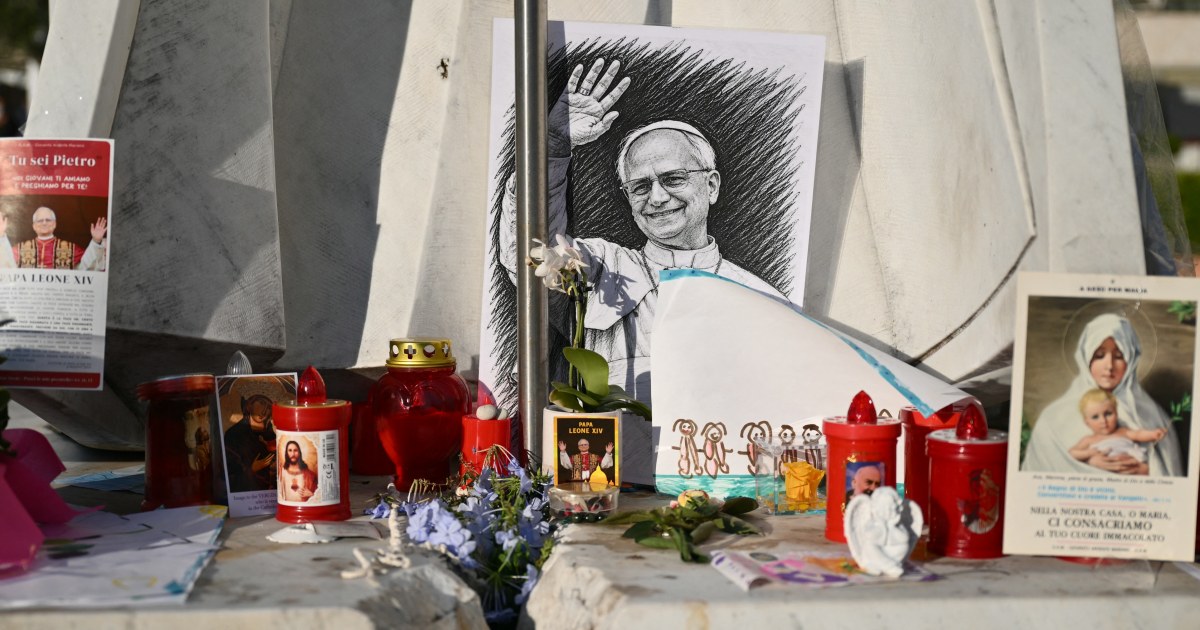
The first American pope is fighting cancer — and the Vatican is watching how he handles it
Pope Leo XIV is leaving the hospital. The Vatican confirmed Saturday that the pontiff, who underwent surgery to remove a cancerous nodule from his right lung, has been deemed fit for discharge from Gemelli Polyclinic Hospital. He returns to the Vatican Sunday, where he is expected to lead the Angelus prayer from the window of his apartment overlooking St. Peter’s Square.
The announcement itself is notable. The Vatican has been unusually transparent about Leo’s condition throughout his treatment — something no recent pope has permitted. John Paul II’s declining health was obscured behind carefully staged appearances and vague communiqués. Benedict XVI’s later years were shrouded in privacy, with the Vatican offering little more than brief statements about his improving condition. Leo, a Chicago native, has let the world see him celebrate Mass in a makeshift chapel within Gemelli, standing at a temporary altar in green vestments while medical staff quietly recited the rosary nearby. Photographs of the pope, palliated but present, circulated across global media in ways that would have been unthinkable under his predecessors.
This transparency is not accidental. It is strategic. And it reveals how much the papacy has changed since Leo took the throne.
A diagnosis that reverberated far beyond Catholic circles
Leo’s diagnosis of adenocarcinoma — a form of non-small cell lung cancer that accounts for roughly 80% of lung cancer cases — came as a shock. The initial lump was detected during a routine checkup in early September, and the Vatican moved quickly to confirm the malignancy before rumors could outpace official channels. The speed of that disclosure, within 48 hours of confirmation, set the tone for everything that followed.
The Vatican has not confirmed whether the cancer had spread beyond the localized nodule removed during surgery. No further treatment has been indicated — no chemotherapy, no radiation — but the ambiguity is telling. In oncology, the absence of adjuvant therapy recommendations typically suggests early-stage disease, yet the Vatican’s refusal to specify staging has fueled speculation. Medical ethicists familiar with papal protocols noted that the Holy See likely consulted oncology specialists at Gemelli and possibly at the NIH or Mayo Clinic before deciding what details to release.
What is clear is the timeline pressure. Leo is scheduled to travel to South America starting November 11, less than a month away. Peruvian President Keiko Fujimori told local television that the pace of Leo’s recovery would determine whether he makes the trip — a statement that carried implicit diplomatic weight and underscored how papal health has become entangled with international relations.
South America is home to the largest Catholic populations outside Europe. Brazil alone has more Catholics than any nation on Earth. A papal visit there is not merely religious — it is diplomatic. It is an opportunity to address issues like migration, poverty, and political instability in regions where the Church’s moral authority is both significant and contested. If Leo does not travel, the message is one of vulnerability. If he does, the message is resilience. Either outcome carries consequences for how the Church is perceived on a continent where traditional institutions face increasing skepticism.
The institutional implications of candor
The Vatican’s decision to disclose Leo’s condition at all is unprecedented in the modern era. The Church has always grappled with the tension between the mystical nature of the papacy and the mortal fragility of the man holding the office. Previous popes managed that tension through silence or euphemism. Leo has chosen candor.
That choice has costs. Every update on his blood tests and chest X-rays feeds a media cycle that thrives on papal drama. Tabloids and cable news segments have latched onto details like the size of the nodule and the length of his hospital stay, reducing a complex medical situation to sound bites. The Church is not immune to the scrutiny that now surrounds its leader’s health. Yet it also gains credibility. By owning the narrative rather than dodging it, the Vatican controls the story — at least for now.
There is also a question of succession that Leo has not addressed. Canon law provides mechanisms for papal resignation — most recently invoked by Benedict XVI in 2013 — and the conclave process is well defined. But the details remain fuzzy in public discourse. What happens if the pope becomes incapacitated mid-papacy? Is there a protocol for a coadjutor? Can a sick pope be declared unable to govern without resigning? The Church has not had a papal health crisis of this magnitude in decades. The institutions designed to manage such a crisis are untested, and theologians have begun publishing papers on the subject — a sign that the question has moved from speculation to institutional urgency.
Vatican insiders suggest that Leo’s inner circle has discussed contingency plans, but no formal documentation has been released. The silence on succession is itself a statement: the pope wishes to project confidence while quietly preparing for possibilities.
Who wins, who loses
The Vatican wins visibility. By disclosing Leo’s condition, it has kept the focus on his resilience rather than his illness. The images of him celebrating Mass, standing steadily at the altar, reinforce the narrative of a pope who refuses to be diminished. Those images have been carefully curated — not staged, but selected — and they serve a purpose in an era when the Church struggles to maintain relevance among younger Catholics.
The media wins engagement. Papal health stories dominate headlines. They are accessible, human, and universally relevant. No one needs to understand theology to follow a story about a man fighting cancer. Newsrooms have assigned dedicated correspondents to cover Leo’s recovery, a level of investment usually reserved for wars and elections. This attention has a second-order effect: it keeps the Vatican in the news, which means the Pope’s policy positions — on climate, migration, and LGBTQ+ inclusion — continue to receive coverage they might otherwise miss.
Leo’s critics lose ground. Those who might have questioned his fitness for the papacy on other grounds — his evangelical upbringing, his blunt rhetoric, his outsider status — now face a public figure who has openly confronted mortality. It is harder to attack a man who has let the world watch him recover from surgery. The visual evidence of his recovery functions as a kind of apologetic, one that no press secretary could have written.
But there are losers too. The Church’s image of papal infallibility — even in a metaphorical sense — takes a hit when the pope is hospitalized for cancer. The institution that presents itself as eternal must confront the fact that its leader is mortal. That confrontation is uncomfortable for some faithful, even if they understand it intellectually. For traditionalist Catholics already skeptical of Leo’s reforms, the illness becomes another data point in a broader narrative of institutional decay. For progressive Catholics, it raises questions about whether the Church is prepared to modernize its understanding of leadership beyond the myth of the invincible pope.
There is also a theological dimension that few commentators have addressed. Leo’s公开 battle with cancer has reignited ancient debates about suffering, sacrifice, and the imitation of Christ. Some theologians have noted that Leo’s willingness to endure treatment publicly echoes the patristic understanding of martyrdom — not as death, but as witnessed endurance. Whether that interpretation resonates with the broader faithful remains an open question.
The precedent that changes everything
Perhaps the most significant consequence of Leo’s handling of his diagnosis is the precedent it sets. Future popes will face the same choice: conceal or disclose. The Vatican has already demonstrated that transparency is survivable — that a pope can be open about illness without triggering a crisis of confidence. That knowledge will shape how the next pontiff communicates, or fails to communicate, about his health.
Press secretaries and Vatican communications offices are already adjusting their protocols. Sources close to the Dicastery for Communication indicated that internal guidelines have been revised to allow for earlier disclosure of significant health events, a shift from the old practice of waiting for symptoms to become visible. The goal is to stay ahead of the story rather than react to it.
This change will not apply uniformly. Some issues — mental health, cognitive decline — may still be treated with caution. But the door has been opened, and it will not close easily. The era of papal secrecy, at least on matters of physical health, is receding.
What happens next
Leo’s recovery is progressing. His doctors have called the clinical improvement “continued.” He has resumed working from the hospital, reviewing documents and holding private audiences via video link. The path forward appears clear — at least for the immediate term.
But the South America trip hangs in the balance. Travel advisors and Vatican logistics experts have begun drafting contingency plans for two scenarios: Leo traveling with a reduced itinerary and Leo canceling entirely. Either outcome will be read as a signal about his health and, by extension, the stability of his papacy.
There are also domestic questions. Leo has scheduled aaddress to the College of Cardinals in late October, where he is expected to discuss both his recovery and his vision for the Church’s direction. Speechwriters have been working on remarks that balance gratitude for the care he received with a reaffirmation of his commitments. The tone, according to sources, will be characteristically direct — less pastoral than papal.
Either way, the Vatican has already changed how it talks about the pope. The images of Leo at his makeshift altar, the detailed press briefings, the willingness to share timelines and medical updates — these are not temporary measures. They represent a new communication philosophy, one that treats the faithful and the public as partners in the story rather than audiences to be managed.
Whether that transparency endures beyond Leo’s health crisis remains to be seen. But the genie is out of the bottle. The papacy will never return to the silence that defined so much of the twentieth century. And in an age when institutions are judged as much by what they reveal as by what they do, that shift may prove to be one of Leo’s most enduring legacies.