Why U.S. Inaction at Hormuz Is Rewriting Global Energy Rules
Iran's escalating strikes on the Strait of Hormuz are hitting record levels with almost no American retaliation. The quiet response is reshaping energy markets and signaling a deeper strategic shift in the Persian Gulf.
The Numbers Behind the Quiet Escalation
The Strait of Hormuz has become the most dangerous stretch of water on Earth for commercial shipping, and Washington is watching without intervening.
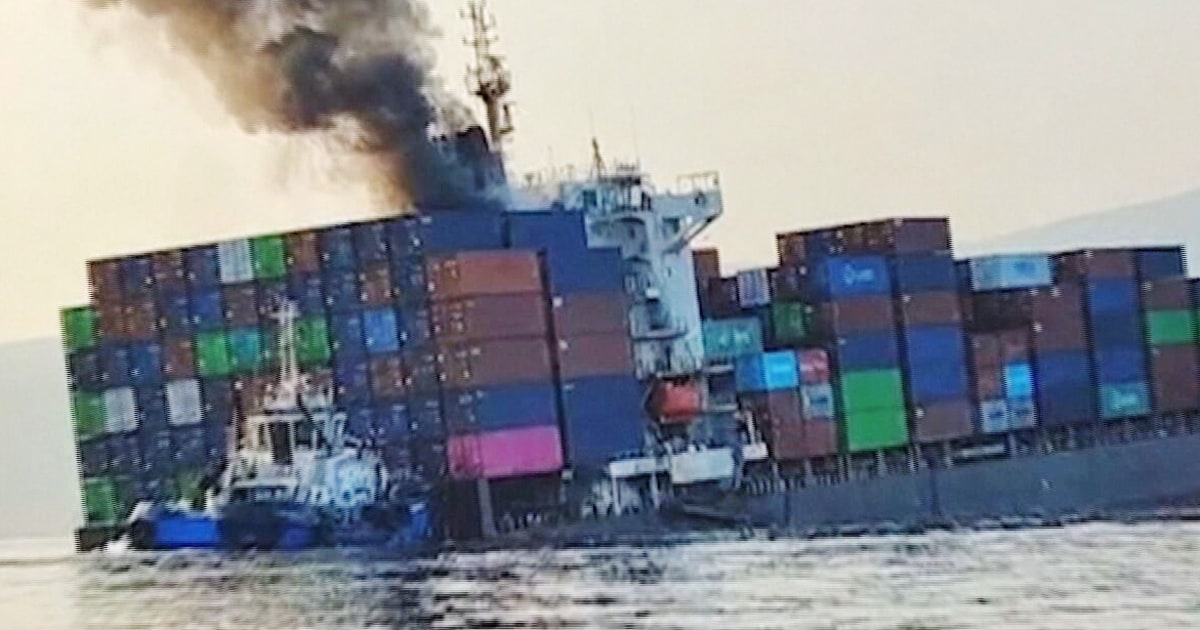
Attacks on vessels transiting the strait have hit a record high this year. Iran-backed forces — including Houthi fighters operating from Yemen and Iranian Revolutionary Guard units directly — have targeted tankers, container ships, and freighters at a pace that exceeds any period since the Iran-Iraq War of the 1980s. The attacks are not coordinated protests or one-off incidents. They are sustained, repetitive, and increasingly brazen.
What makes this moment distinct from previous crises in the strait is the American response. Or rather, the absence of one. Previous administrations — regardless of party — treated freedom of navigation through Hormuz as a non-negotiable pillar of U.S. strategic commitment. The Fifth Fleet operates out of Bahrain precisely to enforce that principle. This time, the pattern is different. Strikes occur. Condemnations follow on social media and in press briefings. Then nothing tangible happens.
Why the Restraint Matters More Than the Attacks
Military analysts and energy traders alike are fixated on the attacks themselves. But the second-order consequence — the erosion of deterrence — is what will reshape global energy markets over the next decade.
Deterrence is not a physical asset. It is a belief held by adversaries about what you will do in response to provocation. Once that belief erodes, the calculus changes everywhere. Piracy becomes cheaper. Insurance premiums climb. Shipowners diversify routes or abandon them entirely. Every actor along the supply chain prices in a new reality: the United States will not fight to keep this waterway open.
That belief, now forming, is doing more damage to global oil markets than any single torpedo or missile strike ever could. Markets do not react to what happens. They react to what they expect will happen next — and expectations have shifted dramatically.
The Energy Shock No One Is Counting On
The Strait of Hormuz carries roughly 20 percent of global petroleum consumption. That is not a speculative figure. It is the benchmark number used by the International Energy Agency, the U.S. Energy Information Administration, and every major trading house in London and Singapore. When that chokepoint is disrupted, the question is never whether supply will be affected — it is how severely and for how long.
Previous disruptions, including the 2019 attacks on Saudi oil facilities and the 2021 Ever Given container ship crisis in the Suez Canal, caused sharp but temporary price spikes. Markets absorbed them because they trusted that the interruptions would be brief and reversible. Trust required visible American military presence and a willingness to use it.
Neither condition holds as strongly today. Energy traders are already adjusting. Volatility premiums embedded in forward oil curves are rising. Insurance rates for vessels transiting the strait have climbed above levels seen during the peak of the 2019–2020 crisis. Shipping companies are beginning to reroute cargoes around the Cape of Good Hope, adding weeks to delivery timelines and billions to operational costs. These are not emergency reactions. They are structural adjustments — the kind that do not reverse quickly even if the attacks stop tomorrow.
Who Wins, Who Loses
Iran is the clear tactical winner. It has achieved maximum disruption with minimum cost. A single drone or anti-ship missile costs a fraction of what it takes to shoot it down. The asymmetric economics favor the attacker every time. Tehran is also sending a deliberate signal to its regional rivals, particularly Saudi Arabia and the United Arab Emirates, whose energy infrastructure remains vulnerable to the same tactics.
China is a quiet beneficiary. As the world’s largest importer of Middle Eastern oil, Beijing has every incentive to watch America falter in the Gulf while it expands its own naval and diplomatic footprint. Chinese warships now make regular port calls in Iran. Chinese investment in Iranian energy projects continues despite sanctions. A weakened American presence creates space that Beijing is eager to fill.
European consumers are the primary losers. The EU already faces elevated energy costs following the war in Ukraine. A sustained disruption in Hormuz would compound those pressures almost immediately. Natural gas liquefaction terminals in Qatar — another critical supply node near the strait — would face compounding risk. Europe has limited strategic flexibility here. It cannot simply redirect pipeline gas the way it redirected LNG supplies after 2022.
American allies in the Gulf, particularly Kuwait and Bahrain, face the most direct threat. Their ports and oil export facilities sit within immediate range of Iranian missile and drone batteries. They depend on American naval protection as a matter of national survival. When that protection becomes unreliable, their strategic autonomy narrows sharply.
The Strategic Recalibration
Analysts on both sides of the Atlantic are beginning to describe what is happening as a strategic recalibration rather than simple indecision. The argument goes that the United States has made a conscious choice to reduce its forward military commitment in the Persian Gulf in favor of focusing resources on the Indo-Pacific, where China represents the primary long-term challenge.
There is some truth to this framing. Force posture adjustments are real and documented. But the consequence of that adjustment is not neutral. It is being interpreted by adversaries as withdrawal, not rebalancing. And the energy market is pricing that interpretation in real time.
This is not a hypothetical concern. It is happening now. The markets do not wait for formal policy announcements. They move on signals — or the lack thereof. When the White House issues statements without accompanying military action, traders read the gap between rhetoric and behavior as policy.
What Happens Next
The most likely near-term scenario is incremental escalation without breakthrough. Iranian-backed forces will continue testing the limits of American restraint, probing for weaknesses in patrol patterns and response timing. The United States will likely respond with symbolic measures — additional naval deployments, rhetoric, perhaps limited strikes on specific targets — but not with the full-force deterrence posture that characterized earlier decades.
The more dangerous scenario involves a miscalculation. A single attack causing significant casualties among commercial crews or damaging major infrastructure could force a sharper American response than policymakers currently plan. The question is whether that response would be decisive enough to restore deterrence or merely reactive enough to deepen the perception of inconsistency.
Neither outcome favors the status quo. The era of assuming the Strait of Hormuz would remain reliably open — even under stress — appears to be ending. The global economy will adapt. But adaptation is costly, and the costs will fall heaviest on the participants who least expect them.
The real story here is not the attacks. It is what the world learns about America from the silence that follows them.