Camp David Secrets Signal Iran Escalation Looming
Trump's inner circle convened at Camp David for the first time in over a year, reviving memories of the 2025 pre-strike briefing. With Iran's truce offer stalled and Saudi pressure mounting, Washington may be finalizing a strike plan.
The Meeting That Shouldn’t Exist
A classified briefing at Camp David, the US president’s rural retreat nestled in Maryland’s Catoctin Mountain Park, happened quietly over the weekend. No press pool followed the motorcade. No official statement emerged from the White House press secretary’s office. What leaked — via Axios, citing three unnamed US officials with direct knowledge of the session — is far more consequential than the source material itself.
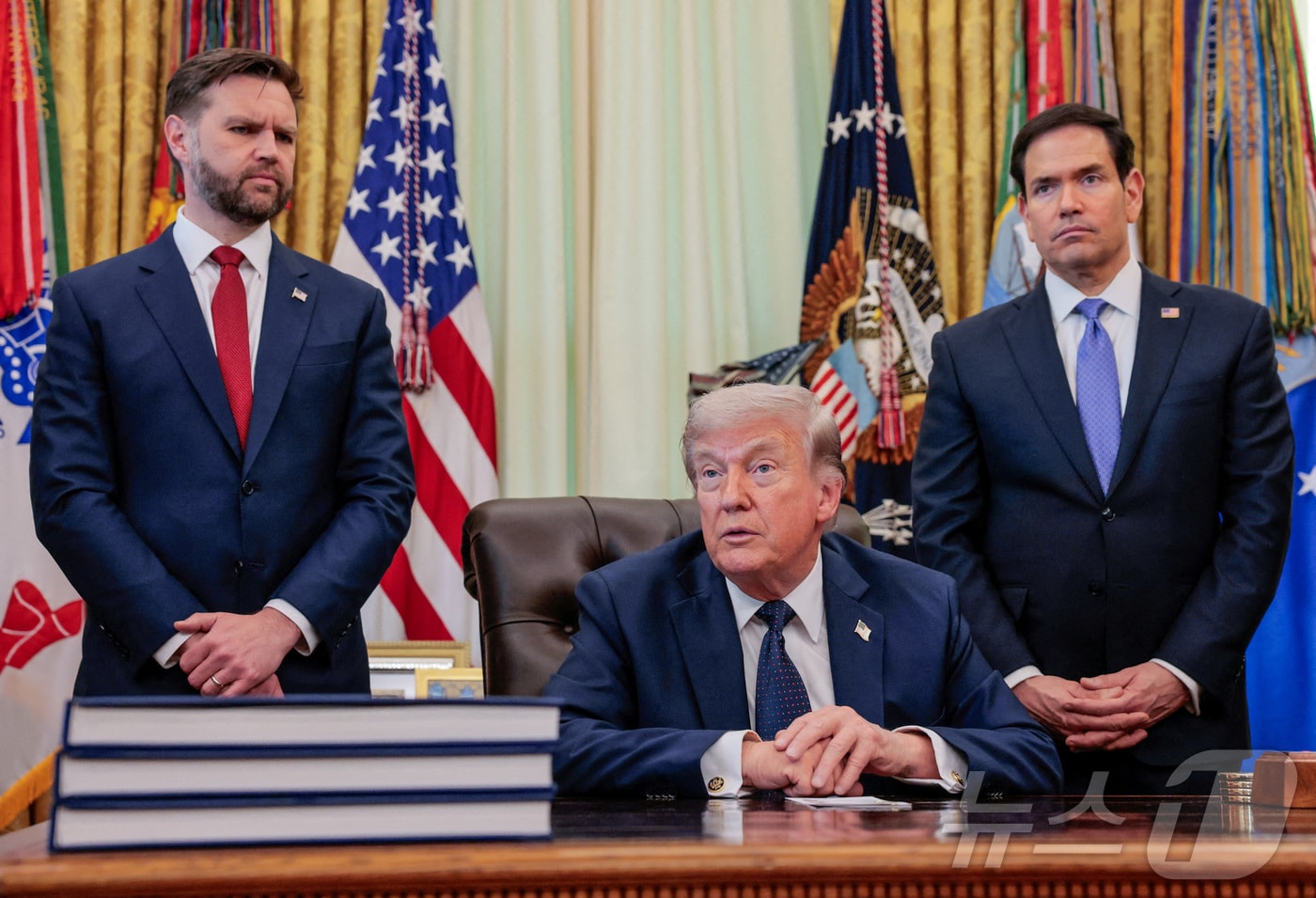
Trump’s top national security team convened at the mountain hideaway for the first time since June 2025. The attendees read like a war cabinet assembled for a crisis: Vice President JD Vance, who led the session according to two officials familiar with the seating arrangement; Secretary of State Marco Rubio, tasked with managing the diplomatic fallout; Defense Secretary Pete Hegseth, responsible for operational planning; CIA Director John Ratcliffe, providing intelligence assessments; Joint Chiefs Chairman Dan Caine, briefing military options; and Middle East envoy Steve Witkoff, the administration’s informal backchannel operator.
The agenda, according to sources, focused on two theaters simultaneously: a potential military response to Iran’s nuclear program and a possible expansion of operations against the Houthi rebels in Yemen. What made this dual-theater approach notable wasn’t the individual threats — both have simmered for years — but the decision to treat them as interconnected rather than separate crises.
The timing is what raises alarms in allied capitals. This wasn’t a scheduled quarterly review. It was convened in response to escalating Iranian provocation and growing frustration from Gulf partners who feel abandoned by Washington’s inconsistent posture.
A Pattern From June 2025
The last Camp David strategy session before this one ended with Israeli F-35s detonating payloads inside Iran’s Natanz and Fordow enrichment facilities on June 14, 2025. That raid triggered the so-called “12-day war” — a brutal, limited exchange that killed thousands across Iran and Israel, sent oil prices surging past $110 a barrel, and destabilized shipping lanes throughout the Red Sea and Strait of Hormuz.
Washington’s role then was largely deniable. The US provided intelligence sharing on Iranian air defense gaps, real-time satellite imagery, and mid-air refueling support for Israeli aircraft transiting through Jordanian airspace. But publicly, America stood aside. The strategic logic was clear and deliberate: let Israel take the kinetic hit and absorb the initial regional backlash while America controlled the after-action environment through deterrence and diplomacy.
This time, the dynamic appears fundamentally reversed. Washington is driving. Tehran is bracing. And the question on every capital’s mind is whether the US will again outsource the initial strike while preparing to intervene on favorable terms — or whether Trump believes America must strike first this time to establish credibility.
What makes this Camp David meeting significant isn’t just who attended — it’s that it broke a year-and-a-half streak of public normalcy. In Trump’s America, where National Security Council meetings are often conducted via encrypted messaging and Twitter threads, a secret retreat at Camp David suggests something beyond routine contingency planning. It signals a decision threshold has been approached or crossed.
One official told Axios that “certain matters were decided, or at minimum discussed in depth.” The phrasing is deliberate and loaded. Decided doesn’t mean executed. But it means the political and military leadership has moved from analysis to options-on-the-table territory. In bureaucratic terms, this is where planning becomes action preparation.
Iran’s Dilemma Gets Sharper
Iran proposed a seven-day truce earlier this week, offered through Oman as intermediary. The US didn’t reject it outright. It redirected the offer through intermediary states for a counter-proposal, which is diplomatic code for: we’re not done talking, but we’re preparing for the alternative and we want you to believe we are.
Behind that diplomatic maneuvering lies a harder reality. Intelligence assessments shared at Camp David reportedly indicated Iran had resumed enriching uranium to 60% purity at underground facilities — a threshold that brings the country months, not years, from weapon-grade material. The timeline, according to two officials, was described in stark terms: if current trajectories hold, Iran could produce enough fissile material for a device within 90 days.
Trump’s rhetoric has hardened accordingly. On Monday, addressing reporters at the White House, he said: “Iran either signs the deal or ceases to exist.” When pressed about next steps against Iran’s nuclear infrastructure, he deflected with characteristic unpredictability: “If I tell you, you’ll have a bigger scoop. You’ll find out soon.”
That’s not the language of a president managing a diplomatic crisis. It’s the language of one who has already seen the endgame and is deciding whether to pull the trigger — or whether to let the other side flinch first.
The calculus for Tehran is brutal. Concede on the nuclear question and risk internal rebellion from hardliners who have built their political legitimacy on resistance to Western pressure. Resist and invite a strike that could degrade the IRGC’s command structure permanently, potentially fracturing the regime’s most powerful institution.
China and Russia have urged restraint through diplomatic channels, but neither has offered a concrete off-ramp. Beijing’s economic leverage over Tehran has diminished significantly since the 2023 Saudi-Iran reconciliation deal, which reduced Iran’s dependency on Chinese market access as a geopolitical lever. Moscow is fully occupied in Ukraine and has limited capacity to project influence in the Persian Gulf. No major power is stepping in as mediator right now, leaving Washington and Tehran to face each other without third-party buffers.
The Saudi Factor
Saudi Arabia has been asking Washington for roughly two years to help neutralize the Houthi threat, framing it as essential to kingdom security and regional stability. The kingdom’s energy infrastructure — including the Abqaiq processing facility hit in 2019, which temporarily knocked half of Saudi Arabia’s oil production offline — remains vulnerable to drone and missile raids from Yemen. Recent intelligence suggests the Houthis have received upgraded Iranian guidance systems that extend their precision strike range deeper into Saudi territory.
Trump’s position on the Houthis has been consistently hostile in rhetoric but cautious in practice. He called them terrorists on multiple occasions. He threatened strikes via Truth Social. But he hasn’t delivered a sustained campaign, preferring scattered retaliatory actions that signal resolve without committing to long-term operations.
Sources tell Axios that his stance may be shifting. The Camp David meeting likely included options for renewed air operations against Houthi targets, potentially coordinated with Saudi and Emirati forces operating from bases in the region. The proposed campaign would differ from previous strikes in scale and coordination — less aboutpunitive raids and more about systematically degrading Houthi launch capabilities.
Why the change now? Several factors converge. The US-Iran escalation creates a permissive environment for a broader regional campaign — if America is already moving against Iranian targets, Houthi operations become part of the same strategic picture rather than a separate problem. Saudi pressure is intensifying as Iranian-backed attacks on its territory resume with increased frequency. And Trump wants a second foreign policy win after the Iran nuclear deal negotiations that collapsed in 2024, having already secured the Abraham Accords earlier in his presidency.
Second-Order Effects and Regional Fallout
The implications extend well beyond any single strike. A US operation against Iran would likely trigger immediate Houthi escalation — missile and drone attacks on American installations in Iraq, Syria, and the Gulf, as well as renewed shipping harassment in the Red Sea. Iraqi militias aligned with Iran would almost certainly join the fray, targeting US bases at Al-Asad and Erbil.
Oil markets are already pricing in risk. Brent crude has climbed above $95 on speculation alone, and analysts at multiple firms have flagged the possibility of a supply shock exceeding the 2019 Abqaiq incident if the Strait of Hormuz — through which approximately 20 million barrels of oil daily transit — were disrupted.
European allies are caught between supporting Washington and avoiding entanglement. France and Germany have called for restraint publicly but are privately preparing for contingency scenarios, including potential refugee flows and energy shortages. Japan’s Foreign Minister has reportedly received advance notice of potential escalation scenarios, suggesting Washington is managing allied expectations before announcements are made.
Israel faces a difficult calculation. While an American strike against Iran would achieve what Israeli planners have long considered necessary, it also risks broadening the conflict in ways that could draw Israel into a multi-front war. Iranian proxies along the northern border — Hezbollah in Lebanon, Palestinian groups in Gaza — would likely activate in coordination with Tehran, creating simultaneous pressure on multiple fronts.
What Comes Next
If this Camp David meeting produced a decision — and most analysts reading the signals believe it did — the timeline is likely days, not weeks. Historical precedent suggests a leak or a small-scale operation precedes the main event. The 2025 Israeli strikes on Iran were preceded by weeks of unexplained satellite activity, subtle US naval movements in the Strait of Hormuz, and a series of cyber operations attributed to Iranian systems that escalated in intensity over ten days.
Expect increased US military presence in the Persian Gulf. The carrier USS Harry S. Truman is already stationed in the region. Two additional strike groups may be en route, according to maritime tracking data that showed accelerated vessel movements through the Suez Canal over the weekend.
The most dangerous variable isn’t Iranian retaliation — it’s miscalculation. A single strike, misidentified or misunderstood, could spiral into something no one in Camp David anticipated. Iranian forces might interpret a conventional strike as an existential threat and respond with asymmetric weapons — chemical agents, sabotage against regional infrastructure, or attacks on civilian targets — that cross thresholds neither side intends.
Trump’s own words suggest he knows this. “The situation is going very well,” he told reporters on Monday. “Iran is not.”
That’s not reassurance. That’s a warning delivered through the language of a man who has already decided and is now testing whether the other side will blink first — or whether he needs to force the issue before the window closes.