Flydubai cockpit axe attack exposes screening gaps
A Flydubai co-pilot's attempted terrorist attack using a cockpit crash axe forces airlines and regulators to confront dangerous gaps in pilot mental-health screening and emergency door protocols.
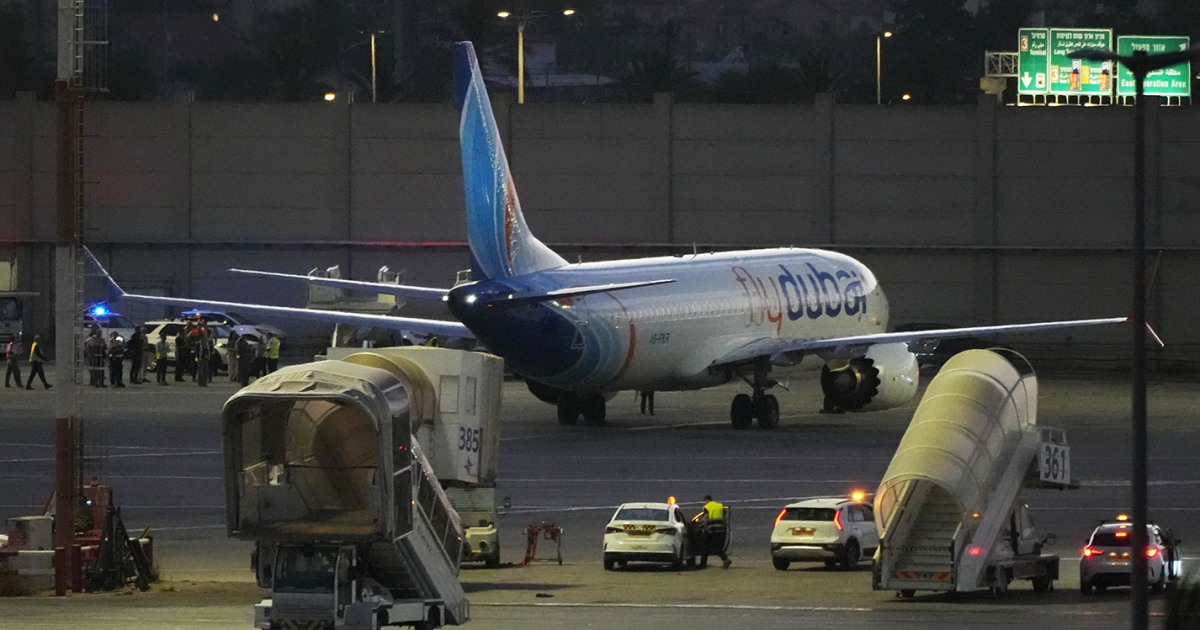
A crash averted, but the questions remain
The Flydubai flight from Dubai to Tel Aviv carried 174 mostly Israeli passengers on Wednesday when the co-pilot, Omani national Hamam al-Hammami, attacked his captain with a crash axe inside the flight deck and tried to seize control of the aircraft. Crew and passengers broke through the cockpit door and subdued him before the plane crashed. The UAE and Israel are now investigating an incident that sits at the uneasy intersection of terrorism, mental health, and aviation security.
What makes this case stand out is not just its brutality. It is the realization that the weapon was already inside the cockpit—a crash axe used by crews to break through debris in an emergency—and that the attacker had been flagged years earlier by his home country. Oman had banned al-Hammami from flying over concerns he had adopted radical ideological views, according to reports citing sources familiar with the matter. Flydubai, a Dubai-based carrier, hired him anyway. How that gap happened, and whether other airlines face the same blind spots, is now a central question for global regulators.
Cockpit security after 9/11: why doors are not enough
Since the terrorist attacks of September 11, 2001, airlines have reinforced cockpit doors, introduced four-digit entry codes, and trained crews to resist intrusions. The goal was to prevent a lone actor from seizing the flight deck and turning the aircraft into a weapon. These measures have largely worked. There have been very few cases of a successful breach in the decades since.
This incident, however, shows what can go wrong when the threat comes from inside the cockpit itself. Al-Hammami did not need to break in. He was already there. The crash axe—standard equipment on commercial flights for emergency use—became his weapon. The reinforced door kept passengers out, but it could not stop a co-pilot from attacking the captain from within.
The story also highlights the extreme difficulty of securing the moments when the door must be opened. In an emergency, crew and passengers need to enter quickly. On this flight, they succeeded, but only after hearing shouts and seeing the plane start to fall. The incident underscores that cockpit security is a balance: keep the door closed to outsiders, but allow rapid entry when insiders are under attack or a hijacking occurs. That balance is fragile, and it relies on crew training and passenger awareness—both tested in real time.
Mental-health screening: a fragmented global system
Pilots undergo regular medical checks, but psychological screening is not uniformly applied across countries. The International Civil Aviation Organization (ICAO) sets standards, but member states implement them differently. Some airlines conduct routine psychometric evaluations; others rely on annual medical certificates that may not catch radicalization or severe personality shifts.
Al-Hammami’s case suggests that a pilot flagged for extremist views in one country can still obtain a license elsewhere. Oman banned him, but there is no public record of a worldwide alert. The UAE’s investigation will likely examine whether Flydubai’s hiring process included adequate background checks, especially for a pilot whose home country had raised red flags. The Wall Street Journal reported that al-Hammami had previously been banned from flying in Oman, but Oman Air did not confirm whether he had worked for them. That ambiguity itself points to a larger problem: when one nation bars a pilot, other countries and airlines may not know.
Mental health is a sensitive topic in aviation. Pilots may hesitate to seek help for fear of losing their licenses. This can allow conditions to worsen until they become critical. The industry has made strides in encouraging reporting without penalty, but stigma remains. Radicalization is a different challenge—it may not show up in medical records, but it can be detected through behavioral changes and social media activity. Al-Hammami’s online posts, which include calls to kill Jews, were reportedly visible to investigators. Whether anyone monitoring hiring processes saw them is unclear.
Who wins, who loses, and what happens next
In the immediate aftermath, Flydubai faces intense scrutiny. The airline has called the incident under investigation and declined to comment beyond that. Its reputation—built on low fares and a growing network—may suffer as passengers question whether pilot vetting is rigorous enough. Competitors will likely see a temporary dip in bookings on Middle Eastern carriers, but the impact should be short-lived if regulators move quickly.
Regulators stand to gain influence if they impose stricter rules. The UAE, Israel, and likely the European Union Aviation Safety Agency (EASA) and the US Federal Aviation Administration (FAA) will review cockpit procedures and mental-health screening standards. The International Air Transport Association (IATA) may push for a global database of banned pilots—a system that exists in some form but is not comprehensive or real-time.
Passengers win only if the changes are visible. They lose trust in the short term, as any terrorism scare does. The image of a co-pilot wielding an axe is hard to shake. Airlines will need to communicate better about security measures without causing panic.
Pilots, especially those from countries with weaker screening systems, may face increased inspections and doubts about their psychological fitness. The Indian captain, Smit Machchhar, was hailed as a hero for opening the cockpit door and allowing crew and passengers to storm in. He spoke from his hospital bed, saying he acted for his own life but also to save the others. His courage may remind the industry that human response remains the last line of defense.
The geopolitical layer: radicalization and state sponsorship
Israeli Prime Minister Benjamin Netanyahu said the attacker had undergone Islamist radicalization and came to crash the plane. He also asked whether he was sent by another state, warning that whoever sent him would pay a heavy price. US President Donald Trump mentioned renewed strikes against Iran if it was behind the attack. A senior US official briefed on the Israeli investigation told NBC News there were no indications Iran directed or was involved.
The incident does not fit a traditional state-sponsored model. There is no evidence of external coordination. Instead, it resembles the lone-actor terrorism that has increased worldwide, driven by online extremism and personal grievance. Aviation security has long focused on external threats—bombings, hijackings—but this case shows the danger of internal radicalization. A pilot with access to controls and a weapon can do enormous harm.
The investigation will look for links to extremist groups, but the immediate focus is on how al-Hammami passed hiring checks despite a prior ban. The answer may lie in bureaucratic silos: Oman did not share its decision with international databases, Flydubai may not have accessed them, and no single agency had a complete picture.
What must change
The first step is global coordination on pilot licensing. When a country bans a pilot for security reasons, that information should be shared with ICAO and other member states in near real-time. A voluntary database already exists, but participation is uneven. Making it mandatory would close a gap that al-Hammami exploited.
Second, airlines must strengthen pre-employment screening. This includes verifying any prior bans, checking social media for extremist content, and conducting psychological evaluations beyond the standard medical certificate. The cost is manageable compared to the cost of another incident.
Third, cockpit procedures need review. Should crash axes be locked away when not in use? Can doors be designed to resist attacks from inside? Training for crew and passengers on how to respond to an internal threat should be updated. The fact that passengers were able to enter and subdue the attacker is a testament to their training and bravery, but it also shows the door was opened—a process that must remain fast yet controlled.
Finally, mental-health support for pilots must be expanded. Encouraging early reporting of stress, anxiety, or ideological shifts can prevent crises. The industry must reduce stigma while maintaining safety standards.
The hard truth
Aviation security has improved dramatically since 9/11, but this attack proves that threats evolve. The enemy is no longer just outside the door. It can be inside, armed with a tool meant for emergencies, driven by ideology, and vetted by systems that fail to catch him.
The Flydubai incident is a wake-up call. It will likely lead to new rules, but the real test is whether those rules are enforced globally. If one country bans a pilot and another ignores it, the system is only as strong as its weakest link. In an industry built on interconnectedness, that is a dangerous flaw.
Captain Machchhar survived. The 174 passengers on board survived. Their luck should not dictate the next round of safety reforms. The questions raised by this attack must be answered before the next flight takes off.