Capcom Just Proved Its Dormant-IP Revival Strategy Works
A 20-year-old franchise sold 1 million copies on day one. Here's what that reveals about Capcom's systematic approach to legacy IP revival — and why it matters for the rest of the industry.
The Number That Should Worry Every Other Publisher
100万本. One million copies moved on day one. Not over a week. Not after a month of word of mouth. In 24 hours, a franchise that had been asleep for two decades — not a remaster, not a spinoff, but a complete new entry in a series last seen on Xbox 360 and PS3 — went from cultural memory to commercial statement.
This is Capcom, talking about Ghost武者 Way of the Sword, reporting that the title launched September 4th and already added a full million-unit sprint to the series lifetime tally, pushing the entire Ghost武者 catalog past the 10 million mark for the first time since the mid-2000s peak.
The number is impressive on its face. What makes it remarkable is the context.
A 20-Year Gap Is a Lifetime in Gaming
The previous Ghost武者 mainline release was Shing Ghost武者: DAWN OF DREAMS in 2006. The series had not simply gone quiet — it had been declared dormant, written off, treated as a footnote in Capcom’s portfolio while rivals monetized their back catalogs with remasters and mobile ports.
By 2026, the industry had moved on. The Japanese AAA market was saturated with live-service attempts, gacha games, and safe remakes. Legacy IP revival had become a genre unto itself, usually executed as either nostalgic rehash or cautious mobile adaptation. Capcom chose a different path entirely: full-budget, full-commitment, multi-platform new entry with actual new gameplay systems.
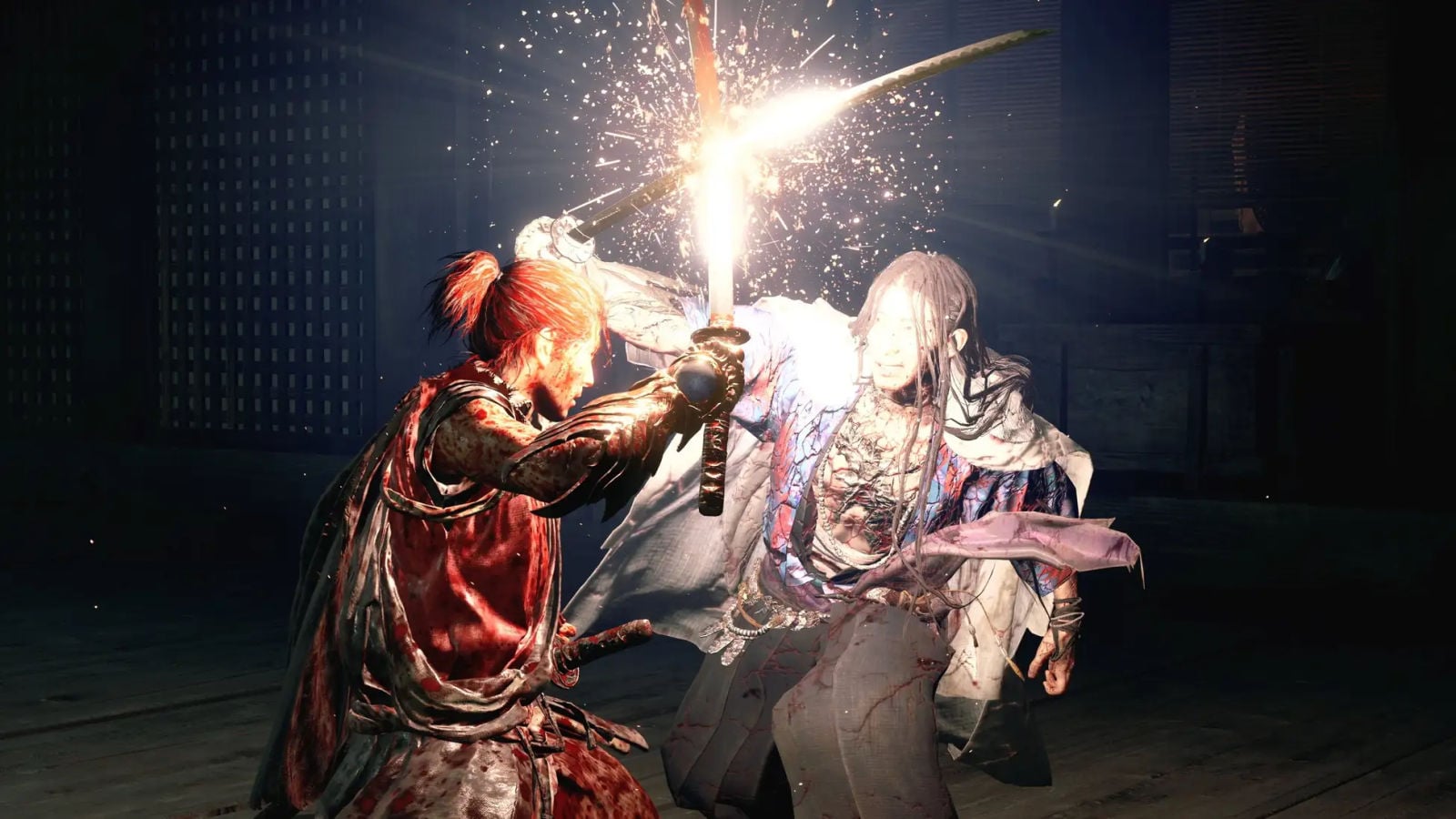
The combat in Way of the Sword doubles down on the series’ signature parry-and-strike identity. The “受け流し” (deflection) mechanic, the “弾き” (parry counter), the “崩し一閃” (crushing flash) finisher — these are not simplified accessibility features bolted onto a generic action game. They are the core combat loop of the original Ghost武者 series, refined for modern hardware and timed precisely for the current generation’s controller standards. This is a game that expects you to learn its rhythm rather than hand-holding you through it.
That confidence matters. In a market where even beloved franchises are being sandbagged with quality-of-life overhauls and auto-aim assistance, Ghost武者 Way of the Sword is a statement that Capcom still believes in player competence.
The Monster Hunter Collaboration Wasn’t Accidental
The source material confirms a Monster Hunter collaboration was part of the launch strategy. This is not a casual crossover. This is a deliberate funnel from Capcom’s current cash engine into its dormant IP, and it reveals something important about how the company is thinking about portfolio management right now.
Monster Hunter is the anchor. It draws millions of players who may never have touched Ghost武者. By placing a crossover element inside the Ghost武者 experience — and vice versa, presumably — Capcom is creating cross-pollination between its strongest active IP and its most promising legacy asset. This is portfolio strategy executed at the gameplay level, not just in marketing decks.
The reasoning is simple and ruthless: Monster Hunter’s player base is massive and engaged. Ghost武者’s brand awareness is deep but dormant. Link them directly, and you convert interest without spending on brand重建 from scratch.
Capcom’s Systematic Revival Playbook
What distinguishes Capcom’s approach from other Japanese publishers attempting IP resurrections is the consistency of the method.
They are not relying on nostalgia alone. They are not issuing remasters and calling it a revival. They are conducting market research, releasing trial versions repeatedly (the source confirms multiple free demos were distributed pre-launch), attending events, building awareness systematically, and then launching full-price titles when the foundation is ready.
This is not the strategy of a company hoping a classic IP will sell itself. This is the strategy of a company that treats IP revival as a disciplined business process — research, promotion, release, measurement, iteration.
Capcom’s stated rationale, as reported by Automaton, is explicit: the company is focusing not only on stable major title releases but also on revitalizing series that have gone quiet for extended periods. Ghost武者 Way of the Sword is presented as the proof of concept for that strategy. Whether it works long-term remains to be seen, but the Day 1 number gives Capcom the credibility to keep pursuing this path with other dormant IPs.
Who Wins, Who Loses
Capcom wins clearly. The Ghost武者 brand is reactivated, the 10 million lifetime milestone is achieved, and the company gains a new intellectual property with ongoing monetization potential — sequels, merchandise, potential spinoffs. The Monster Hunter crossover also provides a measured risk diversification: if Ghost武者 underperformed, Monster Hunter’s ecosystem absorbs the shock. If it overperforms, as it appears to be doing, the entire portfolio benefits.
Japanese AAA developers without a Monster Hunter-scale anchor lose comparatively. The Ghost武者 revival succeeds precisely because Capcom can subsidize the risk with profits from other hits. Studios without that luxury attempting similar IP resurrections face higher financial exposure.
Players win in the short term — a genuinely good Ghost武者 game exists now, on multiple platforms including the newly launched Nintendo Switch 2. But the longer-term question is whether this revitalization strategy is replicable across the industry or whether it requires the specific financial ecosystem only Capcom currently possesses in Japan.
What Happens Next
The immediate expectation is a Ghost武者 2 announcement. The franchise has crossed the threshold from “dormant” to “proven commercial vehicle.” Sequels in Japan move on a remarkably tight feedback loop — when a title performs well on release, development on the follow-up often begins within months, not years.
Beyond Ghost武者, Capcom now has a validated template. Any dormant IP in the company’s vault — Dead Rising, Resident Evil spinoffs, possibly even lesser-known properties like Devil May Cry’s more experimental entries or unreleased classic IPs — can now be evaluated through a clearer framework: sustained demo campaigns, event presence, Monster Hunter-adjacent collaborations, and full-budget new entries rather than remasters. The Ghost武者 result gives the executive team the internal cover to greenlight projects that previously would have been dismissed as too risky.
The global gaming press will also take notice. American and European coverage of Japanese legacy IP revivals tends to be dismissive — these stories are usually framed as nostalgia plays or cash grabs. A 1-million-unit first-day result from a 20-year dormant franchise forces a recalibration of that assumption. The conversation shifts from “why are they making this?” to “how did they make this work?”
That narrative shift is arguably as valuable as the sales numbers themselves. Capcom is no longer just selling Ghost武者. It is selling a methodology — and methodologies spread faster than games.
The Bigger Picture
The Ghost武者 revival is not just a successful game launch. It is evidence that the Japanese AAA market still has room for legacy IP resurrection when executed with discipline, investment, and strategic patience. The 100万本 opening figure is the headline. The 20-year revival strategy is the story underneath it.