The Carolina Gamble: How the US AI Deregulation Push Fractures Global Governance
The Trump administration is taking its deregulatory case to G20 commerce ministers in North Carolina, urging the world's largest economies to sign the Carolina Principles and keep their hands off AI. The move is less about free markets than about locking in American supremacy — and it risks splitting the world into competing regulatory camps.
The Real Bet Behind the Carolina Principles
The Trump administration’s pitch to G20 commerce ministers in North Carolina is dressed in the language of open innovation. Sign the Carolina Principles, the White House is saying, and commit to investing in foundational research, strengthening commercial AI opportunities, and reserving new regulation for truly novel circumstances. In plainer terms: don’t regulate AI unless you absolutely have to, and in the meantime, tear down whatever barriers stand between AI companies and profit.
But this isn’t really about markets. It’s about power. The Carolina Principles, shepherded by Trump’s tech adviser Michael Kratsios, are a strategic maneuver aimed at one objective above all else — ensuring the United States maintains its lead over China in AI development. The logic is blunt: every hour Europe spends debating guardrails is an hour American firms spend deploying without restraint. And every country that signs onto a deregulatory pact removes a potential constraint on OpenAI, Meta, Google DeepMind, and the rest of the Silicon Valley ecosystem.
What makes this gambit noteworthy is not just its audacity but its timing. The G20 summit convenes in December, but the economic chiefs are already gathering in Asheville and the Raleigh-Durham area this week. Finance ministers and central bank governors met first. Trade and commerce ministers — including Commerce Secretary Howard Lutnick — are now taking the stage at the Innovation Ministerial. The sequencing matters: the financial stability crowd has already been sounding alarms about frontier AI risks, and now the tech-friendly camp is stepping in to reframe the conversation entirely.
The Warning From the Other Side of the Room
Before the commerce ministerial even began, Andrew Bailey, chair of the G20’s Financial Stability Board and governor of the Bank of England, sent attendees a letter. The message was unambiguous: frontier AI poses unique financial and cyber risks that can spread across borders with alarming speed. The same technology that reshapes economies and tilts security balances is being deployed faster than anyone — including its creators — can keep up.
That letter landed in the same inbox as the Carolina Principles. Two visions of AI governance, issued on the same week, to the same room. One says innovation needs guardrails. The other says guardrails are the enemy of innovation. There is no middle ground between them.
Canada’s delegation, according to Reuters, plans to advocate for a balance between innovation and public trust and safety. That positioning puts Ottawa squarely between the Trump administration’s deregulatory push and the more precautionary approach of the European Union. It is a uncomfortable place to stand — caught between a superpower that controls the majority of global AI investment and a regulatory bloc that is already implementing the most comprehensive AI law on Earth.
Who Wins, Who Loses
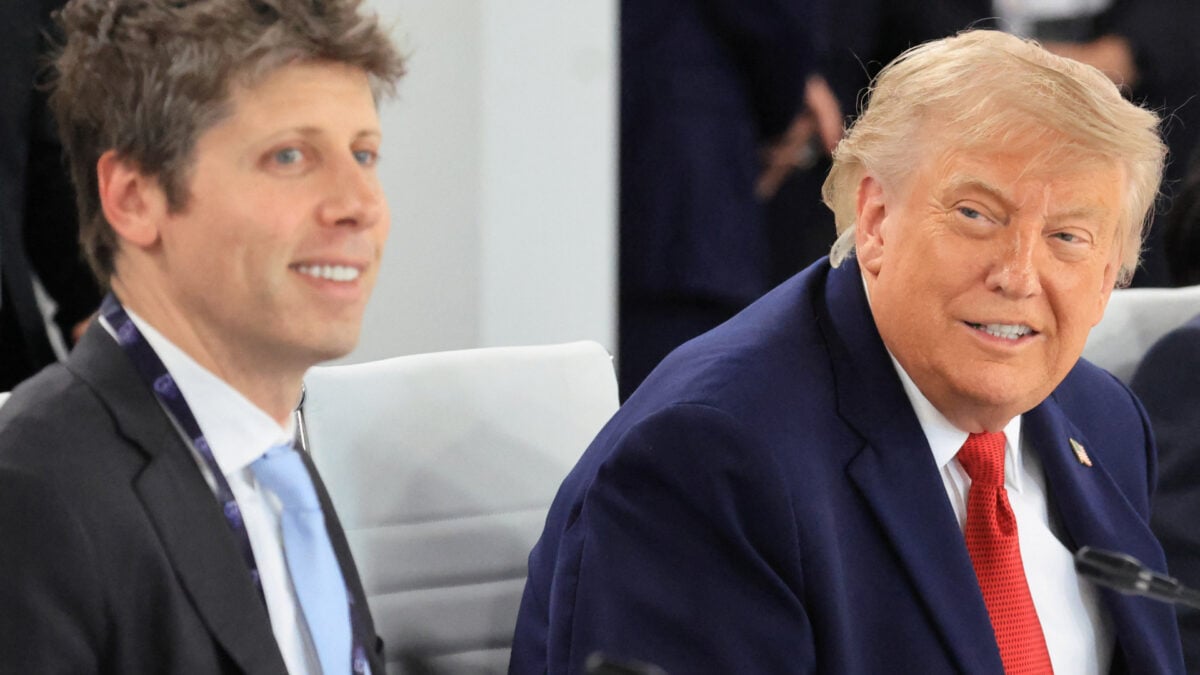
If the Carolina Principles gain traction among G20 members, the immediate winners are clear: American AI companies. They operate in an environment where the regulatory friction is minimal, the capital is flowing, and the competitive pressure from foreign governments is being pulled back. OpenAI’s Sam Altman is sitting down with Lutnick at the ministerial. Nvidia’s Jensen Huang will be there too. Elon Musk, Demis Hassabis, and David Sacks are all scheduled to address attendees. Mark Zuckerberg reportedly will as well. The meeting is, in effect, a summit of the most powerful figures in the AI industry — and the US government is providing the venue.
The losers are harder to name because they are often invisible: workers whose jobs are displaced by untested systems, communities exposed to environmental costs from data center expansion, citizens whose data is processed without adequate safeguards, and countries outside the US that lose the ability to shape the rules governing a technology that will redefine their economies.
Europe is the most consequential loser in this scenario. The EU AI Act is already in motion, with enforcement phases rolling out. American pressure to back off regulation is, in part, an attempt to neutralize the Brussels Effect — the phenomenon by which EU rules become de facto global standards because multinationals prefer one compliant system over many. If the US can convince even a few G20 partners to adopt the Carolina Principles, it weakens the gravitational pull of Brussels.
The China Factor
The unstated driver behind the entire exercise is China. The Trump administration has framed the deregulatory push as necessary to beat Beijing in the AI race. That framing carries weight in Washington, where competition with China dominates policy thinking across almost every domain. But it also carries a dangerous assumption: that the fastest path to AI supremacy is the path with the fewest constraints.
History suggests otherwise. The internet was not built through deregulation alone. Semiconductors were not accelerated by removing every obstacle. Major technological leaps tend to require coordination, investment, and yes — regulation that sets standards and redirects incentives. A hands-off approach may produce faster short-term deployment, but it also produces faster short-term risk accumulation. And when those risks materialize — whether through cyberattacks enabled by autonomous systems, financial instability from algorithmic trading at scale, or social disruption from labor displacement — the cost falls on everyone, not just America.
The Fracture Ahead
The most likely outcome of this G20 moment is not a unified deregulatory pact but a fragmented landscape. The US will push the Carolina Principles. Some countries — perhaps Japan, South Korea, India — may sign on or gesture toward deregulation to maintain favorable relations with Washington. The EU will continue its regulatory trajectory regardless. Canada will try to thread the needle. Others will wait and see.
That fragmentation creates a compliance nightmare for multinational AI companies. Operating under divergent regimes means building different systems for different markets, increasing costs and slowing deployment. It also creates opportunities for regulatory arbitrage — companies basing operations in the least restrictive jurisdictions and exporting their products worldwide. That is the scenario the Trump administration explicitly wants. It is also the scenario that makes the rest of the world more vulnerable.
The G20 Innovation Ministerial in North Carolina will produce photographs and press releases. It will not produce a consensus. But the divergence on display — a White House courting AI CEOs while the Bank of England warns about financial stability, a UN secretary-general calling for guardrails while American officials call for their absence — is itself a signal. The era of unified AI governance is over. What comes next is a contest over whose rules, whose interests, and whose vision of the future will dominate.
The Carolina Principles are the opening move.