Chen Jining's Fall Reveals Xi's True Priority: Loyalty Over Competence
The sudden purge of Shanghai party chief Chen Jining signals thatXi Jinping values unquestioning loyalty far above reformist competence — and sends a clear warning to China's technocratic class ahead of the next leadership transition.
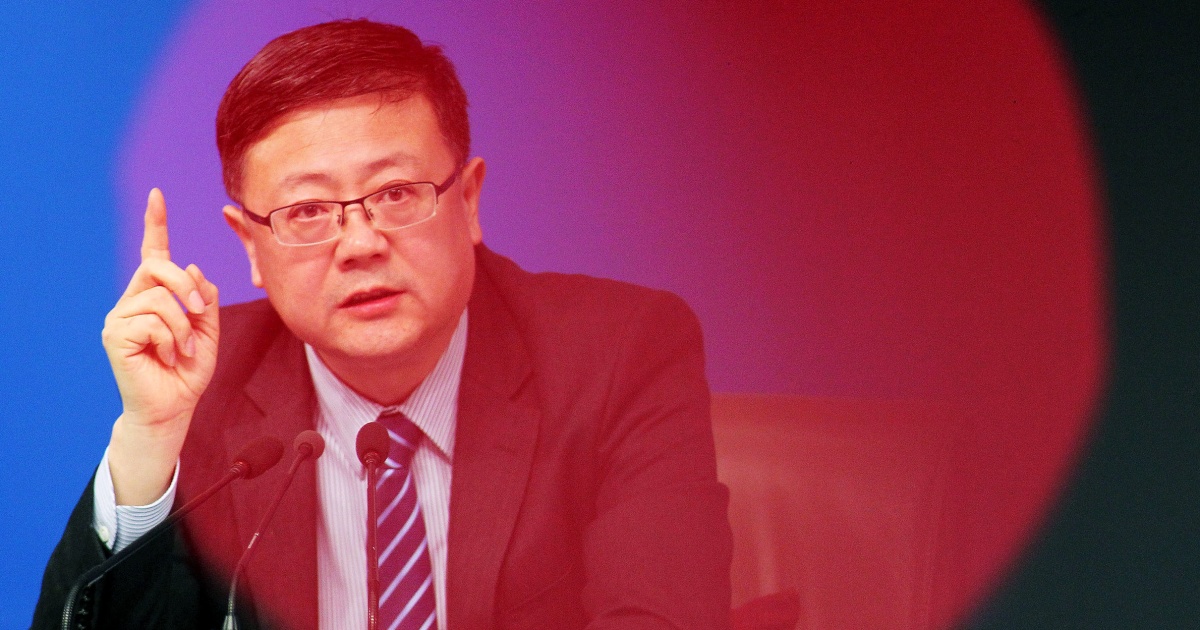
A Technocrat Removed Overnight
Chen Jining’s name vanished from official websites overnight. A page documenting his meeting with Apple’s Tim Cook just last month now returns a 404 error. Within days of a two-line Xinhua bulletin declaring him under “disciplinary review,” the youngest member of China’s Politburo went from rising star to erased figure.
He was 62, a former environmental minister, Beijing mayor, and now Shanghai party secretary. He held doctorates from Imperial College London. He hosted Western business leaders and U.S. senators. By every conventional metric of career trajectory within the Chinese Communist Party, he was on track for the Standing Committee — the seven-person body that actually runs China.
Instead, he has become the fourth Politburo member purged in less than two years.
Why This Matters Beyond a Single Arrest
The immediate lesson is not that Chen committed some secret crime. The deeper one is that Xi Jinping no longer needs loyal ministers to be competent ones — and is willing to remove those who are both.
Chen was never accused of gross financial malfeasance or military defection like some of his predecessors. He had no apparent policy failures on paper. That makes his removal more unsettling for everyone watching how China operates, especially foreign businesses that built relationships assuming stability through meritocratic advancement.
“It is a warning to all technocrats,” said Steve Tsang, director of the SOAS China Institute. “Adhere to strict party discipline and demonstrate unquestionable loyalty to Xi — or else.”
The message is directed inward, but its consequences radiate outward. Companies counting on predictable policy channels through figures like Chen now face a system where personal loyalty to Xi trumps institutional competence.
The Networks Being Cleared
Chen’s portfolio maps a specific ecosystem that Xi appears willing to disrupt. As Shanghai party secretary, Chen oversaw China’s most financially literate city and its primary interface with global capital markets. Shanghai hosts the headquarters of most major multinational corporations operating in China. It is where supply chains meet boardrooms.
His closeness to Apple exemplifies the kind of relationship many Western firms cultivated: direct access to a leader who understood both technology and globalization. Chen welcomed Cook to showcase Shanghai’s strengths in late 2024 and called for advancing the digital transformation of shipping — a pragmatic, growth-oriented posture.
That posture may have been precisely the problem.
Tsang noted that Chen was “someone who could rise further but not as a successor.” In other words, he posed no dynastic threat, yet he remained independent enough in outlook to represent a different governing philosophy — one prioritizing economic modernization and international engagement over ideological conformity.
Removing him clears space for someone whose loyalty is less contingent on professional achievement and more on alignment with Xi’s current priorities.
The Discipline Machine Is Working as Designed
At the fifth plenum last month, the Central Committee vowed to “ensure more rigorous discipline enforcement” and use discipline as “a guide, restraint, guarantee, and incentive.” Damien Ma of Carnegie China described this as part of a 15-year project to build an internal operating system for purging “bad eggs.”
“The top leadership is normalizing this anti-corruption, this self-cleansing,” Ma said. “It is now a normal part of what the party expects.”
What that means in practice is a system where investigation becomes routine rather than exceptional. Officials cannot assume that good performance protects them. Political survival now requires visible, daily demonstrations of ideological alignment with Xi’s line.
For the corporate world, this raises the cost of doing business in China. Relationship-based governance — knowing the right person, building trust with the right official — remains valuable. But that trust can evaporate instantly when the political winds shift.
What Comes Next for Policy and Supply Chains
Chen’s ouster arrives a year before the 21st Party Congress, where Xi is expected to cement another five-year term. No vice president has been announced. No clear successor has emerged. The vacuum itself is strategic: keeping rivals uncertain while consolidating power.
For global supply-chain planners, the takeaway is not that China will stop functioning. It is that the logic governing function has changed. Decisions that once flowed through technical ministries and experienced administrators now route through political loyalty filters.
Shanghai, under Chen, had been a model of pragmatic openness. Its replacement will likely enforce stricter compliance with central directives, potentially slowing projects that involve foreign investment or cross-border data flows — areas where Chen had shown particular enthusiasm.
The environmental angle matters too. Chen was an environmental scientist by training. His ministry saw China commit to peak carbon emissions by 2030 and neutrality by 2060. A successor without that background may deprioritize those targets in favor of industrial growth or energy security.
Who Wins. Who Loses.
Xi wins. That is the structural outcome. The Politburo shrank from 24 to 21 members after three prior purges. Zhang Shengmin, a top general elevated last month, replaces one victim; Chen is the fourth. The body grows more homogeneous.
Foreign business loses predictability. American, European, and Japanese companies that invested in China on the assumption of continuous reform channels now face a landscape where reformist officials can be removed regardless of record.
Chinese technocrats lose career assurance. Merit no longer guarantees advancement. Ideological conformity does.
China’s global standing gains ambiguity. The country continues to grow and innovate, but its decision-making becomes more insular. International partners must recalibrate expectations about which Chinese institutions deliver on commitments.
The Erasure Begins Immediately
Within days of Chen’s announcement, Tsinghua University removed him from its list of former presidents. Shanghai government sites scrubbed his name. Even the Apple meeting that symbolized his cosmopolitan profile disappeared behind a 404.
This erasure is performative as much as practical. It tells every remaining official what happens to those who fall out of favor: you did not exist.
But it also sends a message to the outside world. The gateways that Western companies relied on — officials who spoke English, hosted foreign executives, championed open innovation — are not permanently secure positions. They are appointments conditioned on alignment with Xi’s increasingly narrow definition of loyalty.
A System That Cleans Itself Permanently
Anti-corruption campaigns have periodic spikes in China’s history. What distinguishes Xi’s is its permanence. It is no longer a seasonal operation. It is a governing mechanism.
Chen Jining’s career would have placed him among the most powerful technocrats in the country. Instead, he is now a cautionary footnote. His removal confirms that in Xi’s China, the highest office belongs not to the most capable — but to those whose capabilities serve the leader’s interests without questioning them.